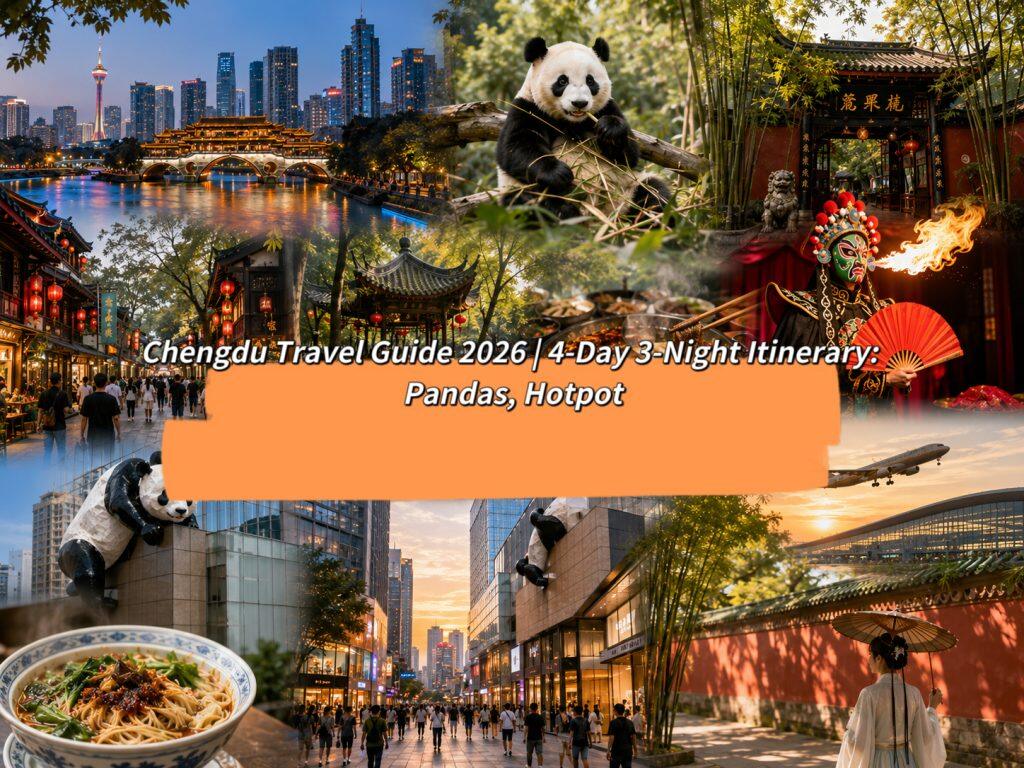
Hey everyone, Mike Wang here – your China travel insider with 20 years on the road. I’m not making this up – it’s what every traveler says after coming back from Chengdu. There’s a line in a famous Chinese folk song that goes, “Chengdu, the only thing I can’t take away is you.” I used to think that was overly sentimental. Then I stepped out of Chengdu Shuangliu Airport, got hit by that warm, humid air laced with the faint scent of Sichuan peppercorns – and I got it. This city has a hold on you. The good kind.
I’ve been traveling across China for two decades, and Chengdu has always held a special place in my heart. It doesn’t try to impress you with skyscrapers or speed. It just sits there in the Sichuan Basin, brewing tea, bubbling hotpot, raising pandas, and smiling at you: “What’s the hurry, friend?”
Let me walk you through 4 days and 3 nights of what the locals call bashi – that untranslatable feeling of perfect, cozy comfort.
4-Day 3-Night Itinerary
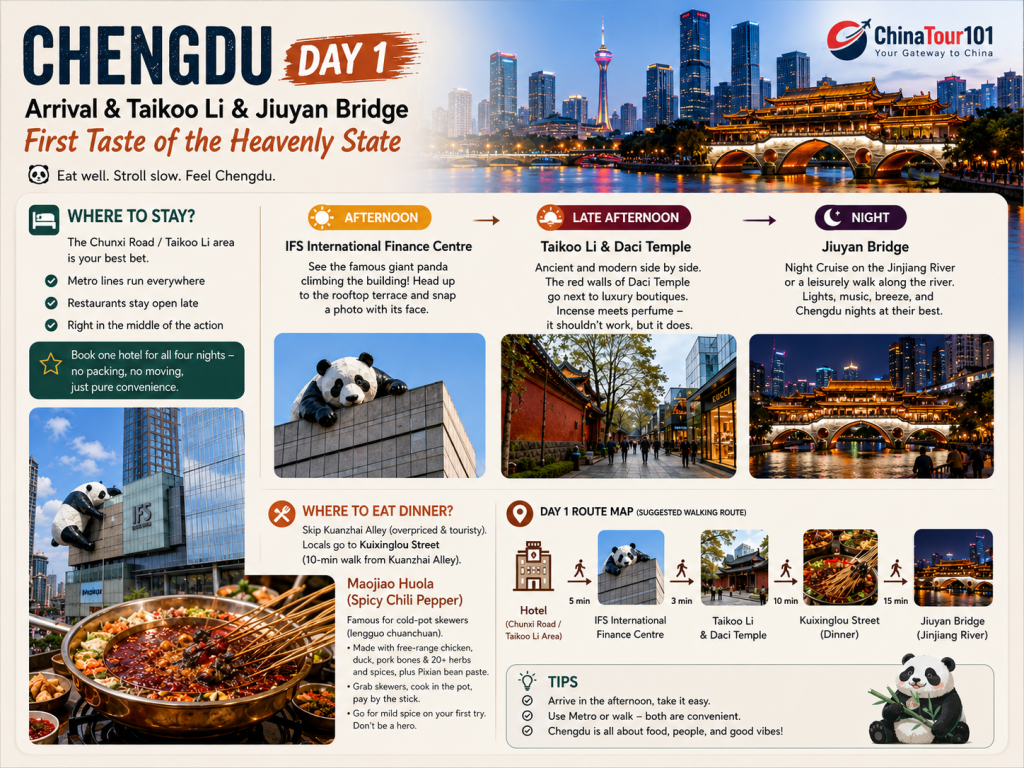
Day 1|Arrival & Taikoo Li & Jiuyan Bridge – First Taste of the Heavenly State
You’ll likely land in the afternoon. Don’t rush to the sights – let this city win you over with a meal first.
Where to stay?
The Chunxi Road / Taikoo Li area is your best bet. Metro lines run everywhere, restaurants stay open late, and you’re right in the middle of the action. Book one hotel for all four nights – no packing, no moving, just pure convenience.
Drop your bags and head straight to IFS International Finance Centre.
You’ve seen that giant panda climbing the building in photos – its backside sticking out on one side, its head peeking over the seventh floor. Go up to the rooftop terrace and snap a photo with the panda’s face. It’s your official “hello” to Chengdu.
Right next door is Taikoo Li. It’s polished, yes – maybe a little too polished. But here’s the magic: ancient and modern exist side by side without any awkwardness. The red walls of Daci Temple sit right next to luxury boutiques. Incense from the temple and perfume from the shops mingle in the air. It shouldn’t work. But it does.
Where to eat dinner?
Don’t eat in Kuanzhai Alley – it’s overpriced and touristy. Locals will tell you to go to Kuixinglou Street, just a 10-minute walk from Kuanzhai Alley. This is where Chengdu’s food scene gets real.
Maojiao Huola (literally “Spicy Chili Pepper”) is famous for its cold-pot skewers (lengguo chuanchuan). The broth is made with free-range chicken, duck, pork bones, and over 20 herbs and spices, plus Pixian bean paste – the holy grail of Sichuan fermented broad bean paste. You grab skewers from the fridge, cook them in the bubbling pot at your table, and pay by the stick. Go for mild spice on your first try. Don’t be a hero.
Where to go at night? Jiuyan Bridge.
Not for the bridge itself – for the Night Cruise on the Jinjiang River below it. Lights dance on the water, the Funan River flows quietly through the city, and bars along the bank light up one by one. Someone’s singing. Someone’s drinking. Someone’s just staring at the water. You don’t have to take the cruise – just walk along the river, let the evening breeze settle your meal, and soak it in. This is a Chengdu night.
Day 2|Panda Base & Wenshu Monastery & Hotpot – Face to Face with China’s National Treasure
In Chengdu, there’s one good reason to wake up early: pandas.
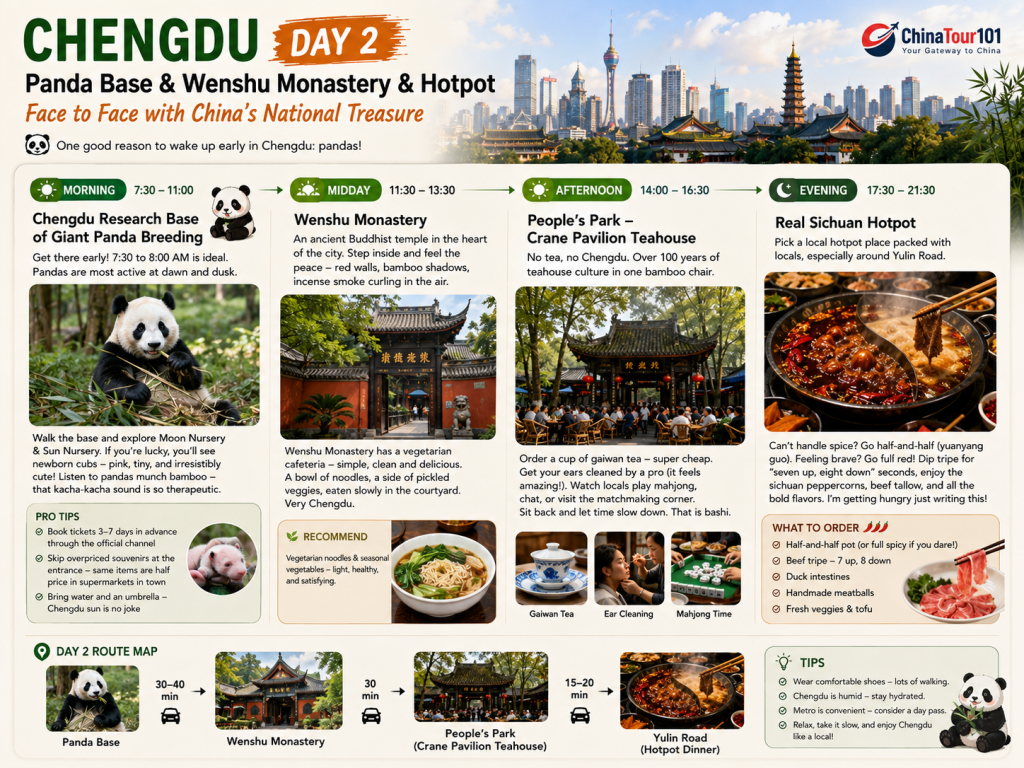
Morning: Chengdu Research Base of Giant Panda Breeding
Get there early. I mean early. Aim for 7:30 to 8:00 AM. Pandas are crepuscular – most active at dawn and dusk. By the time the sun’s high and the heat kicks in, they’ll be flopped over like black-and-white beanbags, dead to the world.
The base is walkable – no need for trams unless you have mobility issues. The Moon Nursery and Sun Nursery are the main attractions. If you’re lucky, you’ll see newborn panda cubs – pink, hairless, the size of a mouse. Ugly-cute doesn’t even begin to describe it. Adult pandas munch on bamboo in the outdoor enclosures, and that crunchy kacha-kacha sound is oddly therapeutic.
Pro tips:
- Book tickets 3–7 days in advance through the official channel
- Skip the overpriced souvenirs at the entrance – the same stuff is half price at supermarkets in town
- Bring water and an umbrella – Chengdu sun is no joke
Midday: Wenshu Monastery
From the Panda Base, head to Wenshu Monastery.
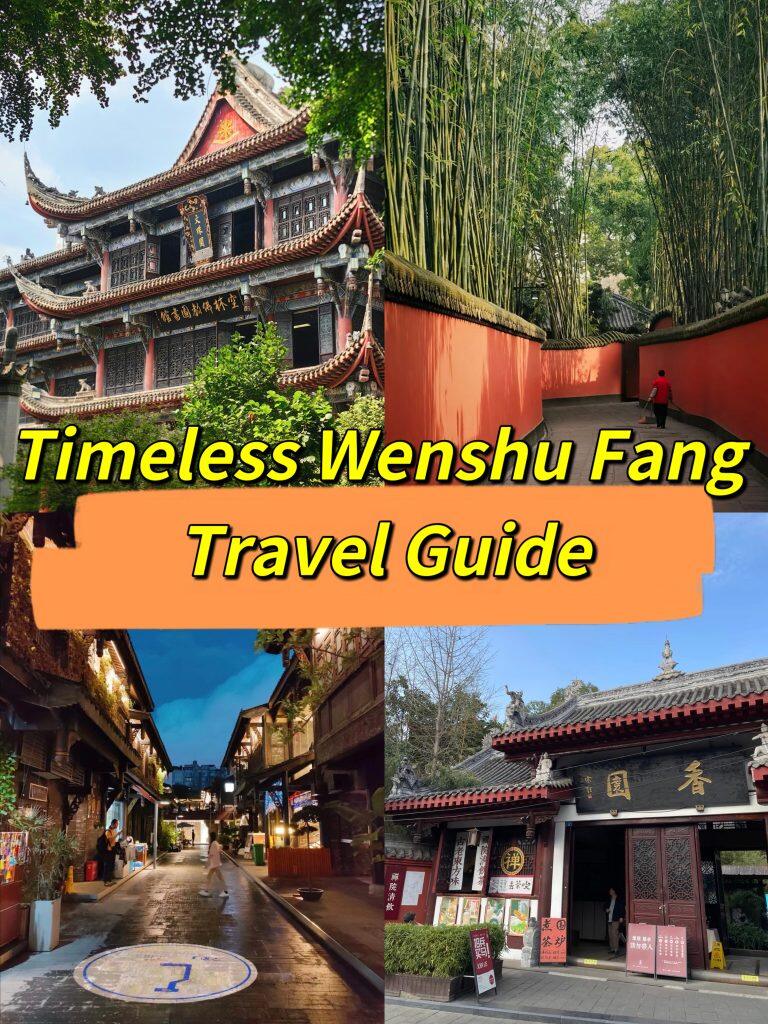
This ancient Buddhist temple sits right in the middle of the city, but the moment you step through the gate, the noise fades. Red walls, bamboo shadows, curling incense smoke – it’s incredibly photogenic. Wenshu has a vegetarian cafeteria – you don’t need meat every meal. A bowl of plain noodles, a side of pickled vegetables, eaten slowly in the courtyard. Very Chengdu.
Afternoon: People’s Park – Crane Pavilion Teahouse
If you come to Chengdu and don’t have tea, you might as well not have come.
Crane Pavilion Teahouse in People’s Park is over a century old. Order a cup of covered-bowl tea (gaiwan) – it’ll cost you next to nothing. Sink into a bamboo chair. Get your ears cleaned by a roaming ear-picker (trust me, it feels amazing). Watch the locals play mahjong, chat about nothing, or haggle over their children’s marriages at the nearby matchmaking corner. Just sit there and watch time trickle past the rim of your tea bowl. That is bashi.
Evening: Real Sichuan Hotpot
For your first proper hotpot in Chengdu, pick a place where locals pack the tables – skip the Instagram-bait chains. The neighborhood hotpot joints around Yulin Road are a safe bet. Can’t handle spice? Order a half-and-half pot (yuanyang guo) with one spicy side and one mild. Feeling brave? Go full red – bubbling beef tallow, floating Sichuan peppercorns, tripe dipped for exactly “seven up, eight down” seconds, duck intestines curled just right. I’m getting hungry just writing this.
Day 3|Wuhou Shrine & Jinli & Kuanzhai Alley – Three Kingdoms & Fireworks
Morning: Wuhou Shrine
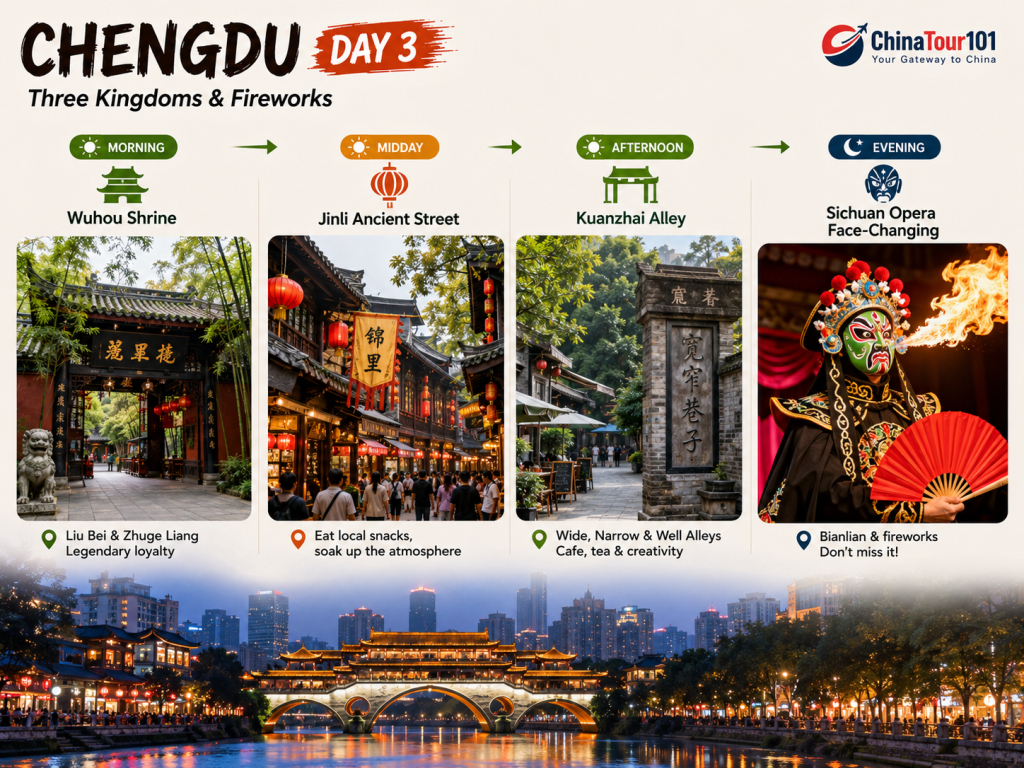
China’s only temple dedicated to both a ruler and his subject – Liu Bei and Zhuge Liang, the legendary duo of the Three Kingdoms period. Red walls, green bamboo, grey tiles – this is one of Chengdu’s most iconic photo spots.
Get a guide or rent an audio device – the Three Kingdoms stories don’t reveal themselves through architecture alone. Even if you’re not familiar with the history, the calligraphy plaques, stone steles, and statues convey a sense of tragedy and loyalty that needs no translation. “Left the battlefield before the mission was accomplished” – that’s the vibe here.
You don’t need a ticket to photograph the red wall outside – great for hanfu (traditional Chinese clothing) photos if that’s your thing.
Midday: Jinli Ancient Street
Jinli is right next to Wuhou Shrine. It’s prettier at night when the lanterns light up – but if you only have this afternoon, go for it.
Jinli is your classic ancient street – tea houses, opera stages, snack stalls, handicraft shops. Try the sandapao (three sticky rice balls slammed onto a drum), tangyou guozi (fried sugar dough), or danhonggao (egg pancakes). But don’t fill up here – save room.
Afternoon: Kuanzhai Alley
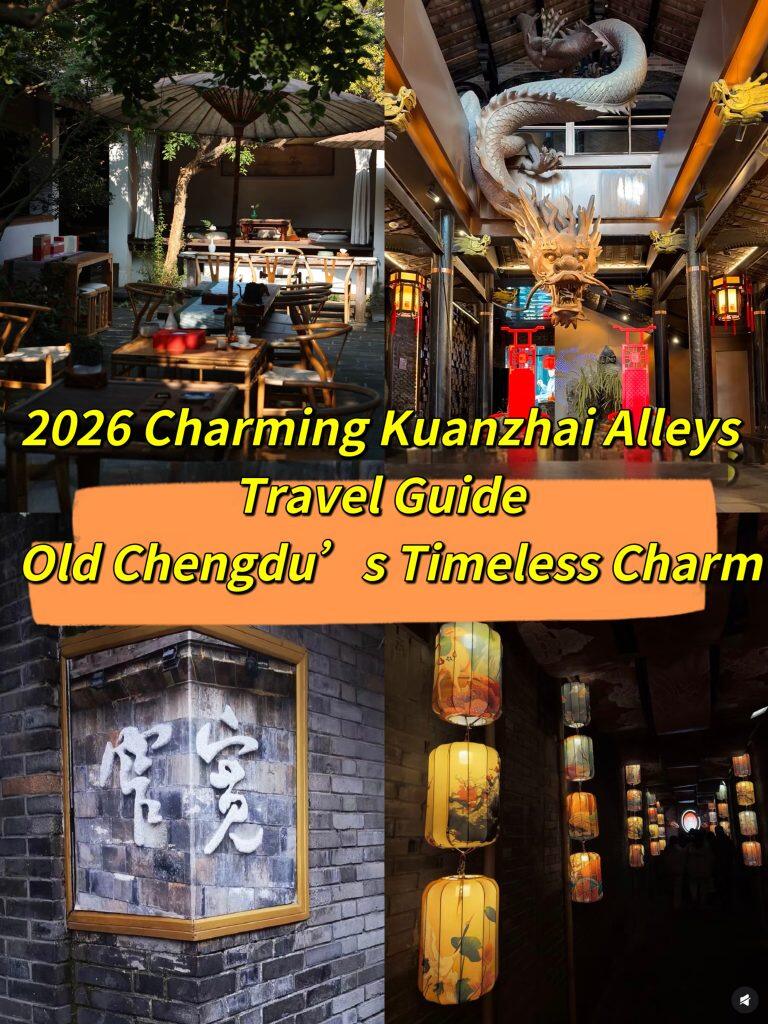
Kuanzhai Alley is actually three parallel streets – Wide Alley, Narrow Alley, and Well Alley. They date back to the Qing Dynasty and are now lined with boutique shops, cafes, tea houses, and creative restaurants.
Browse, sure. But buy wisely – prices are inflated and quality isn’t always the best. The real gems are on Kuixinglou Street and Xiaotong Alley nearby – you already went there on Day 1, remember?
Evening: Sichuan Opera Face-Changing
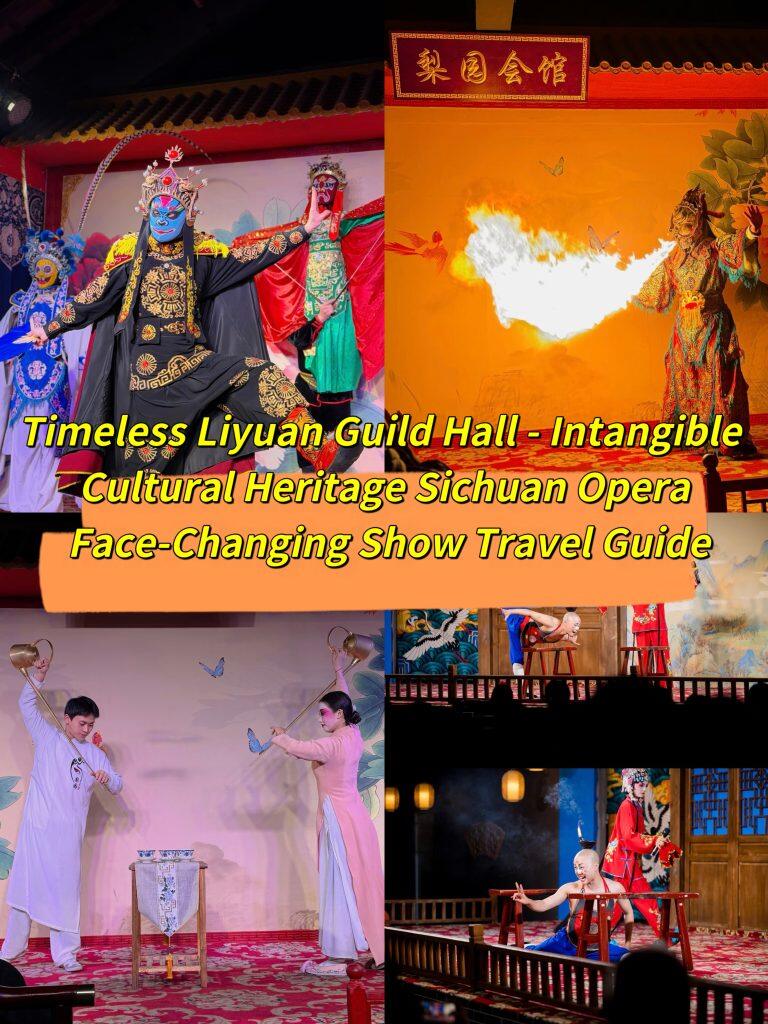
You’re in Sichuan – see some Sichuan opera. There are theaters near Jinli and Kuanzhai Alley. The face-changing (bianlian) is the showstopper – performers swap masks in a fraction of a second, sometimes spitting fire between changes. Don’t overthink the plot. Just enjoy the spectacle.
Day 4|Dujiangyan & Mount Qingcheng – Water & Taoism, the Perfect Finale
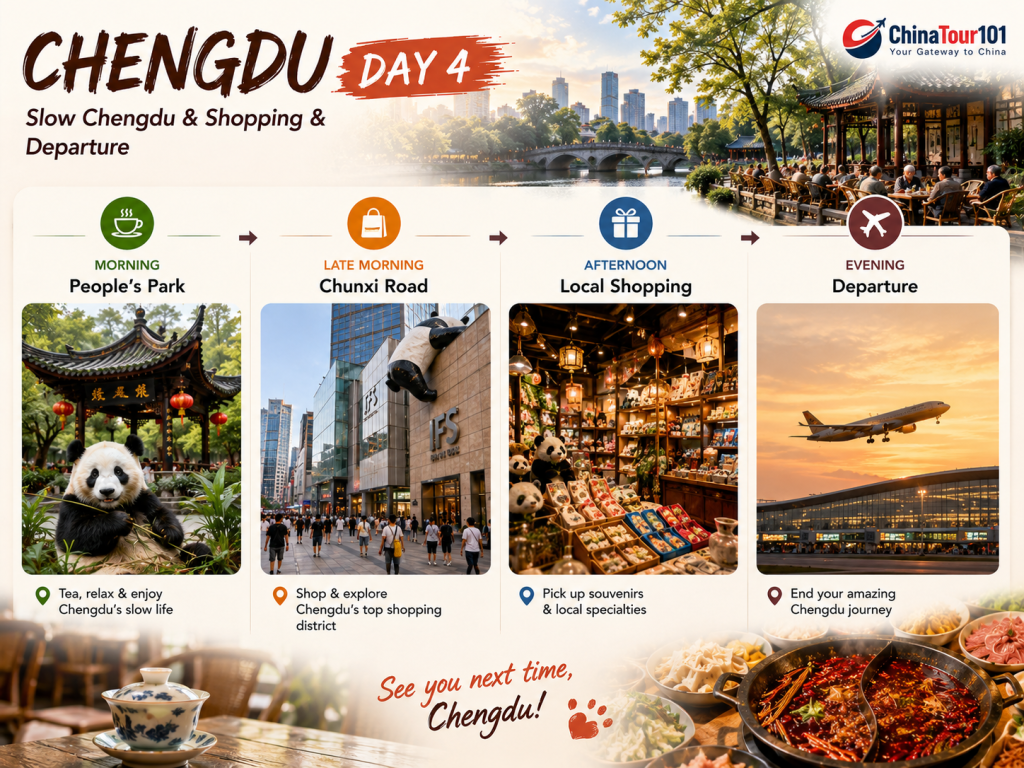
If you have a full day, I strongly recommend spending it at Dujiangyan and Mount Qingcheng. They’re about an hour from downtown Chengdu and easily doable as a day trip.
Morning: Dujiangyan Irrigation System
Over 2,200 years ago, Li Bing and his son built this marvel – and it’s still in use today. Stand at the Fish Mouth (yuzui), the levee that splits the Min River into two channels – one for irrigating the Chengdu Plain, one for flood discharge. No photo does it justice. The scale, the ingenuity, the fact that it’s been working for two millennia – it hits you in a way no textbook ever could.
Afternoon: Mount Qingcheng
“Mount Qingcheng is the quietest place under heaven” – that’s the old saying, and it’s true. This is one of the birthplaces of Taoism. If you’re not up for a hard hike, take the cable car up and explore the front mountain. The entire mountain is covered in nanmu trees, ginkgo, and bamboo – the air is so clean you’ll find yourself taking deep breaths without thinking.
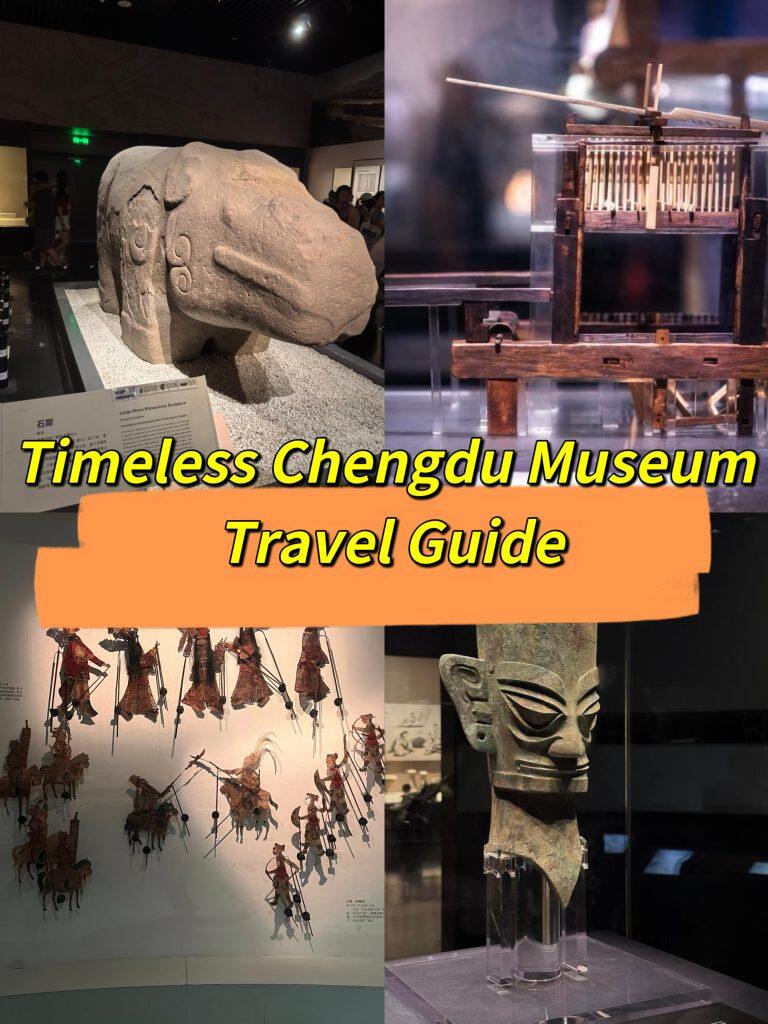
If you’re short on time or don’t want to venture out of the city, Day 4 can also be spent in town – Chengdu Museum is free (book ahead), grab a coffee in Wangping Street, or explore the creative hub of Eastern Memory – you really can’t go wrong.
Frequently Asked Questions – Your Chengdu Trip
Q: Is 4 days 3 nights enough for Chengdu?
Yes. You can cover all the core city sights comfortably. If you want to add Dujiangyan + Mount Qingcheng, that’s a full Day 4. For a deeper experience – more tea houses, more neighborhoods, more everything – 5 to 7 days gives you room to breathe.
Q: Where should I stay for my first visit?
Chunxi Road or Kuanzhai Alley area. The metro covers almost all the major sights, and staying in one hotel without switching is the biggest time-saver you’ll find.
Q: What time should I go to the Panda Base to avoid crowds?
Get there right when it opens at 7:30 AM. The pandas are most active in the early morning. By 10 AM, the tour buses roll in and it gets packed. Also avoid weekends and Chinese public holidays if you can.
Q: Do I need to book attractions in advance?
Yes – especially the Panda Base. Tickets sell out fast during peak seasons. Book through the official WeChat mini-program 3–7 days ahead. Chengdu Museum is free but also requires advance booking.
Q: Is Chengdu spicy food really that spicy?
Yes. And no. The heat (la) comes from chili peppers, but the numbing sensation (ma) comes from Sichuan peppercorns – and that’s the real signature of Sichuan cuisine. Start with mild spice levels and work your way up. And always order a side of bobo ji (mouth-numbing chicken) – the name tells you exactly what you’re in for.
Q: Can I use credit cards or do I need cash?
Hotels and upscale restaurants take cards. But for street food, local shops, and even some attraction tickets, you’ll want WeChat Pay or Alipay. Good news: you can now link international Visa/Mastercard cards to both apps. Bring some cash (500–1,000 RMB) as backup – ATMs are everywhere in the city center.
Q: Is English spoken in Chengdu?
Major attractions (Panda Base, Wuhou Shrine, Kuanzhai Alley) have English signs and audio guides. Hotel staff and younger locals usually speak basic English. But don’t expect everyone to – download a translation app like Baidu Translate or Google Translate. A few words like ni hao (hello) and xie xie (thanks) will get you big smiles!
Q: When is the best time to visit Chengdu?
Spring (March–May) and Autumn (September–November) are perfect – mild temperatures, clear skies, and blooming or golden landscapes. Summer (June–August) is hot and humid; winter (December–February) is damp and chilly, but the city is quieter and the hotpot tastes even better when it’s cold outside.
Mike Wang
Mike Wang is a 40-something Chinese travel expert, has explored the world,
hosting numerous foreign visitors. He’s deeply interested in and knowledgeable
about ancient cultural architectures, enriching journeys with his insights.