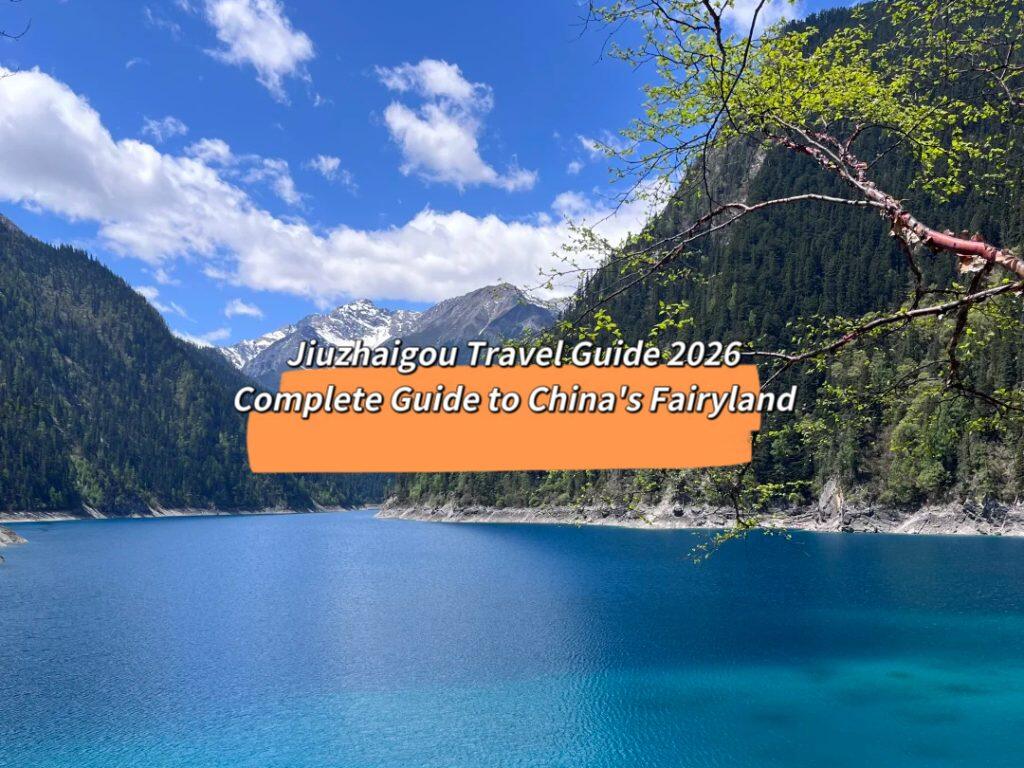
Hello, I’m Mike Wang, a China travel expert with over 20 years of experience exploring every corner of this magnificent country. If there’s one destination that still takes my breath away no matter how many times I visit, it’s Jiuzhaigou. Let me paint the picture for you: imagine walking through a fairy tale valley where turquoise lakes shimmer like liquid sapphire, where waterfalls cascade down terraced mineral deposits in curtains of white and blue, and where every turn of the trail reveals colors so vivid you’d swear someone Photoshopped the landscape. That’s Jiuzhaigou — and it’s 100% real.
Jiuzhaigou Introduction 2026
Nestled deep in the mountains of northern Sichuan Province, Jiuzhaigou Valley is a UNESCO World Heritage Site and one of China’s most iconic natural wonders. The name translates to “Nine Village Valley,” named after the nine Tibetan villages scattered throughout the park. What makes this place truly magical is its water. Thanks to unique geological formations and mineral-rich runoff from ancient glaciers, the lakes here display an almost surreal range of blues, greens, and teals that shift with the seasons and even the time of day. From the mirror-like calm of Five Flower Lake to the thundering power of Pearl Shoal Waterfall, every corner of Jiuzhaigou tells a different story.
Whether you’re planning your first China Travel 2026 adventure or returning for another dose of natural beauty, this Jiuzhaigou travel guide 2026 will give you everything you need to plan the perfect trip.
Quick Facts
📍 Location: Aba Tibetan and Qiang Autonomous Prefecture, Sichuan Province, southwestern China
🏛️ Established: UNESCO World Heritage Site (1992), UNESCO Biosphere Reserve (1997)
📏 Area: Approximately 720 square kilometers (278 sq miles)
🏔️ Altitude: 2,000 to 4,764 meters (6,560 to 15,623 feet) above sea level
📅 Peak Season: September to November (autumn foliage) and July to August (summer holidays)
💡 Key Tip: Book tickets and hotels at least 2-3 weeks in advance during peak season
🌸 Best Time to Visit: Mid-October to early November for fall colors; June for greenery and fewer crowds
Tickets & Opening Hours
🎫 Tickets & Pricing (2026 Season)
Jiuzhaigou operates on a unified ticket system that covers both park entry and the internal sightseeing buses that shuttle visitors between scenic areas. Here are the current rates:
▶️ Peak Season (April 1 — November 15)
Park Entry: 169 RMB (~23 USD)
Sightseeing Bus: 90 RMB (~13 USD)
Total: 259 RMB (~36 USD)
▶️ Off-Peak Season (November 16 — March 31)
Park Entry: 80 RMB (~11 USD)
Sightseeing Bus: 80 RMB (~11 USD)
Total: 160 RMB (~22 USD)
▶️ Discounts Available
Students (valid ID): 50% off park entry
Seniors (60+): Free entry (Chinese ID) or 50% off (foreign passport)
Children under 6 or under 1.2m: Free
Military personnel (valid ID): Free
⚠️ Important Booking Notes:
All tickets must be purchased ONLINE in advance through the official Jiuzhaigou WeChat mini-program or the park’s official website. Same-day on-site purchase is NOT available.
Daily visitor capacity is capped at 41,000 people. During golden weeks (National Day, Chinese New Year), tickets sell out fast — sometimes weeks ahead.
Foreign visitors need a valid passport for entry. Bring it with you; it will be checked at the gate.
The ticket is valid for ONE DAY only. There are no re-entry passes once you leave the park.
Main Scenic Areas & Attractions
Jiuzhaigou is laid out in a Y-shaped valley with three main gorges: Shuzheng Gorge, Rize Gorge, and Zechawa Gorge. The sightseeing buses connect all areas, and most visitors complete the park in one full day. Here are the must-see highlights:
Five Flower Lake (Wuhua Hai) — Rize Gorge
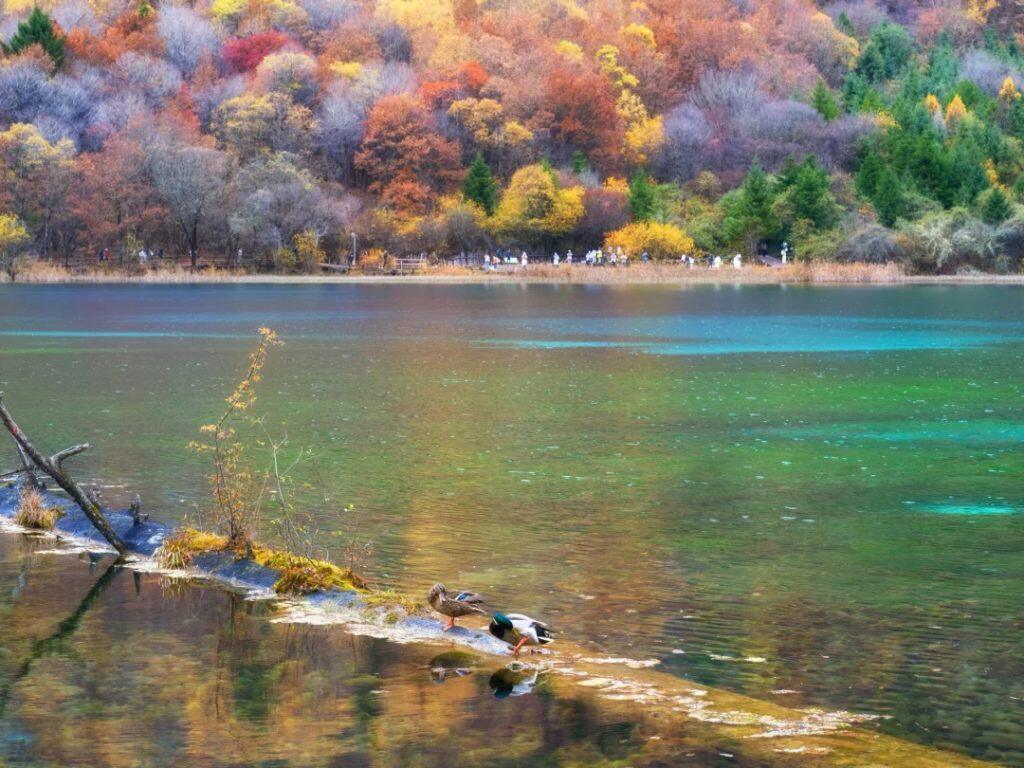
This is the crown jewel of Jiuzhaigou and arguably one of the most beautiful lakes on Earth. Five Flower Lake sits at an altitude of 2,472 meters and is famous for its mind-blowing display of colors — turquoise, emerald green, azure blue, and even pale yellow swirl together in the shallow waters. The lake is so clear that ancient fallen tree trunks are visible on the bottom, creating an eerie, otherworldly underwater landscape. Scientists believe the colors come from a combination of calcium carbonate deposits, algae, and mineral reflections.
Best viewpoint: The elevated wooden boardwalk on the northern side of the lake offers the most panoramic view. Visit before 10 AM for the calmest water and best light. This spot gets crowded by mid-morning, so make it one of your first stops.
Pearl Shoal Waterfall (Zhenzhutan) — Rize Gorge
If you’ve seen the 1992 Chinese film “Hero” directed by Zhang Yimou, you might recognize this waterfall. Pearl Shoal Waterfall is a massive crescent-shaped cascade spanning 162 meters wide, where water rushes over a series of travertine terraces creating a curtain of pearl-like droplets — hence the name. The water crashes into a wide pool below, sending mist into the air that creates rainbows on sunny days. It’s one of the widest waterfalls in China and absolutely thundering during the summer months.
Best viewpoint: The viewing platform at the top of the waterfall gives you a dramatic front-facing view of the entire cascade. There’s also a boardwalk that takes you down to the base for an up-close experience. Allow 30-40 minutes here.
Long Lake (Chang Hai) — Zechawa Gorge
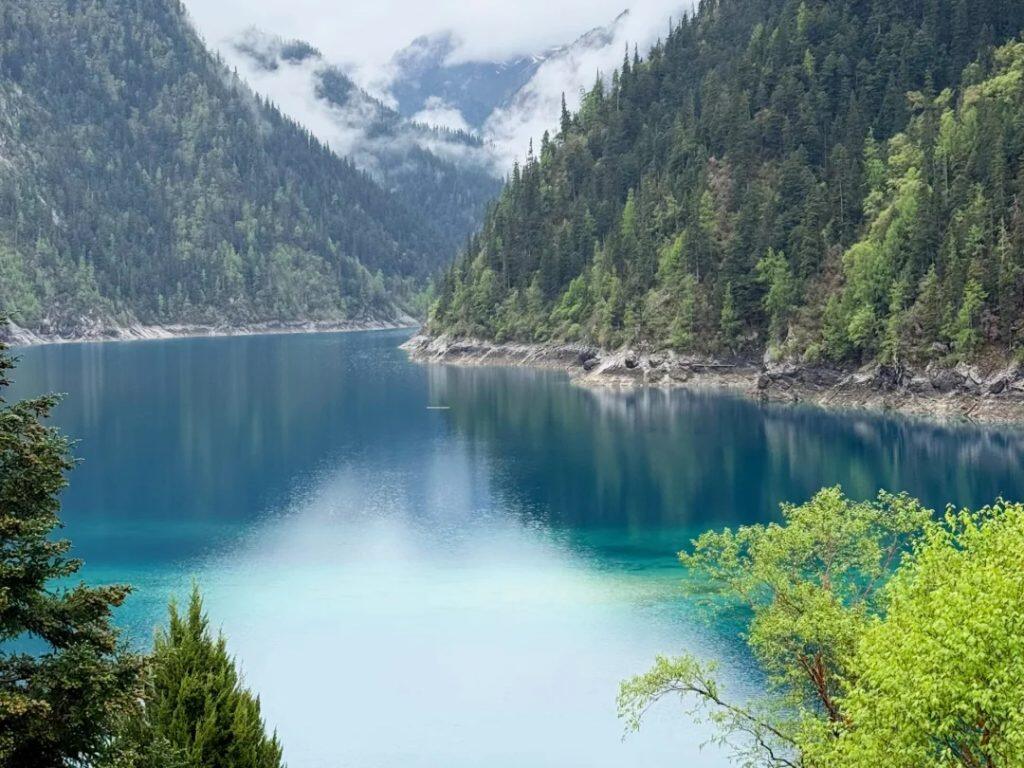
Long Lake is the largest and deepest lake in Jiuzhaigou, stretching over 8 kilometers long and reaching depths of more than 100 meters. Surrounded by snow-capped peaks and dense coniferous forests, the lake has a striking deep blue-green color that contrasts beautifully with the mountain backdrop. In winter, parts of the lake freeze over, creating surreal ice sculptures. Unlike the shallower lakes in the park, Long Lake’s deep waters remain a consistent, intense blue year-round.
Best viewpoint: The main viewing deck at the southern end of the lake. For a more adventurous experience, hike along the eastern shoreline trail (about 2 km round trip) for secluded views away from the main crowds. This area is also one of the best spots in the park for sunset photography.
Shuzheng Lakes (Shuzheng Qun Hai) — Shuzheng Gorge
The Shuzheng Lakes are a chain of 19 interconnected lakes and ponds linked by small waterfalls and rapids, stretching across 5 kilometers. Think of it as Jiuzhaigou’s “greatest hits” on a smaller scale — each lake has its own character, from deep emerald pools to shallow turquoise shallows. The water levels and colors change throughout the year, making this area look completely different depending on when you visit. Traditional Tibetan-style wooden bridges and prayer flags connect the boardwalks, adding cultural charm to the natural scenery.
Best viewpoint: The area near Shuzheng Waterfall (the largest in this chain) offers an excellent vantage point. The boardwalk system here is extensive and well-maintained, making it easy to explore at your own pace. Allow 1.5-2 hours for a thorough visit.
Nuorilang Waterfall — Central Junction
Located at the Y-intersection of the three gorges, Nuorilang is the widest waterfall in Jiuzhaigou at over 300 meters across. While not as tall as Pearl Shoal, its sheer width and the way it cascades over layered travertine formations make it incredibly photogenic. The name “Nuorilang” means “majestic and beautiful” in Tibetan. There’s a large viewing platform and a restaurant nearby, making it a natural rest stop during your day in the park.
Best viewpoint: The main observation deck directly in front of the falls. For a unique angle, walk the trail to the left side where you can get closer to the cascading water. This is also where the park’s internal bus system transfers between gorges, so you’ll likely pass through here multiple times.
Transportation
Getting to Jiuzhaigou has become significantly easier in recent years. Here’s how to reach this mountain paradise:
🚆 By Train
The Chengdu-Huanglongjiuzhai Railway (opened 2024) connects Chengdu directly to Huanglong Jiuzhaigou Station in approximately 1.5-2 hours by high-speed train. From the station, a shuttle bus takes about 1 hour to reach the park entrance.
▶️ Chengdu East Railway Station → Huanglong Jiuzhaigou Station
⚠️ During peak season (October), train tickets sell out extremely quickly. Book via the 12306 app or website as early as possible.
✈️ By Air
Jiuzhaigou-Huanglong Airport (JZH) is the closest airport, located approximately 88 km from the park entrance. Flights operate from major Chinese cities including Chengdu, Beijing, Shanghai, and Xi’an.
▶️ From Chengdu to JZH
From the airport, you can take an airport shuttle bus to the park (about 1.5 hours, 45 RMB / ~6 USD) or hire a private car (200-300 RMB / ~28-42 USD). Note that the mountain road can be winding; if you’re prone to motion sickness, bring medication.
⚠️ Flights to JZH are sometimes delayed or cancelled due to weather conditions, especially in winter. If you’re on a tight schedule, the train is more reliable.
🚌 Local Transport (Within Jiuzhaigou)
Once inside the park, all transportation is handled by the official sightseeing buses (included in your ticket). The buses follow a hop-on, hop-off system at designated stops throughout the three gorges.
Experience & Activities
Beyond the main sightseeing route, Jiuzhaigou offers several memorable experiences for active travelers:
🧗 Hiking & Trekking
While most visitors stick to the boardwalks, there are several hiking trails that offer a more immersive experience. The Zaru Valley Trail is a lesser-known gem — a 3-4 hour hike through pristine forests, past small waterfalls, and alongside a rushing river. You’ll likely encounter wildlife including golden snub-nosed monkeys, Sichuan takin, and various bird species. The trail is moderately challenging with some elevation gain.
For something shorter, the boardwalk between Five Flower Lake and Pearl Shoal Waterfall (about 3 km) is a beautiful walk through forested terrain with multiple lake viewpoints along the way. This section is often skipped by bus-only visitors, so you’ll enjoy relative solitude.
📷 Photography
Jiuzhaigou is a photographer’s paradise, period. The combination of crystal-clear water, vibrant colors, dramatic waterfalls, and mountain backdrops creates world-class compositions at every turn.
Practical Tips & Etiquette
Here are the essential tips to make your Jiuzhaigou trip 2026 smooth, safe, and memorable:
🔹 Altitude Awareness: Jiuzhaigou sits at a high altitude (2,000m+). Most visitors adapt fine, but take it easy on your first day. Stay hydrated, avoid alcohol, and consider bringing altitude sickness medication just in case. Symptoms like headache or shortness of breath usually pass within 24 hours.
🔹 Dress in Layers: Mountain weather changes fast. Even in summer, mornings and evenings can be chilly (5-10°C / 41-50°F). Bring a waterproof jacket, comfortable walking shoes with good grip (boardwalks can be slippery near waterfalls), and a warm layer you can easily remove.
🔹 Pack Your Own Food: Food options inside the park are limited and overpriced. The sole restaurant near Nuorilang Waterfall serves basic Chinese cafeteria food. Bring energy bars, sandwiches, fruit, and plenty of water. There are convenience stores in Zhangzha Town outside the park.
🔹 Respect the Environment: Do NOT touch the water, throw anything into the lakes, or step off the boardwalks. Jiuzhaigou’s fragile ecosystem depends on visitor cooperation. The calcium carbonate formations took thousands of years to develop and are easily damaged. Violators can face hefty fines.
🔹 Bring Cash and a Chinese Phone Plan: While the park accepts mobile payments (Alipay/WeChat Pay), having some cash is wise for smaller vendors. A working Chinese SIM card with data is extremely helpful for booking tickets, using maps, and hailing rides. International cards and roaming data can be unreliable in this mountainous region.
🔹 Stay Overnight Nearby: Do NOT try to visit Jiuzhaigou as a day trip from Chengdu. The park deserves a full day, and the travel time alone is 4-5 hours each way. Book a hotel in Zhangzha Town the night before your park visit. During peak season (especially October), book accommodations at least one month in advance — the town has limited capacity.
🔹 Plan for Crowds: Jiuzhaigou is one of China’s most popular tourist destinations. During peak season and national holidays, expect significant crowds at the main attractions. Arriving early (before 7:30 AM), visiting during the shoulder seasons (late May, early June, or late November), and exploring the less-visited trails will help you avoid the worst of the congestion.
🔹 Photography Etiquette: Be mindful of other visitors when taking photos, especially on narrow boardwalks. Don’t block pathways or use drones (they’re prohibited inside the park without special permits). If you photograph local Tibetan residents, always ask for permission first — it’s both polite and culturally respectful.
Jiuzhaigou is not just a travel destination — it’s an experience that stays with you forever. I’ve guided thousands of travelers through this valley over the past two decades, and I still get emotional every time I see the morning light hit Five Flower Lake. Whether you’re chasing the legendary autumn colors, marveling at thundering waterfalls, or simply walking in silence along a forested boardwalk, Jiuzhaigou delivers on a level that few places in the world can match.
Plan well, arrive early, and let the magic of Nine Village Valley take your breath away. Safe travels, and enjoy your China Travel 2026 adventure! 🏔️✨

Mike Wang
Mike Wang is a 40-something Chinese travel expert, has explored the world,
hosting numerous foreign visitors. He’s deeply interested in and knowledgeable
about ancient cultural architectures, enriching journeys with his insights.
Essential China Attractions
Zhangjiajie Travel Guide 2026: Complete Guide to China’s Most Spectacular Natural Wonder
Jiuzhaigou Travel Guide 2026: Complete Guide to China’s Fairyland
Huangshan Travel Guide 2026: Yellow Mountain Complete Guide
Yangshuo Guangxi 2026 | Karst Mountains & Li River Paradise
Potala Palace Travel Guide 2026: Lhasa’s Iconic Tibet Landmark & Top Attractions
Suzhou Classical Gardens 2026 | UNESCO World Heritage Guide
Dunhuang Mogao Caves Travel Guide 2026: Complete Visitor’s Manual
Zhangye Danxia Travel Guide 2026 | China’s Rainbow Hills
Lijiang Ancient Town 2026 | UNESCO Naxi Cultural Gem Guide
Qinghai Lake Travel Guide 2026: China’s Largest Salt Lake – Complete Local Tips
Xishuangbanna Travel Guide 2026 | Borderland Tropical Paradise China Summer Escape Pick
2026 Wuzhen Trip – East & West Gate Iconic Yangtze Delta China Attraction
2026 Shaolin Temple Trip – World-Famous Zen Temple Top China Attraction
Hukou Waterfall Travel Guide 2026 | Yellow River’s Grand Roaring Falls Guide
Changbai Mountain Tianchi Travel Guide2026 | China’s Volcanic Alpine Lake Guide
Danxiashan Travel Guide 2026 | China’s Colorful Danxia Landform Gem Guide
Fujian Tulou Travel Guide 2026 | UNESCO Ancient Hakka Earthen Building Guide
Laojun Mountain Travel Guide 2026: Sacred Temples, Laozi & Spiritual Heritage
Wudang Mountain Travel Guide 2026: Complete Local Expert Guide to China’s Most Sacred Taoist Peak
Mount Lu Summer Escape 2026: 22°C Cool Retreat & Complete Travel Guide
Zhujiajiao Photo Guide 2026: Bridges, Canals & Night Lights
Zhaoxing Dong Village Cultural Guide 2026: Drum Towers, Grand Song & Ancient Traditions
Libo Xiaoqikong Travel Guide 2026: Easy Downhill Route & Kid-Friendly Spots
Ngari Travel Guide 2026: Kailash, Manasarovar & Zanda Clay Forest
Gulangyu Island Travel Guide 2026: Sunlight Rock, Villas & Sunset Spots
Hongcun Travel Guide 2026 | China’s Ink-Wash Huizhou Ancient Village Guide
Kaifeng Ancient City Travel Guide 2026 | China’s Glorious Song Dynasty Imperial Capital Guide
Harbin Ice and Snow World Travel Guide 2026: World’s Top Winter Ice-Snow Carnival
Kanas Lake Travel Guide 2026 | Xinjiang Fairyland Glacier Lake & Three Bays Guide
Dali Erhai Travel Guide 2026 | Yunnan Wind Flower Snow Moon Plateau Lake Guide
Shangri-La Travel Guide 2026 | Yunnan Snow Mountain & Tibetan Culture Plateau Guide
2026 Moganshan Travel Guide | Yangtze Delta’s Serene Mountain Retreat & Summer Getaway Guide
2026 Huangguoshu Waterfall Trip – China’s Most Spectacular Waterfall & Guizhou Natural Icon
Enshi Grand Canyon Travel Guide 2026 | China’s Karst Wonder & Hiking Paradise Guide
Popular City Travel Guides
Beijing Travel Guide Shanghai Travel Guide Hangzhou Travel Guide Sanya Travel Guide Chongqing Travel Guide
Nanjing Travel Guide Guangzhou Travel Guide ChengduTravel Guide Hongkong Travel Guide Xi’an Travel Guide