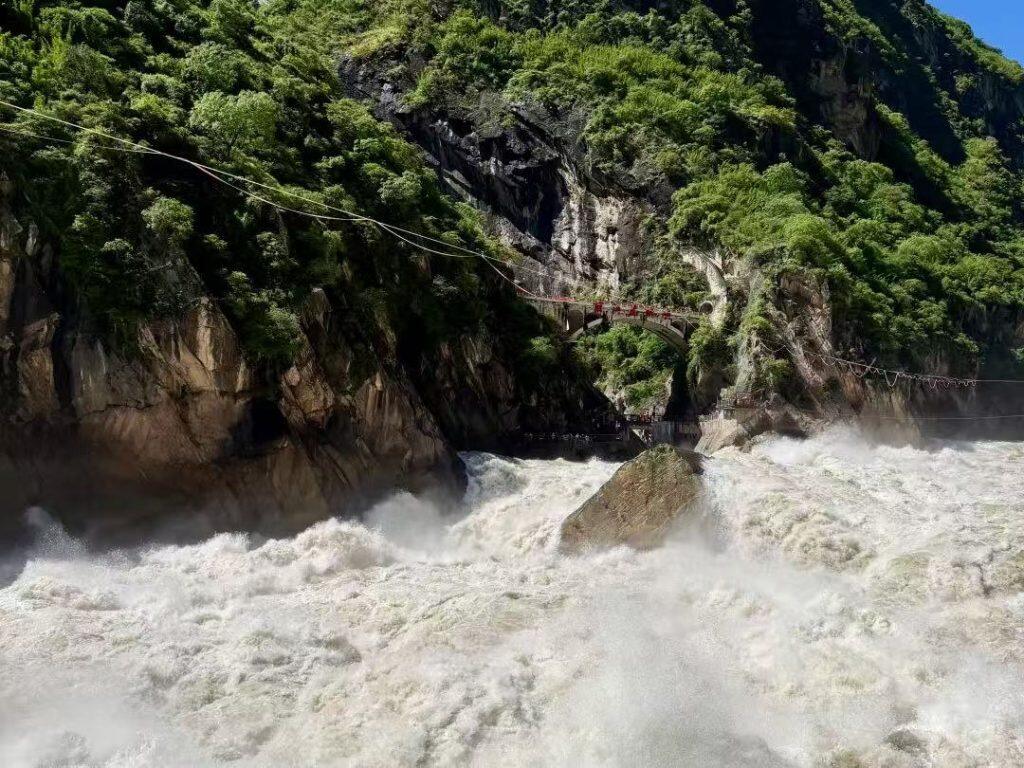
Hello, I‘m Mike Wang. For over 20 years, I have guided travelers through China’s most breathtaking landscapes, but few places have left me as speechless as Tiger Leaping Gorge. I still remember my first visit — standing on the viewing platform as the Jinsha River roared through the narrow canyon below, the sound so thunderous I could feel it in my chest. The cliffs rose like giants on either side, and the raw, untamed power of nature was almost overwhelming. I knew then that this wasn‘t just a canyon — it was one of the most spectacular natural wonders on Earth.
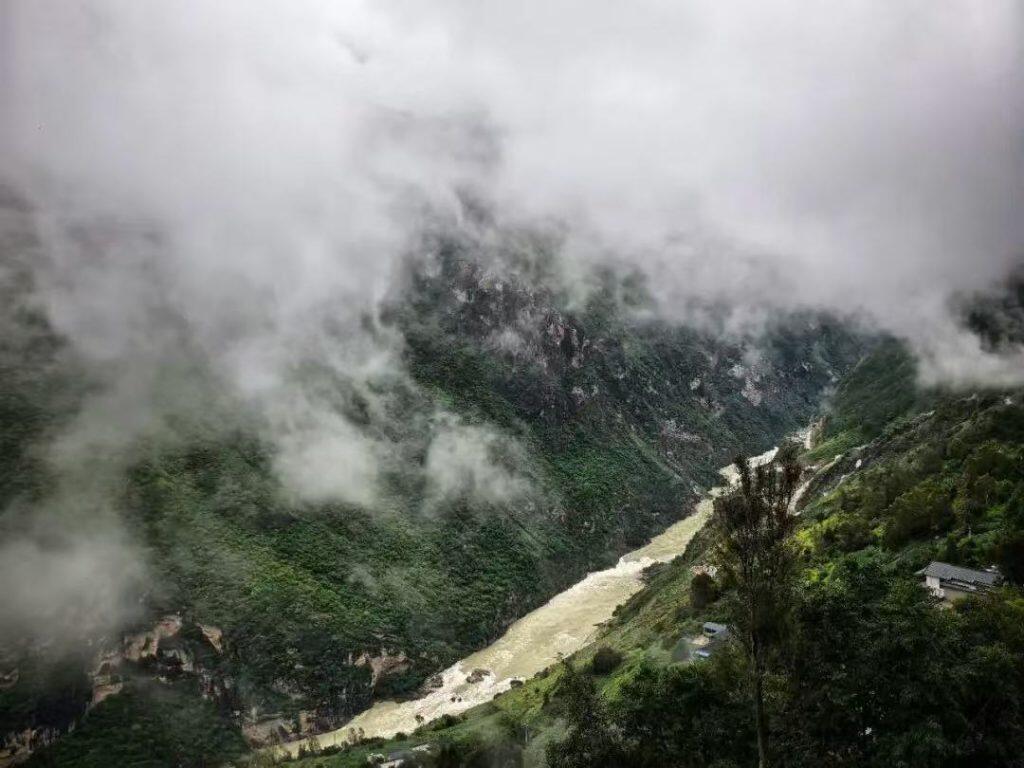
Located between Lijiang and Shangri-La in Yunnan Province, Tiger Leaping Gorge is one of the deepest gorges in the world, plunging an astonishing 3,790 meters (12,434 feet) from the snow-capped peaks to the raging river below. The Jinsha River, an upper stretch of the mighty Yangtze, has carved its way through the mountains for millennia, creating a 23-kilometer canyon of unparalleled drama. The gorge is named after a legend that a tiger, fleeing hunters, leaped across the river at its narrowest point — a spot just 25 meters wide. If you are planning your Yunnan trip 2026, this Tiger Leaping Gorge travel guide 2026 will give you everything you need — from the accessible Upper Gorge to the challenging Middle Gorge, from the famous 28 Bends to the legendary Halfway Guesthouse, and from local secrets to safety tips. Let me share what I‘ve learned from two decades of bringing travelers to this unforgettable canyon.
🏔️ Why Tiger Leaping Gorge 2026 Belongs on Your China Bucket List
You might be thinking, “Another canyon?” But Tiger Leaping Gorge is genuinely in a league of its own.
First, the sheer scale is mind-boggling. At 3,790 meters deep, it‘s nearly twice as deep as the Grand Canyon. The river roars through the narrowest sections with a force that you can feel in your bones. Standing at the edge, watching the water crash against ancient rocks, you understand why this place has been called one of the “world’s top 10 classic hiking routes”.
Second, the diversity of experiences is extraordinary. You can spend 2-3 hours on a short visit to the Upper Gorge, walking along well-paved plank paths and taking in the views. Or you can spend 1-2 days hiking the famous High Trail, a rugged path that winds along the cliffs with jaw-dropping views of the river and snow mountains. Whether you‘re a casual sightseer or a seasoned trekker, there’s something here for you.
Third, the setting is spectacular. The gorge is flanked by Jade Dragon Snow Mountain (5,596m) to the east and Haba Snow Mountain (5,396m) to the west. The High Trail follows the mountainside, offering panoramic views of both peaks. The Naxi culture, which has thrived in this region for centuries, adds another layer of richness to the experience.
I‘ve taken travelers from all over the world to this canyon, and the reaction is always the same: awe, followed by silence. This place doesn’t just show you beauty — it overwhelms you with it.
🎟️ Tickets, Hours & Smart Booking for Tiger Leaping Gorge 2026
💰 Ticket Prices (2026 Update):
⏰ Opening Hours (2026):
- Upper Gorge Scenic Area: 9:00 AM – 5:00 PM (last entry at 5:00 PM)
- Middle Gorge: 8:30 AM – 5:30 PM
- High Trail: Open 24 hours — it‘s a public trail through the mountains
⚠️ Important 2026 Note:
- The Upper Gorge has an elevator (escalator) that takes you down to the river level. It costs around 70 RMB round trip. If you’re reasonably fit, you can walk the 1,000 steps down and back for free.
- The Lijiang side of Upper Gorge reopened in March 2025 after being closed, so you now have two options for accessing the Upper Gorge.
🗺️ The Three Sections of Tiger Leaping Gorge 2026
Tiger Leaping Gorge stretches about 23 kilometers from Qiaotou Village to Daju Village and is divided into three sections. Each offers a completely different experience.
🐅 Upper Gorge – The Classic View
Best for: Families, first-timers, casual sightseers, and anyone short on time
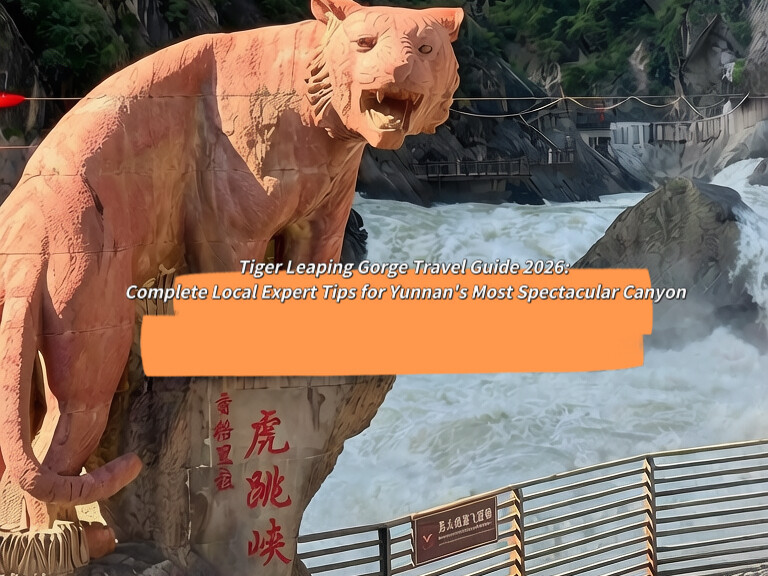
The Upper Gorge is the most accessible and developed section of Tiger Leaping Gorge. This is where you‘ll find the famous Tiger Leaping Rock — a massive boulder in the middle of the river that, according to legend, is where the tiger made its legendary leap.
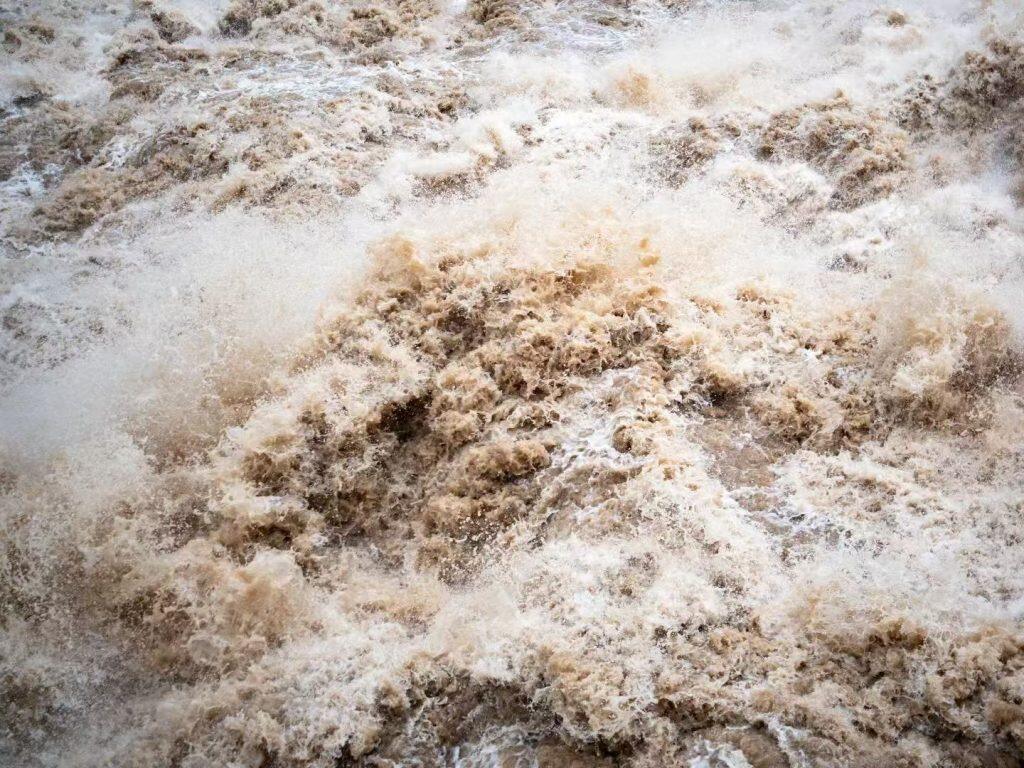
What makes it special: Well-paved plank paths follow the river, allowing you to get close to the roaring rapids without any danger. The sound of the water crashing against the rocks is thunderous — you can barely hear each other talking. The viewing platform offers one of the most dramatic river views you‘ll ever see.
Pro tip: If you don‘t want to walk the 1,000 steps down and back, take the escalator (70 RMB round trip). It saves your legs for the rest of your trip. The Upper Gorge is about 1-2 hours for a visit.
🧗 Middle Gorge – The Adventurer‘s Playground
Best for: Hikers, adventure lovers, and experienced trekkers
The Middle Gorge is the essence of the Tiger Leaping Gorge experience. This is where the canyon narrows dramatically, the river becomes a raging torrent, and the trails become wild and challenging. The Middle Gorge is not fully developed — the trails are maintained by local villagers, adding to the raw, authentic feel.
What makes it special: The Middle Gorge is home to the famous Sky Ladder — a nearly vertical iron ladder bolted into the cliff face. Climbing it is an adrenaline rush like no other. You‘ll also find the “One Line of Sky” (Yixiantian), a narrow passage where the cliffs close in so tightly that only a sliver of sky is visible.
Pro tip: Allow 3-4 hours for the Middle Gorge. There are three downhill routes from the High Trail into the Middle Gorge — Zhang‘s Inn, Tianti Inn, and Yixiantian — which form a perfect loop. Choose based on your fitness level. And bring cash for the village maintenance fee (15-30 RMB).
🌿 Lower Gorge – The Quiet Escape
Best for: Photographers, slow travelers, and those seeking solitude
The Lower Gorge is the least visited section, offering quieter trails and a more peaceful atmosphere. The canyon widens here, and the scenery becomes more serene.
What makes it special: If you‘ve had your fill of crowds and want to experience the gorge in solitude, the Lower Gorge is your answer. It‘s deeper into the canyon and offers a different perspective on the landscape.
Pro tip: Most travelers skip the Lower Gorge because the scenery is less dramatic than the Upper and Middle sections. Only visit if you have extra time and want a quieter experience.
🥾 The High Trail – One of the World‘s Great Treks
The High Trail is what puts Tiger Leaping Gorge on the global trekking map. It‘s known as one of the “world‘s top 10 classic hiking routes”. The trail winds along the mountainside of Haba Snow Mountain, offering jaw-dropping views of the river below and the snow peaks above.
Route Overview:
- Total distance: ~26 kilometers
- Duration: 2 days (or 1 day for the “Tiger Loop”)
- Highest point: ~2,700 meters — altitude sickness is not a concern
- Trail direction: From Qiaotou (north of Lijiang) to Tina‘s Guesthouse (Middle Gorge)
📍 Sample 2-Day Itinerary:
Day 1:
- 09:00 – Depart Lijiang by bus (50 RMB)
- 10:30 – Arrive at Qiaotou, take a minivan (30 RMB) to Naxi Family Guesthouse
- 11:00 – Start hiking! The famous 28 Bends come first — a steep, switchback climb that will test your legs
- Afternoon – Pass Tea Horse Guesthouse, continue to Halfway Guesthouse for overnight stay
Day 2:
- Morning – Hike from Halfway Guesthouse to Middle Gorge
- Optional – Descend into the Middle Gorge for the Sky Ladder and One Line of Sky (3-4 hours round trip)
- Afternoon – Arrive at Tina‘s Guesthouse, take a bus back to Lijiang or on to Shangri-La
Pro tip: The trail faces south, so hikers get sunlight even in the deep gorge. The best views are in the morning when the light hits the snow-capped peaks.
🚗 How to Get to Tiger Leaping Gorge 2026
🚌 By Bus (Most Common):
- From Lijiang Bus Station or Express Bus Station, take a bus to Qiaotou (the gateway town)
- Cost: 20–50 RMB
- Departures: usually mornings around 8:00-9:00 AM
- Alternative: Book a bus via the WeChat mini-program
🚗 By Shared Minivan / Private Car (Recommended for flexibility):
- From Lijiang Old Town, shared minivans cost 50-120 RMB per person
- Travel time: 1.5-2 hours
- Best drop-off: Qiaotou / scenic area entrance
🚙 Self-Driving:
- Navigate to Tiger Leaping Gorge Scenic Area — the roads are a mix of highway and mountain roads
- From Lijiang: about 1.5-2 hours
- Parking available at the Upper Gorge visitor center
🚍 From Shangri-La:
- Tiger Leaping Gorge is about 80-100 km south of Shangri-La city
- Buses and private cars are available
💡 Local Expert Tips for Tiger Leaping Gorge 2026
- Don’t buy oxygen at the entrance — the altitude is only about 1,800-2,700 meters, so you won‘t need it
- Bring cash — the Middle Gorge village fee (15-30 RMB) requires cash, and signal is poor
- Don‘t wear white shoes — the red soil of the canyon will stain them permanently
- Wear non-slip hiking shoes — the trails can be slippery, especially after rain
- Dress in layers — the temperature drops significantly in the evening
- Bring sunscreen and a hat — the UV at this altitude is intense
- The best months for hiking are April-June and September-November
- The rainy season (July-August) brings the most powerful river flow, but trails can be slippery and landslides are possible
- Tuesday and Thursday have the fewest tourists
- Beware of “free photo” scams — they offer a small free photo, then charge for larger prints
❓ FAQ – Tiger Leaping Gorge Trip 2026
Q: Is Tiger Leaping Gorge suitable for someone who doesn‘t hike?
A: Absolutely — and I say this as someone who has brought hundreds of visitors here. The Upper Gorge is specifically designed for casual visitors. It has well-paved plank paths that follow the river, allowing you to experience the canyon‘s power without any strenuous hiking. You can walk down to the viewing platform in about 20 minutes, or take the escalator (70 RMB) if you want to save your legs. The entire Upper Gorge visit takes about 1-2 hours. So even if you‘re not a hiker, you can still experience one of the world‘s most spectacular canyons. Just stick to the Upper Gorge and you‘ll have an unforgettable experience.
Q: Can I do the Tiger Leaping Gorge hike in one day?
A: Yes — and it‘s becoming increasingly popular. The “Tiger Loop” is a one-day trek that covers the best parts of the High Trail. Start from Tea Horse Guesthouse (not the official entrance), hike the 28 Bends and the High Trail, and finish at Tina‘s Guesthouse in the Middle Gorge. It‘s a long day — about 6-8 hours of hiking — but it‘s achievable for anyone with reasonable fitness. The advantage is that you don‘t need to carry overnight gear. However, I recommend the 2-day hike if you have the time — it allows you to stay at Halfway Guesthouse, watch the sunset from the “Awesome Balcony,” and truly soak in the experience without rushing.
Q: What‘s the best time of year to visit Tiger Leaping Gorge?
A: This depends on what you want to experience. For hiking, the best months are April-June and September-November. Spring brings blooming wildflowers and moderate temperatures (13-20°C), while autumn offers golden foliage and exceptional visibility. For the most powerful river views, visit during the rainy season (July-August) when the water is at its fullest and most dramatic. However, trails can be slippery and landslides are possible. For fewer crowds and peaceful trails, consider November — the water isn‘t as roaring, but the trails are quiet and the views are still stunning.
Q: How do I get from Lijiang to Tiger Leaping Gorge?
A: The most common way is by bus or shared minivan from Lijiang. Buses depart from Lijiang Bus Station in the morning (around 8:00-9:00 AM) and cost 20-50 RMB. Shared minivans from Lijiang Old Town cost 50-120 RMB per person and are more flexible. The journey takes about 1.5-2 hours. If you‘re doing the High Trail hike, get off at Qiaotou (the gateway town). If you‘re visiting the Upper Gorge only, the bus can drop you directly at the scenic area entrance. Private cars and taxis are also available if you prefer more comfort and flexibility.
Tiger Leaping Gorge is more than just a tourist destination — it is a place of raw, untamed beauty that humbles everyone who visits. For millennia, the Jinsha River has carved its way through these mountains, creating one of the most spectacular canyons on Earth. Standing at the edge, watching the water roar through the narrow gorge, you feel the power of nature in a way that few places can match.
I have watched travelers arrive tired from the chaos of city life and leave with a renewed sense of peace and perspective. The Naxi people who call this region home have lived in harmony with these mountains for centuries, and their culture adds a warmth and richness to the experience that goes beyond the scenery.
I sincerely invite you to come to Yunnan and experience Tiger Leaping Gorge in 2026. Walk the High Trail, feel the spray of the Jinsha River on your face, watch the sunset paint the snow-capped peaks in shades of gold, and let the raw power of this canyon remind you of the beauty and grandeur of the natural world. This is a place that will stay with you long after you leave — I promise you that.
If you need any local advice — where to find the best Naxi food, how to navigate the trail, or which viewpoint offers the most dramatic sunrise — just ask. I am always happy to share my home with you. Safe travels, and I hope to see you in the gorge.

Mike Wang
Mike Wang is a 40-something Chinese travel expert, has explored the world,
hosting numerous foreign visitors. He’s deeply interested in and knowledgeable
about ancient cultural architectures, enriching journeys with his insights.
Essential China Attractions
Zhangjiajie Travel Guide 2026: Complete Guide to China’s Most Spectacular Natural Wonder
Jiuzhaigou Travel Guide 2026: Complete Guide to China’s Fairyland
Huangshan Travel Guide 2026: Yellow Mountain Complete Guide
Yangshuo Guangxi 2026 | Karst Mountains & Li River Paradise
Potala Palace Travel Guide 2026: Lhasa’s Iconic Tibet Landmark & Top Attractions
Suzhou Classical Gardens 2026 | UNESCO World Heritage Guide
Dunhuang Mogao Caves Travel Guide 2026: Complete Visitor’s Manual
Zhangye Danxia Travel Guide 2026 | China’s Rainbow Hills
Lijiang Ancient Town 2026 | UNESCO Naxi Cultural Gem Guide
Qinghai Lake Travel Guide 2026: China’s Largest Salt Lake – Complete Local Tips
Xishuangbanna Travel Guide 2026 | Borderland Tropical Paradise China Summer Escape Pick
2026 Wuzhen Trip – East & West Gate Iconic Yangtze Delta China Attraction
2026 Shaolin Temple Trip – World-Famous Zen Temple Top China Attraction
Hukou Waterfall Travel Guide 2026 | Yellow River’s Grand Roaring Falls Guide
Changbai Mountain Tianchi Travel Guide2026 | China’s Volcanic Alpine Lake Guide
Danxiashan Travel Guide 2026 | China’s Colorful Danxia Landform Gem Guide
Fujian Tulou Travel Guide 2026 | UNESCO Ancient Hakka Earthen Building Guide
Popular City Travel Guides
Beijing Travel Guide Shanghai Travel Guide Hangzhou Travel Guide Sanya Travel Guide Chongqing Travel Guide
Nanjing Travel Guide Guangzhou Travel Guide ChengduTravel Guide Hongkong Travel Guide Xi’an Travel Guide