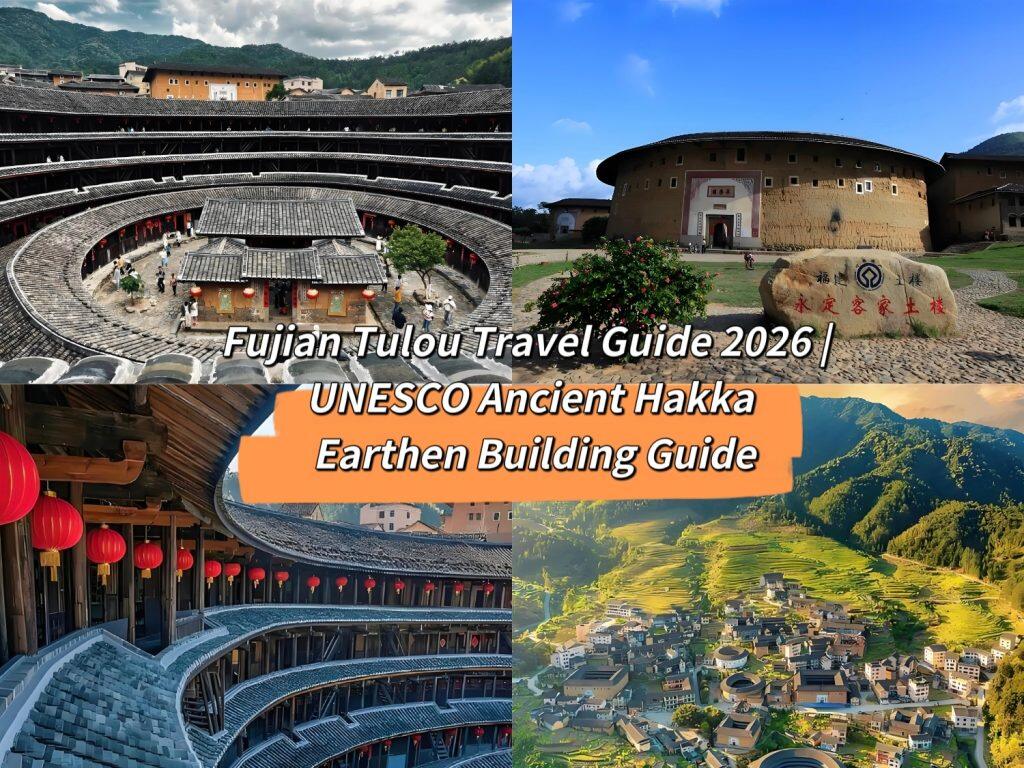
Hello, I’m Lila Jiang, a China travel expert with over 10 years of experience exploring every corner of this magnificent country. If there’s one destination that still takes my breath away no matter how many times I visit, it’s Fujian Tulou. Let me paint the picture for you: imagine earthen castle-like round and square fortresses scattered amid misty green mountain valleys, layered wooden balconies strung with crimson red lanterns, ancient cobblestone lanes winding around rammed-earth walls that have stood for centuries. At dawn, thin mountain fog wraps clusters of tulou amid rice paddies and bamboo groves; at sunset, warm golden glow paints the thick ochre walls, turning the whole village into an idyllic pastoral scroll. That’s Fujian Tulou .
Fujian Tulou Introduction 2026
Scattered across Yongding District of Longyan City and Nanjing County of Zhangzhou in southern Fujian Province, Fujian Tulou is a UNESCO World Cultural Heritage Site and China’s iconic Hakka vernacular architectural treasure, nicknamed “Oriental Mountain Castles” and once mistaken for mysterious alien UFOs from aerial photos. Dating back to Song and Yuan dynasties and booming through Ming and Qing periods, these giant clustered dwellings were crafted by migrating Hakka ancestors, built with local red soil mixed with sand, glutinous rice syrup and bamboo reinforcement, with thick stone foundation and 1–3 meter sturdy rammed earthen walls, integrating residential, clan gathering and military defense functions all in one building. The heritage scope covers six major tulou clusters and four standalone landmark buildings split into two core visiting zones: Yongding Tulou Area and Nanjing Tulou Area, boasting more than 3,700 preserved ancient tulou across mountain villages.
Whether you’re planning your first China Travel 2026 adventure or returning for another dose of natural beauty and profound folk culture, this Fujian Tulou travel guide 2026 will give you everything you need to plan the perfect trip.
Quick Facts
📍 Location: Core scenic spots in Nanjing County (Zhangzhou) & Yongding District (Longyan), Southern Fujian, China.
🏛️ Established: Inscribed onto UNESCO World Heritage List (2008), China National 5A Tourist Attraction.
📏 Area: Total preserved tulou distribution area over 2,300 square kilometers; core sightseeing zone around 320 sq km.
🏔️ Altitude: Most villages sit between 300–900 meters above sea level amid subtropical mountain terrain.
📅 Peak Season: March–April (rapeseed blossom around villages) & October–November (golden harvest rice fields); Chinese National Day and Spring Festival are tourism rush periods.
💡 Key Tip: Book entrance tickets and mountain village homestays 2–3 weeks ahead during peak dates; prepare extra 2 full days for in-depth cross-area sightseeing.
🌸 Best Time to Visit: Mid-March to early April for floral pastoral scenery; late October to mid-November for golden rice terrace backdrop and soft sunset photography; early morning 7–9 a.m. for mist-shrouded tulou views.
Tickets & Opening Hours
🎫 Tickets & Pricing (2026 Season)
Nanjing and Yongding operate separate scenic ticket systems with independent entry fares for each tulou cluster, no universal cross-district pass available.
▶️ Nanjing Core Scenic Spots
Tianluokeng Tulou Cluster (Four Dishes & One Soup): 90 RMB (~13 USD)
Water Town Yunshuiyao (Yunshuiyao Ancient Village): 90 RMB (~13 USD)
Combined Two-Site Joint Ticket: 100 RMB (~14 USD)
▶️ Yongding Core Scenic Spots
Gaobei Tulou Cluster (King of Tulou – Chengqi Building): 50 RMB (~7 USD)
Hongkeng Tulou Cluster (Prince of Tulou – Zhencheng Building): 90 RMB (~13 USD)
Yongding Two-Site Joint Ticket: 90 RMB (~13 USD)
▶️ Discounts Available
Students (valid student ID): 50% off full entry price
Seniors aged 60–64: Half-price admission; visitors over 65 years old free entry with Chinese ID or foreign passport携程
Children under 6 or shorter than 1.2 meters: Free full entrance ticket
Active military personnel and disabled travelers with official certification: Free park access
⚠️ Important Booking Notes:
- All tickets require real-name online pre-reservation via official Fujian Tulou WeChat mini-program; limited same-day walk-in tickets only available in off-peak weekdays.
- Daily visitor flow is under official cap; tickets sell out rapidly during golden holiday weeks.
- Foreign tourists need original passports for identity check at scenic spot gate.
- Single-site ticket valid only for one-time entry on booked visiting date, no repeated park re-entry permission.
- Core scenic opening hours: 8:00–18:00 daily; homestay tulou villages support night sightseeing after closing time.
Main Scenic Areas & Attractions
Tianluokeng Tulou Cluster (Four Dishes & One Soup)
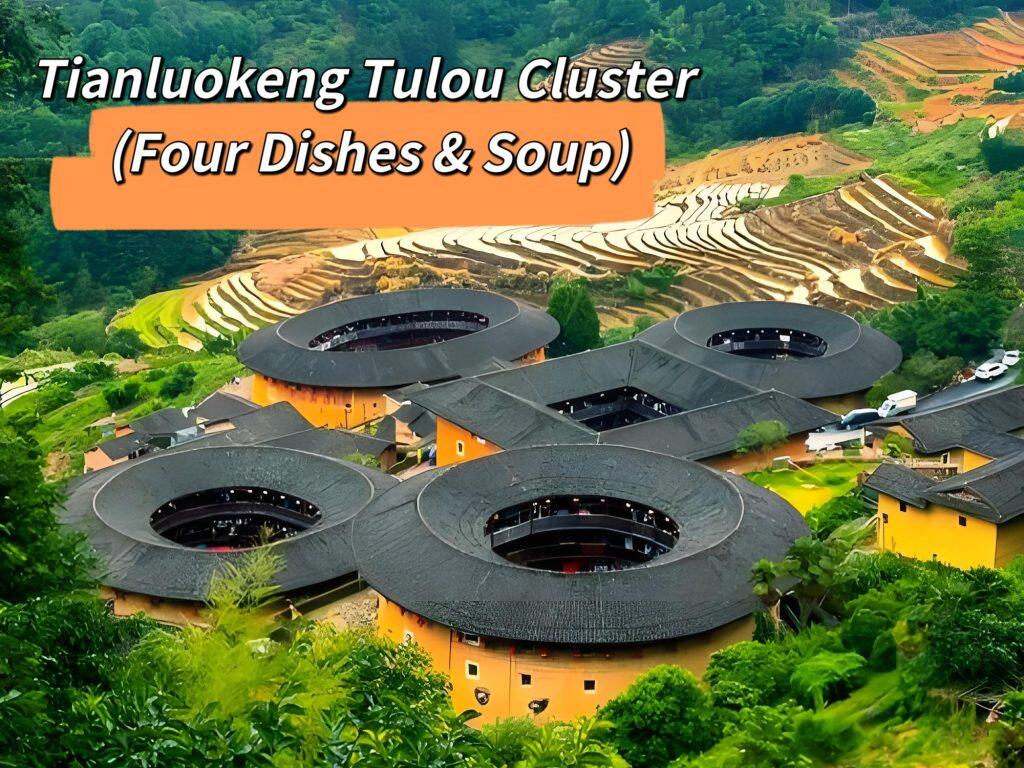
The iconic symbol of Fujian Tulou, consisting of three round buildings, one oval tulou and one square tulou neatly arranged on sloped farmland, looking exactly like a set of table dishes when overlooked from the hilltop viewing platform, hence its vivid local nickname. Built across Ming and Qing dynasties, all five buildings remain inhabited by local Hakka families. Best viewpoint locates on upper mountain observation deck 15 minutes uphill from parking lot; arrive before 9 a.m. to avoid tourist crowds and catch floating valley mist wrapping earthen castles. Set aside 1 hour for full sightseeing.
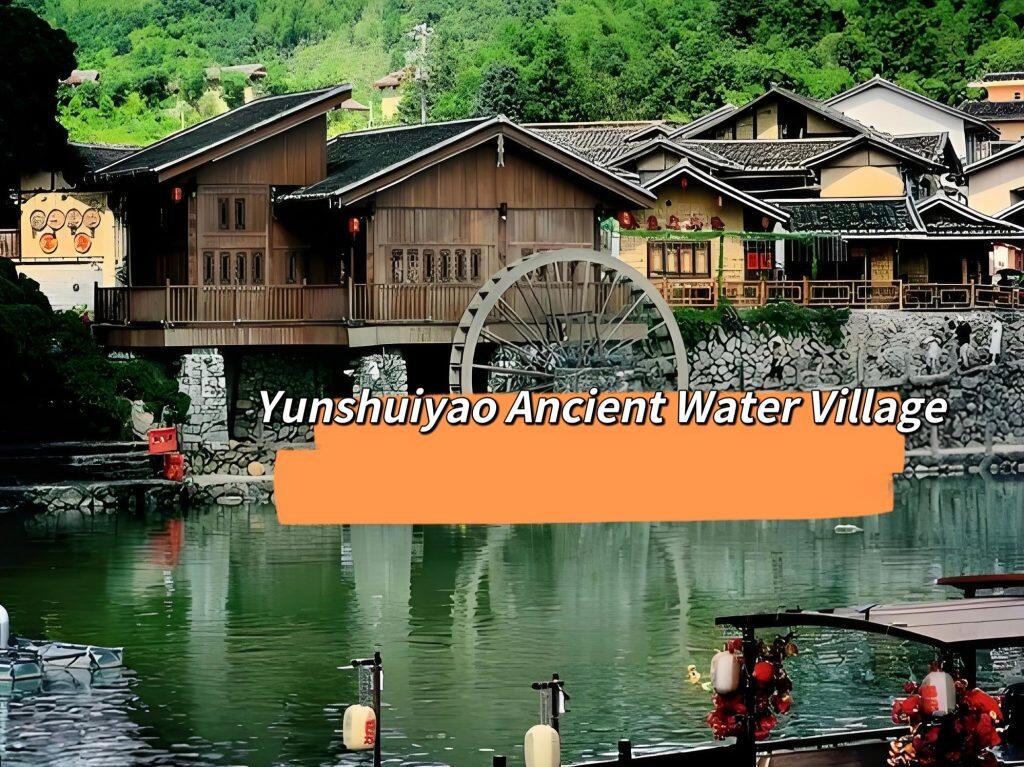
Yunshuiyao Ancient Water Village
A time-honored riverside ancient town blending ancient banyan trees, stone mill waterwheels, limpid brooks and classic tulou landmarks, stretching over 1.5km along mountain stream. Two highlight buildings stand here: Hegui Building, a five-story rectangular tulou miraculously constructed on swamp mud nicknamed “Building Floating on Marshland”; Huairou Building, an exquisitely crafted double-ring round tulou hailed as the finest preserved Hakka earthen fortress in South Fujian. The thousand-year-old stone pedestrian trail shaded by giant banyan canopies is perfect for casual strolling; allocate around 1.5–2 hours for village exploration.
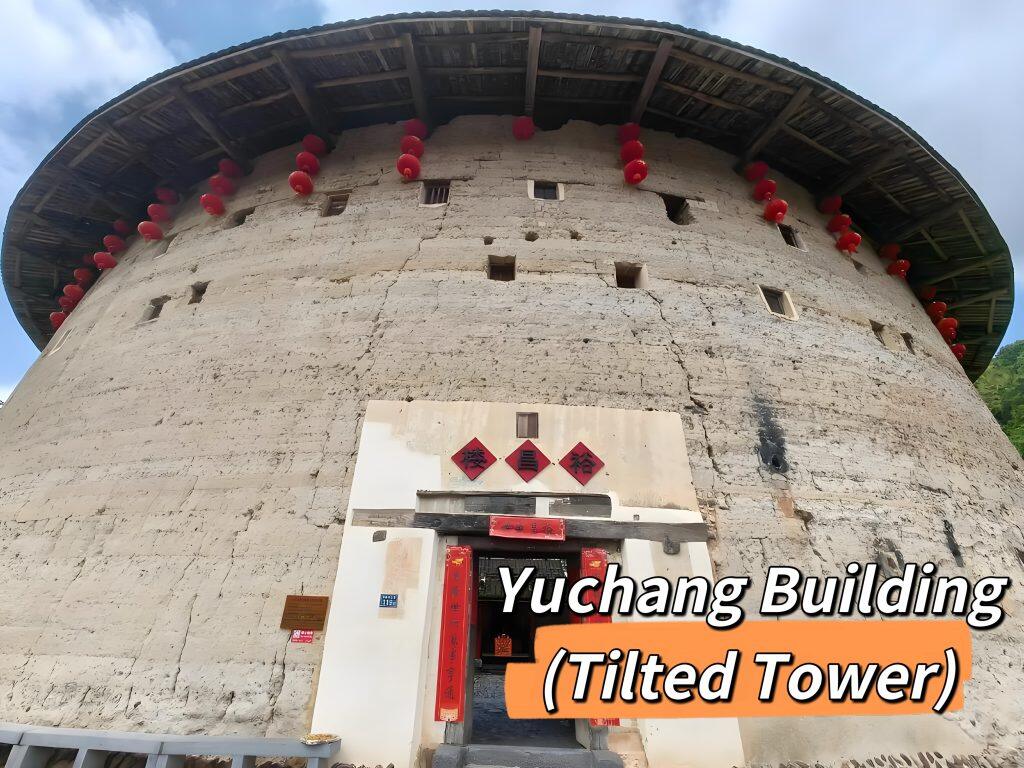
Yuchang Building (Tilted Tower)
Known as “Leaning Tulou”, a late-Ming wooden-structured round building whose inner timber beams slant over 15 degrees yet remain intact for hundreds of years thanks to ingenious ancient architectural mechanics, a rare architectural oddity of Chinese folk construction.
Gaobei Tulou Cluster – Chengqi Building (King of Tulou)
Famous as the largest round tulou in China, built in late Ming Dynasty with four concentric nested rings, over 400 indoor rooms once housing more than 800 clan residents simultaneously. Standing 73 meters in outer diameter, the layered circular corridors and central ancestral courtyard fully display traditional Hakka big-family communal lifestyle. Best visiting window: 10:00–11:30 when sunlight filters through central courtyard onto wooden beams and hanging red lanterns; spend roughly one hour exploring inner floors and listening to local elder’s clan stories.
Hongkeng Tulou Folk Village – Zhencheng Building (Prince of Tulou)
Yongding’s most prestigious landmark tulou, a unique Sino-Western hybrid design round fortress combining traditional Hakka courtyard layout and European arched corridor details, once exhibited alongside Great Wall and Lama Temple in global architecture expo. Within the cluster also lie Fuyu Building (palace-style five-phoenix tulou), Kuiju Building (Tibetan Potala-like hillside square tulou) and Rusheng Building (miniature rice-measure-shaped tiny round tulou), forming a complete tulou type specimen gallery. Multiple daily Hakka folk performances including puppet show and wedding reenactment are staged inside the scenic area; reserve 2 full hours for in-depth visit.
Chuxi Ancient Tulou Village
A well-preserved primitive mountain village dotted with dozens of unspoiled ancient tulou away from mainstream tourist crowds, dominated by Jiqing Building – one of China’s oldest existing round tulou finished in early 15th century with 72 separated indoor staircases. Ideal for travelers chasing authentic undisturbed rural Hakka life.
Transportation
🚆 By High-speed Train
Take high-speed rail from Xiamen North/Shenzhen North Railway Station to Nanjing Railway Station (for Nanjing Tulou) or Longyan/Yongding Station (for Yongding Tulou) respectively. Upon station exit, regular scenic shuttle bus departs every hour for mountain villages, 35–50 RMB per person with about 1-hour drive to core gate; private shared car costs around 50 RMB per passenger, full-day chartered car roughly 300 RMB for small groups. Book train tickets via 12306 APP in advance during spring and autumn travel peaks.
✈️ By Air
Nearest major airport: Xiamen Gaoqi International Airport. After landing, transfer by metro to Xiamen North High-speed Station then take bullet train toward Nanjing/Longyan, total journey around 2.5 hours. No direct airport flights to nearby mountain counties; mountain highways curve sharply, prepare carsickness medicine for winding uphill drive if prone to motion sickness.
🚌 Local Transport Within Scenic Area
Fixed shuttle buses run between separate tulou sites with scheduled departures every 30–60 minutes; Nanjing Yunshuiyao ↔ Tianluokeng through shuttle costs 30 RMB one way, Yongding Hongkeng ↔ Gaobei connecting bus around 20 RMB per passenger. Private vehicles are prohibited from entering inner ancient village core zones; rent electric village cart for short-distance transfer inside towns at extra cost.
Experience & Activities
🧗 Hiking & Trekking
Casual visitors wander paved stone lanes inside ancient villages and tulou courtyards; outdoor lovers can pick the inter-village mountain footpath linking Yunshuiyao and Tianluokeng for a moderate 3-hour woodland trek across bamboo forest and rice paddies with scattered tulou panoramas all along the route. Off-trail trespassing onto crop fields and private clan yards is strictly forbidden.
📷 Photography
Spring features rapeseed flowers surrounding ochre earthen walls; autumn frames golden rice fields against layered round tulou silhouettes; night scene highlights warm lantern lights glowing inside circular wooden corridors. Dawn mist over valley tulou ranks as top-tier shooting theme; drone flight requires official scenic permit and is banned above ancient residential buildings.
🍵 Hakka Folk Experience
Join in hands-on local activities: DIY glutinous rice cake pounding, bamboo basket weaving, Hakka folk ballad singing and authentic Leicha tea grinding inside resident-owned tulou homestays; seasonal bonfire night and simulated ancient Hakka wedding shows are available at Hongkeng Village every weekend. Taste signature local dishes: stuffed tofu, taro buns and free-range field chicken stew at mountain farm restaurants.
Practical Tips & Etiquette
🔹 Climate Prep: Southern Fujian stays humid and warm year-round; summer (June–August) has frequent sudden mountain showers and strong UV radiation, carry lightweight raincoat, sun cream and sun hat; spring and autumn have big day-night temperature gap, add thin windproof outerwear for early morning hill climbing.
🔹 Footwear Choice: Massive uneven ancient stone paths and uphill country lanes spread across all villages, wear anti-slip comfortable walking sneakers; high heels and slippers are not suitable for long walking.
🔹 Supply Reminder: Catering choices inside core scenic villages are limited with higher pricing; stock bottled water and energy snacks in county downtown before heading into mountain areas.
🔹 Cultural & Heritage Protection: Do not scratch or carve marks onto ancient rammed earthen walls and wooden pillars; avoid disturbing daily life of permanent tulou residents, never step into private living rooms without owners’ permission. Centuries-old earthen architecture is extremely fragile to man-made damage, rule violators face administrative fines.
🔹 Payment & Signal: Most village homestays and restaurants accept Alipay & WeChat Pay; prepare small cash for remote roadside snack stalls and elder-run family shops. Mobile signal weakens on remote mountain hiking trails, download offline maps beforehand.
🔹 Accommodation Tip: Arrange overnight stay inside tulou homestays for authentic night scenery and early-morning mist viewing instead of day trip from Xiamen; homestay rooms get fully booked one month ahead during spring blossom and autumn harvest peak travel periods.
🔹 Photograph Etiquette: Always politely ask for consent before taking portrait photos of local elderly Hakka villagers and residents living inside ancient tulou out of respect for local folk customs.
Fujian Tulou is far more than an exotic architectural sightseeing spot; it is a living carrier of thousand-year Hakka migration history, clan culture and extraordinary Chinese ancient construction wisdom. After two decades leading global travelers around China, I still feel mesmerized whenever I catch sight of clustered round earthen castles emerging from green misty mountain valleys at sunrise. Whether you chase blooming spring countryside landscapes, harvest golden autumn pastoral views or immersive authentic Hakka rural life, Fujian Tulou delivers a unique cultural journey unmatched anywhere else on earth.
Plan well, arrive early to beat daytime crowds and capture precious morning fog moments, and let the timeless rustic charm of Hakka earthen castles settle deeply into your travel memories. Safe travels, and enjoy your China Travel 2026 adventure! 🏯🏮

Lila Jiang
She is Lila Jiang, a 28-year-old girl.
With over 10 years in the travel industry, she’s chased wanderlust near and far;
what she loves most is diving into local cultures,
finding hidden gems, and connecting with people who bring journeys to life.
Essential China Attractions
Zhangjiajie Travel Guide 2026: Complete Guide to China’s Most Spectacular Natural Wonder
Jiuzhaigou Travel Guide 2026: Complete Guide to China’s Fairyland
Huangshan Travel Guide 2026: Yellow Mountain Complete Guide
Yangshuo Guangxi 2026 | Karst Mountains & Li River Paradise
Potala Palace Travel Guide 2026: Lhasa’s Iconic Tibet Landmark & Top Attractions
Suzhou Classical Gardens 2026 | UNESCO World Heritage Guide
Dunhuang Mogao Caves Travel Guide 2026: Complete Visitor’s Manual
Zhangye Danxia Travel Guide 2026 | China’s Rainbow Hills
Lijiang Ancient Town 2026 | UNESCO Naxi Cultural Gem Guide
Qinghai Lake Travel Guide 2026: China’s Largest Salt Lake – Complete Local Tips
Xishuangbanna Travel Guide 2026 | Borderland Tropical Paradise China Summer Escape Pick
2026 Wuzhen Trip – East & West Gate Iconic Yangtze Delta China Attraction
2026 Shaolin Temple Trip – World-Famous Zen Temple Top China Attraction
Hukou Waterfall Travel Guide 2026 | Yellow River’s Grand Roaring Falls Guide
Changbai Mountain Tianchi Travel Guide2026 | China’s Volcanic Alpine Lake Guide
Danxiashan Travel Guide 2026 | China’s Colorful Danxia Landform Gem Guide
Fujian Tulou Travel Guide 2026 | UNESCO Ancient Hakka Earthen Building Guide
Popular City Travel Guides
Beijing Travel Guide Shanghai Travel Guide Hangzhou Travel Guide Sanya Travel Guide Chongqing Travel Guide
Nanjing Travel Guide Guangzhou Travel Guide ChengduTravel Guide Hongkong Travel Guide Xi’an Travel Guide