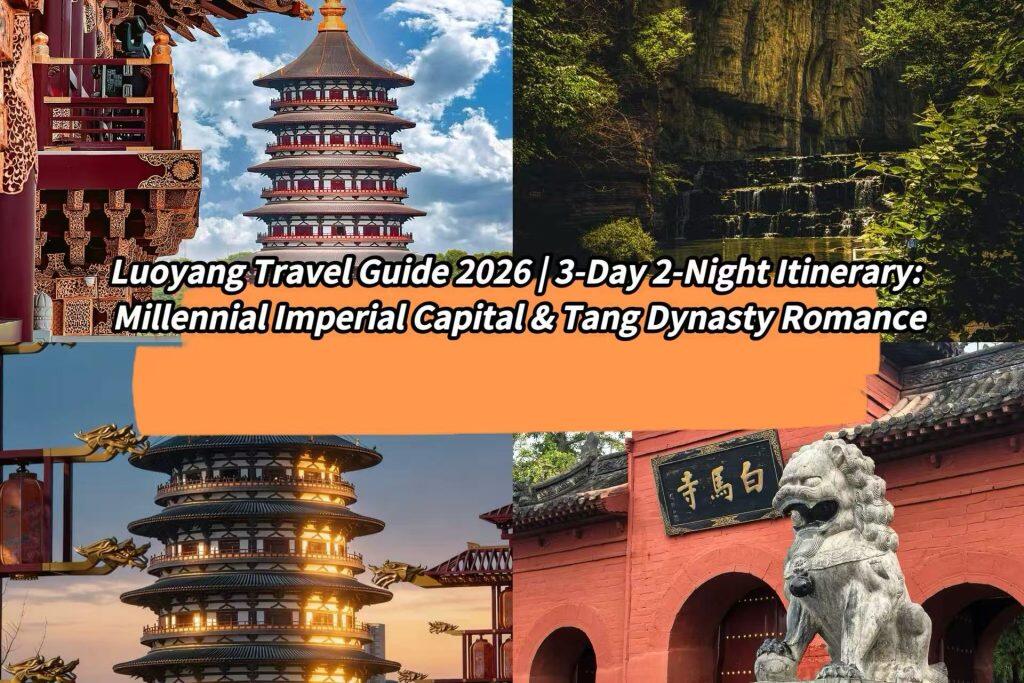
Hey everyone, Mia Chen here — your dedicated China travel insider. Most Chinese cities shine with modern vitality, but Luoyang is different. It is less a tourist destination, more a living museum of Chinese civilization. I used to wonder where the glory of the Tang Dynasty had gone. It was not until I wandered the quiet corridors of White Horse Temple, admired the timeless Buddhist carvings at Longmen Grottoes, and walked through lantern-lit Tang-city streets that I found the answer. The grandest chapters of ancient China are still breathing right here.
I’ve traveled widely across China, yet Luoyang always feels uniquely touching. It boasts no noisy commercial glamour, only millennium-old imperial heritage, elegant peony culture and simple Central Plains warmth. It speaks slowly, letting every brick, river and relic tell its profound story.
Let me guide you through a delicate 3-day 2-night Luoyang tour, and experience the true charm of China’s ancient imperial capital — where history is not just viewed, but truly felt.
About Luoyang: An Ancient Imperial Capital of 13 Dynasties
Luoyang, hailed as the ancient capital of 13 dynasties and a cradle of Chinese civilization, stands out from ordinary Chinese tourist cities with its unparalleled millennium-old cultural heritage. Unlike trendy urban travel destinations, it preserves authentic imperial relics, ancient Buddhist art masterpieces, and traditional Central Plains folk culture. This tailor-made 3-day 2-night guide focuses on foreign travelers’ core demands:in-depth cultural exploration, hassle-free transportation, authentic local catering, practical accommodation, and exclusive overseas tourist tips, helping you avoid superficial sightseeing and immerse yourself in Luoyang’s unique historical charm.
Pre-Travel Preparation (Overseas Traveler Exclusive)
Documents, Visa & Entry Rules
All foreign visitors must hold a valid passport and a legitimate Chinese visa; travelers from visa-exempt countries need to strictly comply with China’s stay duration regulations. Since all Luoyang scenic spots, hotels and cultural venues implement real-name verification, it is strongly recommended to carry a physical copy of your passport and visa separately from the original for emergency use. No additional special travel permits are required for all urban cultural attractions in Luoyang, which greatly simplifies the travel process for overseas tourists.
Network & Payment Adaptation
Cash is rarely accepted in Luoyang, as WeChat Pay and Alipay dominate daily consumption across restaurants, shops and scenic areas. Foreign travelers can bind international credit cards to these two mobile payment platforms in advance to solve payment barriers. For stable network access essential for navigation, ticket booking and real-time translation, purchase a local Chinese SIM card or portable WiFi device upon arrival. Most local small stalls and family-run restaurants have no English support, so downloading offline Chinese-English translation software is a necessary preparation for smooth travel and communication.
Cultural & Travel Reminders
Unlike ordinary recreational tourist destinations, Luoyang’s core attractions are precious historical and cultural relics, requiring standardized visiting etiquette. Tourists are prohibited from touching ancient grotto carvings, making loud noises in Buddhist temples, and conducting unauthorized photography or video recording in key cultural protection areas. The most comfortable and worthwhile travel windows are April to May, when the city is covered in blooming peonies (Luoyang’s city flower and cultural symbol), and October to November, featuring cool, pleasant weather and fewer crowds for in-depth cultural sightseeing.
3-Day 2-Night In-Depth Cultural Itinerary
This 3-day 2-night itinerary is tailor-made for foreign cultural tourists, abandoning superficial check-in-style sightseeing. The compact, crowd-avoiding route covers Luoyang’s three core cultural IPs: Tang imperial civilization, UNESCO world heritage grotto art, and the origin of Chinese Buddhism, allowing overseas travelers to systematically and deeply perceive the charm of China’s ancient capital.
Day 1: Arrival + Sui-Tang Imperial Culture Exploration
Arrival & Check-in
Arrive at Luoyang Longmen High-speed Railway Station or Luoyang Railway Station. Metro Line 2 and official taxis support English place name navigation, making it easy for foreign travelers to reach hotels in the Luoyi Ancient City area. After check-in, take a short rest to adapt to the local environment and prepare for afternoon cultural sightseeing.
Sui-Tang Paradise & Mingtang Scenic Area
As the core imperial relic complex of Wu Zetian’s reign in the prosperous Tang Dynasty, Sui-Tang Paradise and Mingtang Scenic Area perfectly reproduce the grand imperial architecture, ritual systems and royal living scenes of ancient Luoyang. The scenic area regularly holds traditional Tang Dynasty costume performances and ritual shows. Complete English introduction boards are installed in each exhibition area, helping foreign tourists fully understand the historical background and artistic value of Tang imperial culture.
Luoyi Ancient City Night Tour & Snack Tasting
Luoyi Ancient City restores the street pattern and architectural style of ancient Luoyang. At night, the whole ancient city is lit up with traditional lanterns, paired with folk music and intangible cultural heritage performances, creating an immersive ancient capital night scene. Strolling along the ancient streets and tasting local snacks allows travelers to experience the integration of history, humanity and local life intuitively.

Day 2: World Heritage Grottoes + Ancient Buddhist Culture
Longmen Grottoes (World Cultural Heritage)
Longmen Grottoes, a UNESCO World Heritage Site and one of China’s three most famous grotto groups, represents the pinnacle of ancient Chinese Buddhist stone carving art. The grottoes were built across the Northern Wei Dynasty to the Tang Dynasty, with a spanning history of over 400 years. The iconic Vairocana Buddha features grand and exquisite carving, embodying the open and prosperous artistic aesthetics of the Tang Dynasty. It is recommended to visit in the early morning to avoid crowds and rent an English audio guide to learn detailed historical and artistic knowledge (ticket fee: 90 RMB, suggested visiting duration: 3 hours).
White Horse Temple
Known as the earliest official Buddhist temple in China, White Horse Temple has a 2,000-year history and is the birthplace of Chinese Buddhism. Different from most traditional Chinese temples with a single architectural style, it integrates Chinese, Indian, Thai and Burmese Buddhist buildings, forming a unique cross-cultural religious landscape. The quiet and solemn temple environment enables foreign travelers to deeply understand the spread and integration of Eastern Buddhist culture (ticket fee: 35 RMB, suggested visiting duration: 2 hours).
Xigong Snack Street Food Tour
Xigong Snack Street is a local old night market with strong grassroots vitality. Gather here to taste authentic potstickers, handmade noodles and other characteristic snacks, experience the lively night market culture of Luoyang, and integrate into the daily life of local residents.

Day 3: Museum Civilization Interpretation & Departure
Luoyang Museum
Luoyang Museum is a national first-class museum and the core window to interpret Luoyang’s 5,000-year civilization history. The museum collects a large number of precious cultural relics from 13 dynasties, including exquisite bronze wares, colorful Tang tri-color pottery, and peony-themed cultural artifacts. All exhibition halls are equipped with standard English introduction plates and paid English audio guides, helping overseas tourists systematically sort out the historical context of the Central Plains civilization. The museum is free to visit, but advance online reservation with a passport is mandatory.
Taste authentic Luoyang Water Banquet
Arrange a meal at a local time-honored restaurant to enjoy the authentic Luoyang Water Banquet. This imperial-style feast perfectly combines delicious food and traditional culture, serving as a perfect ending to the in-depth cultural tour.
Departure
After packing up luggage, take metro Line 2 or a formal online car-hailing/taxi to Luoyang Longmen High-speed Railway Station or Beijiao Airport for departure, with smooth and convenient whole-journey transportation.

Recommended Accommodation Areas & Hotels
We have carefully screened two foreigner-friendly accommodation areas with safe environments, complete English services and convenient transportation, covering high-end and cost-effective options. All recommended hotels avoid remote locations and low-quality homestays, fully matching the travel needs of overseas cultural tourists and ensuring a comfortable and hassle-free stay experience.
Yingtian Gate & Luoyi Ancient City Area (First Choice for Cultural Travelers)
As the core cultural and tourist hub of Luoyang, this area is densely packed with Sui and Tang Dynasty imperial relics, boasting stunning night scenery and concentrated catering and leisure resources. Major urban scenic spots are within walking distance, effectively saving commuting time. Most hotels here provide professional English reception, 24-hour front desk service and international currency payment support, which is the top choice for foreign travelers focusing on cultural exploration.
High-end Option: Huayang International Hotel (5-star) – A premium hotel with complete supporting facilities, providing free high-speed rail transfer, professional laundry service and exclusive English travel consultation. It is ideal for travelers pursuing high-quality accommodation and convenient travel arrangements.
Cost-Effective Option: Boutique Hotels near Luoyi Ancient City – Safe, clean and affordably priced at 150-300 RMB per night. Closely adjacent to local snack streets and scenic spots, these hotels are perfect for backpackers and budget-friendly cultural tourists.
Luolong District (Quiet & Scenic)
Luolong District is located close to Longmen Grottoes and Sui-Tang Botanical Garden, featuring brand-new hotel facilities and a quiet, comfortable travel environment. It is highly suitable for family travelers and tourists who prioritize exploring grotto Buddhist culture. The district has complete commercial supporting facilities, and direct metro access to the urban core area, balancing tranquility and travel convenience.
Authentic Local Catering Guide (Foreign Traveler Friendly)
This catering guide abandons overpriced, commercialized tourist restaurants and focuses on authentic, culturally themed Luoyang delicacies and time-honored local stores. All recommended dishes feature mild, international-friendly flavors, allowing foreign travelers to taste local food while experiencing the profound Central Plains dietary culture behind each dish.
Must-Try Local Signature Dishes
Luoyang Water Banquet – A national intangible cultural heritage and the most representative imperial cuisine of Luoyang, with a history spanning over 1,000 years. Composed of 24 soup-based dishes served in continuous flowing order, it inherits the exclusive dining etiquette and culinary culture of the Sui and Tang royal courts. The signature Peony Jelly, shaped like Luoyang’s iconic peony, integrates local flower culture into cuisine. All dishes taste fresh and mild with no spicy flavor, perfectly adapting to foreign taste buds.
Xiaojie Potstickers – A classic folk street food popular among local residents for decades. With crispy golden skin and juicy savory filling, it is affordable, delicious and a must-try snack to experience Luoyang’s grassroots food culture.
Bufan Tang Soup – A traditional Central Plains soup with rich, balanced ingredients and a mellow taste. It reflects the simple, down-to-earth dietary customs of local people and is a typical daily staple for Luoyang locals.
Recommended Authentic Restaurants
Xiaojie Tianfu – A 24-hour local time-honored store gathering all classic Luoyang snacks. It features transparent pricing and simple English menu labels, completely avoiding tourist traps, and is always crowded with local diners.
Zhen Butong Water Banquet Restaurant – The most authoritative old brand for authentic Luoyang Water Banquet. It maintains standardized traditional cooking techniques, and staff can briefly introduce the historical and cultural origin of each dish in simple English, bringing a dual experience of food and culture.
Practical Tip: Restaurants inside scenic spots are usually overpriced with ordinary taste. For authentic local food, walk 2 to 3 blocks to urban snack streets and local old stores for better cost performance and genuine flavor.
Full-Route Transportation Guide
This transportation guide integrates all practical travel methods for foreign tourists, sorting out safe, convenient and English-friendly commuting solutions for urban travel, scenic spot transfers and arrival & departure, eliminating complicated and unreliable travel options.
City Public Transportation
Luoyang Metro is the most recommended travel tool for foreign tourists. All metro lines covering core scenic spots are equipped with full English interface and real-time English voice broadcast. Metro Line 2 runs through railway stations, high-speed railway stations, Luoyi Ancient City and other key areas, with stable operation and clear route guidance. Ordinary city buses lack sufficient English prompts and complex route identification, so they are not recommended for overseas visitors unfamiliar with the city.
Scenic Spot Commuting Transportation
Urban Core Scenic Spots (Mingtang, Luoyi Ancient City): These scenic spots are densely distributed within the urban area. Walking or riding shared electric vehicles is the most flexible and time-saving option, with low cost and convenient parking.
Suburban Cultural Scenic Spots (Longmen Grottoes, White Horse Temple): Priority should be given to official taxis and regular online car-hailing services, which support English positioning and standardized charging. It is strictly forbidden to take unlicensed private cars soliciting passengers at scenic spot entrances to avoid overcharging and travel fraud risks.
Arrival & Departure Transportation
Luoyang’s airport, railway station and high-speed railway station are all connected by metro lines. Official vehicles at all transportation hubs implement unified standardized charging standards with no arbitrary charges, which is highly friendly to foreign tourists without local travel experience.
Exclusive Tips for Foreign Travelers
Ticket Reservation Rules
All cultural scenic spots and public museums in Luoyang implement real-name ticket reservation systems. Foreign travelers can complete ticket booking via official tourist platforms with valid passports. Luoyang Museum and other free public cultural venues have daily visitor limits, so it is necessary to make reservations 1 to 3 days in advance. All scenic spot ticket prices are uniformly fixed with no bargaining space.
Language Communication Tips
Complete English service is available in star-rated hotels, scenic spot service centers and large time-honored restaurants. However, community small shops, snack stalls and local grocery stores generally have no English communication support. It is suggested to store the accurate English names and addresses of scenic spots, hotels and restaurants in your mobile phone in advance, and use real-time translation software for daily communication.
Cultural Experience Highlights (Unique Value)
The biggest unique travel value of Luoyang lies in its authentic millennium-old Chinese imperial civilization, which is completely different from the trendy commercial travel experience of modern Chinese cities. Foreign travelers can enjoy exclusive cultural experiences here, including watching professional Tang Dynasty court costume shows, trying traditional Hanfu dressing, and appreciating the perfect integration of ancient grotto art and Buddhist culture. These in-depth cultural experiences allow overseas visitors to truly understand the inheritance and charm of Central Plains civilization.
Safety & Emergency Tips
Luoyang is one of the safest tourist cities in central China with a stable public security environment. China’s emergency numbers 110 (police) and 120 (ambulance) support basic English emergency services. It is recommended to save your hotel’s detailed address and emergency contact information locally on your mobile phone. Avoid solo travel in remote suburban areas and unlit country roads at night to ensure travel safety.

Mia Chen
Mia Chen is a 30‑year‑old tour guide.She has explored Luoyang thoroughly
and hosted many international visitors. She is passionate and knowledgeable
about grotto art, Tang‑Dynasty imperial heritage and local culinary traditions,
including sampling the authentic Luoyang Water Banquet. She enriches every
tour with her down‑to‑earth, firsthand insights.