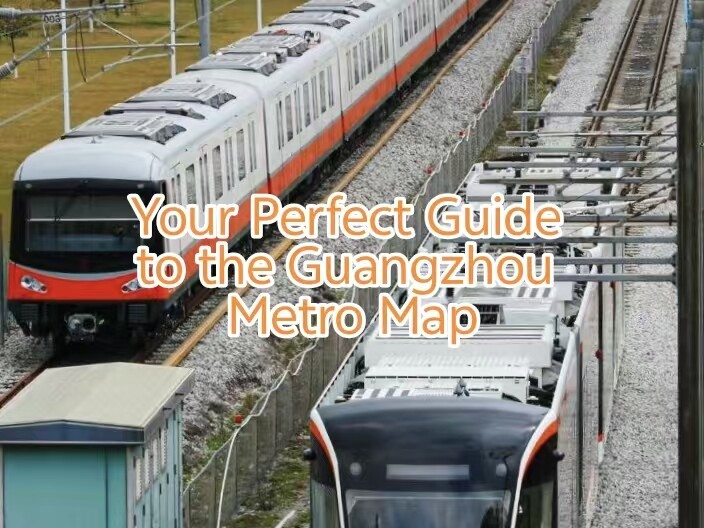
Hi, I’m Lila Jiang, a China travel professional with over 5 years of experience. During these five years, I’ve traveled extensively around China.Meanwhile, I have a certain understanding of the subway transportation in various cities.Guangzhou’s metro system, one of the most efficient and extensive in South China, is more than just a convenient mode of transportation—it’s the key to unlocking the city’s unique charm and rich culture.
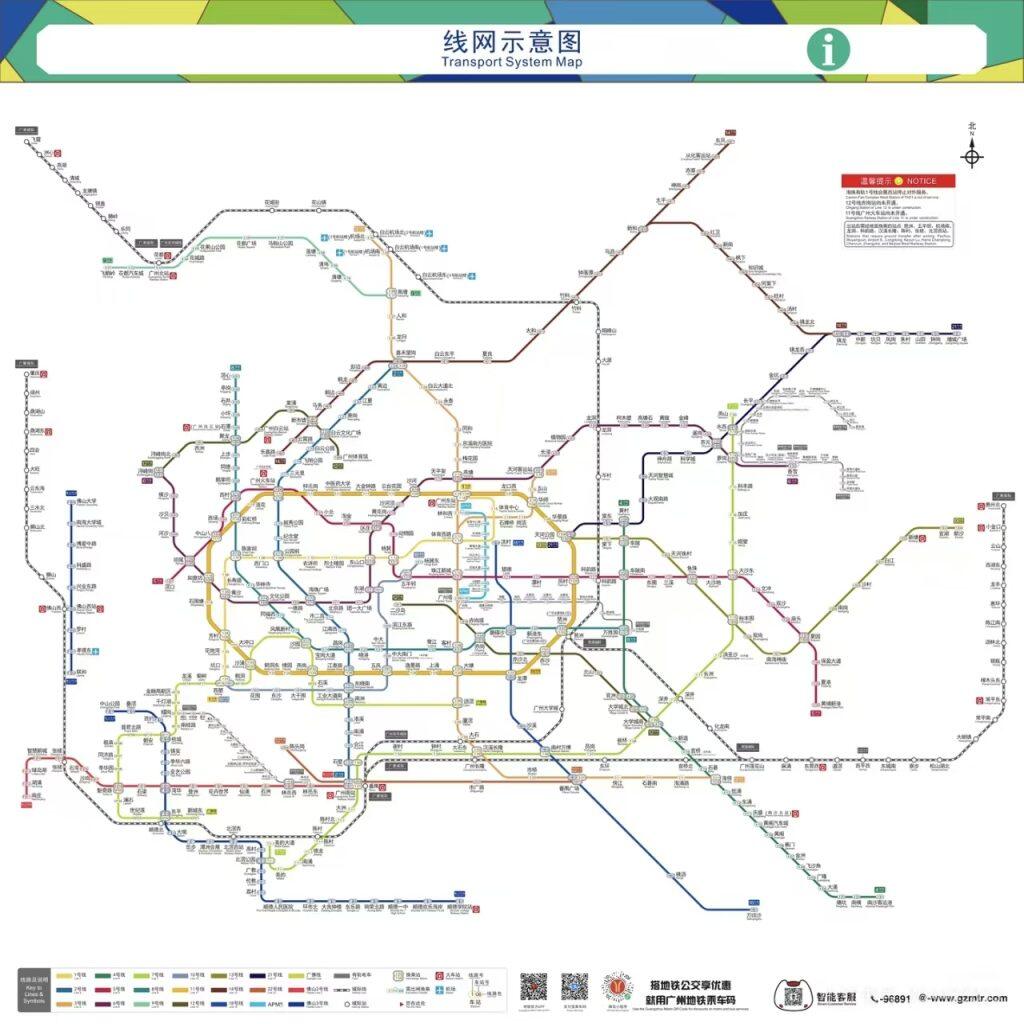
With over 20 metro lines and more than 300 stations, Guangzhou’s subway network connects nearly every major tourist destination, business district, and local neighborhood. Whether you’re here to visit historical landmarks, explore modern cities, or experience the local lifestyle, the metro will get you there quickly and easily. In this guide, I’ll walk you through the Guangzhou Metro Map, highlight the must – visit stations, and provide tips to help you plan a seamless and enjoyable metro journey in this vibrant city.
Guangzhou Metro Overview – Why It‘s Your Best Friend in the City
Let me be honest with you — before I moved to Guangzhou, I was terrified of the metro. The maps looked like colorful spaghetti, the stations seemed endless, and I had no idea which line went where. But after three years of riding this system almost daily, I can tell you this: the Guangzhou Metro is one of the cleanest, most efficient, and traveler-friendly subway networks I have ever used anywhere in the world.
As of 2026, the Guangzhou Metro operates 19 lines, covering approximately 779.9 kilometers (484.6 miles) and serving 397 stations across all 11 districts of the city, with extensions reaching into neighboring Foshan as well. That‘s not just big — that‘s massive. And the best part? It‘s still growing. By the end of 2026, the network is expected to exceed 800 kilometers with the opening of Line 12’s central section and Phase 2 West of Line 13.
What I love most about the Guangzhou Metro is how ridiculously affordable it is. A short ride costs as little as 2 RMB (about 30 cents USD), and even a cross-city journey rarely exceeds 10 RMB. Compare that to taxi fares or the stress of navigating Guangzhou‘s infamous traffic, and you‘ll quickly see why the metro is the smartest choice for any Guangzhou metro trip.
The trains run from roughly 6:00 AM to 11:30 PM depending on the line and station, with frequencies as tight as 2-3 minutes during peak hours. Announcements are made in both Cantonese, Mandarin, and English — so even if you don‘t speak a word of Chinese, you‘ll know exactly when to get off.
Here‘s a local secret: download the official Guangzhou Metro app or use Alipay‘s ride code feature before you arrive. Trust me, fumbling with ticket machines while a queue forms behind you is not the vibe you want on your first day. Set it up in advance, and you‘ll glide through the gates like a pro.
Key Metro Lines You‘ll Use on Your Guangzhou Metro Trip
You don‘t need to memorize all 19 lines — I certainly haven‘t. But there are a few heavy hitters that will carry you to 90% of the places you want to go. Here‘s my cheat sheet based on years of trial and error:
🔶 Line 1 (Yellow) – The granddaddy of them all. Guangzhou‘s very first metro line runs from Xilang to Guangzhou East Railway Station. It‘s your ticket to the city‘s historic heart, passing through Chen Clan Academy, Park前的 (People‘s Park), and the bustling shopping districts around Tiyu Xilu. If you‘re here for culture and old-school Guangzhou vibes, Line 1 is your ride.
🔵 Line 2 (Blue) – The airport connector. This line runs from Guangzhou South Railway Station all the way up to Jiahewanggang. It‘s how you get from the high-speed rail hub into the city, and it also connects to Baiyun Airport via transfer at Jiahewanggang. If you‘re arriving by plane or train, Line 2 will probably be your first encounter with the metro.
🧡 Line 3 (Orange) – The busiest line in the entire system, and honestly, the one that scares first-timers the most. It runs north-south and connects Baiyun Airport directly to downtown. During morning and evening rush hours, Line 3 is absolutely packed — I‘m talking shoulder-to-shoulder, personal-space-is-a-memory packed. My advice? Avoid it between 8-9 AM and 6-7 PM if you can. But if you need to get to Zhujiang New Town (the modern CBD with all the skyscrapers) or Canton Tower, Line 3 is unavoidable — and honestly, worth the squeeze.
🟢 Line 8 (Green) – A quieter, more relaxed line that runs east-west through the southern part of the city. It‘s great for reaching Haizhu District, the Canton Fair complex (if you‘re here for business), and several riverside parks. When Line 3 feels like a sardine can, Line 8 is your sanctuary.
🔴 Line 18 (Red) – The new kid on the block and an absolute speed demon. This express line rockets you from downtown Guangzhou to Nansha in record time. It‘s a game-changer if you‘re heading to the southern districts or connecting to ferry services.
🌉 Guangfo Line – This one‘s special because it crosses city borders. Running between Xincheng East in Foshan and Lijiao in Guangzhou, it‘s the lifeline for anyone exploring both cities in one trip. Foshan is famous for its ancestral temples and incredible Cantonese food, so don‘t sleep on this line.
How to Buy Metro Tickets in Guangzhou
let‘s talk about the practical stuff — because nothing kills the excitement of a Guangzhou metro trip faster than standing helplessly in front of a ticket machine. I‘ve been there, and it‘s not fun. Here‘s everything you need to know.
Option 1: Contactless Payment (My Top Pick) – This is what I use every single day. Download Alipay or WeChat and set up the Guangzhou Metro ride code. At the gate, just scan the QR code, walk through, and scan again when you exit. The fare is automatically deducted based on your entry and exit stations. It‘s seamless, it‘s fast, and it saves you from carrying loose change. If you‘re visiting from overseas, set this up before you leave — it takes five minutes and saves you hours of frustration.
Option 2: Yang Cheng Tong Card – This is the city‘s official transportation card, and it works on buses, ferries, and even some convenience stores. You can buy one at any metro station for a refundable deposit, then top it up with cash. The real perk? Monthly spending discounts — spend over 80 RMB and get 20% off; spend over 200 RMB and get 50% off. If you‘re staying for a week or more, this card pays for itself.
Option 3: Single-Journey Tokens – These are the green plastic coins you get from ticket vending machines. They work fine for one-off rides, but I honestly don‘t recommend them for tourists. Why? Because you need exact change or small bills, the machines can be confusing if you don‘t read Chinese, and you have to queue twice — once to buy, once to exit (you insert the token into the exit gate). It‘s doable, but it‘s the least convenient option.
Option 4: Multi-Day Passes – Guangzhou offers 1-day (20 RMB) and 3-day (50 RMB) passes that give you unlimited rides. If you‘re planning a sightseeing marathon, these are fantastic value. I used a 3-day pass on my first visit and rode the metro like it was a theme park — hopping on and off just to explore different neighborhoods. Zero regrets.
Pro tip from experience: Always carry a backup payment method. I‘ve had my phone battery die mid-trip more times than I‘d like to admit, and having a Yang Cheng Tong card in my wallet saved me every single time.
Important Tips for a Smooth Guangzhou Metro Trip
After hundreds of metro rides across Guangzhou, I‘ve compiled a list of lessons learned the hard way — so you don‘t have to.
🕐 Rush Hour Is Real – Plan Accordingly – Line 3 between 8:00-9:00 AM and 6:00-7:00 PM is genuinely one of the most crowded train experiences you‘ll ever have. If you‘re traveling with luggage, small children, or just value your personal space, avoid these times at all costs. The metro app has a “real-time crowding” feature that shows you which stations are busy — use it.
🧳 Luggage Etiquette – If you‘re carrying large suitcases, use the elevators, not the escalators. I‘ve watched too many tourists struggle with rolling luggage on moving stairs, and it‘s both dangerous and stressful. Every station has accessible elevators — just look for the signs.
⏱️ Don‘t Overstay – Here‘s something nobody told me on my first trip: you have a maximum of 270 minutes (4.5 hours) from entry to exit. If you exceed that, you‘ll be charged a penalty fee. It sounds like plenty of time, but if you‘re doing a long day of sightseeing with transfers, it can sneak up on you. Keep an eye on the clock.
🚻 Bathroom Locations – Need to find a restroom in a hurry? The Guangzhou Metro app has a “toilet finder” feature that shows you which stations have facilities and exactly where they are located. This has saved me more times than I care to count — especially after a big bowl of spicy noodle soup.
📱 Stay Connected – Free Wi-Fi is available on most trains and in stations, but it can be spotty. I recommend getting a local SIM card or an eSIM before you arrive so you‘re never stranded without navigation. Google Maps works, but Amap (Gaode) is more accurate for metro routes in China.
💬 Language – Station announcements are in Cantonese, Mandarin, and English. Signs are bilingual too, though some older stations have less consistent English signage. When in doubt, just show your destination station name (in Chinese characters) to a staff member — they‘re universally helpful and used to assisting tourists.
FAQ – Your Guangzhou Metro Trip Questions
Q: What‘s the absolute best way to pay for the metro as a tourist in 2026?
A: Without a doubt, use Alipay‘s Guangzhou Metro ride code. It‘s what I‘ve been using for years, and it‘s honestly the most stress-free option. You don‘t need to worry about buying tickets, calculating fares, or carrying exact change — just scan your phone at the gate and go. The fare is automatically calculated and deducted when you scan out. If you‘re worried about your phone battery, get a Yang Cheng Tong card as a backup. I keep both in my daily rotation and have never looked back. One thing to note: make sure your Alipay is set to the mainland China version with a valid payment method linked. It takes a few minutes to set up, but it‘s absolutely worth it for the convenience.
Q: How do I get from Baiyun Airport to the city center using the metro?
A: This is one of the most common questions I get, and the answer is simple: take Metro Line 3 directly from the airport into downtown. The journey takes about 40-50 minutes depending on your final destination, and trains run frequently from early morning until around 11:30 PM. The airport has a dedicated metro station integrated into the terminal, so you don‘t even need to leave the building. Just follow the signs for “Metro” after you collect your luggage. If you‘re heading to the southern part of the city or Guangzhou South Railway Station, you can transfer to Line 2 at Jiahewanggang station. My personal recommendation? If you‘re arriving during rush hour, the metro is actually faster than a taxi because you avoid all the highway traffic. I‘ve made this trip dozens of times and never once regretted choosing the train over a cab.
Q: Is the Guangzhou Metro easy to navigate for someone who doesn‘t speak Chinese?
A: Yes — and I say this as someone who arrived in Guangzhou with exactly zero Mandarin skills. All stations have bilingual signs in Chinese and English, and train announcements are made in Cantonese, Mandarin, and English. The metro map is color-coded and intuitive, and the official app has an English interface. That said, I‘ll give you one piece of honest advice: download a metro map app before you arrive and save it offline. Some of the older stations have less consistent English signage, and having a backup map on your phone gives you total peace of mind. Also, don‘t be shy about asking staff for help — they‘re used to assisting tourists and many speak basic English. I‘ve had station staff walk me to the right platform more than once, and they were always patient and kind.
Q: What should I do if I lose something on the Guangzhou Metro?
A: First of all, don‘t panic — I‘ve left everything from umbrellas to backpacks on trains, and I‘ve always gotten my items back. Guangzhou Metro has a surprisingly efficient lost-and-found system. Your best bet is to go to the customer service center at any station and report your loss. They‘ll log it into the system and check across the entire network. You can also call the Guangzhou Metro service hotline — the number is posted on the official website and inside every train carriage. If you‘re in a rush, the metro app also has a lost-and-found reporting feature. One thing I‘ve learned: always note the carriage number (it‘s displayed above the doors) before you exit. It makes it infinitely easier for staff to locate your item. And if you‘re traveling with expensive items like a passport or laptop, keep them in a secure inner pocket — prevention is always better than recovery.

Lila Xia
She is Lila Jiang, a 28-year-old girl.
With over 10 years in the travel industry, she’s chased wanderlust near and far;
what she loves most is diving into local cultures,
finding hidden gems, and connecting with people who bring journeys to life.
Essential Metro Map Guide
Your Ultimate Guide to the Shanghai Metro Map
Your Ultimate Guide to the Beijing Metro Map
Your Perfect Guide to the Guangzhou Metro Map
Chengdu Metro Trip Guide: Easy Navigation
Essential Shenzhen Metro Trip Guide
Hangzhou Metro Travel Guide: Top Tips
Chongqing Metro Guide: Smooth Trip Tips
Xiamen Metro Trip Guide: Easy to Navigate
Essential Kunming Metro Trip Guide for Visitors
Nanjing Metro Travel Guide: Top Practical Tips
Qingdao Metro Guide: Must-Know Trip Tips
Harbin Metro Travel Guide for a Perfect Trip
Zhengzhou Metro Guide: Essential Trip Tips
Changsha Metro Travel Guide: Smooth Journey Tips
Popular City Travel Guides
Beijing Travel Guide Shanghai Travel Guide Hangzhou Travel Guide Sanya Travel Guide Chongqing Travel Guide
Nanjing Travel Guide Guangzhou Travel Guide ChengduTravel Guide Hongkong Travel Guide Xi’an Travel Guide