Hi, I’m Dalia Xu, a 30-year-old seasoned travel enthusiast with over a decade of travel experience. I have a passion for natural landscapes and hotel reviews. Hangzhou’s metro system, a sleek and efficient network weaving through the city’s blend of ancient charm and modern vitality, is far more than a transit tool—it’s your gateway to exploring West Lake’s serenity, Lingyin Temple’s spirituality, and the city’s vibrant urban spots with ease.
With multiple metro lines covering key scenic areas, historical sites, and transportation hubs, Hangzhou’s subway connects every corner of this picturesque city that seamlessly marries nature and urban life. Whether you’re here to wander the misty shores of West Lake, delve into the lush greenery of Xixi National Wetland Park, or check out trendy hotel districts, the metro will take you there smoothly. In this guide, I’ll walk you through the Hangzhou Metro Map, highlight the must-visit stations tied to natural landscapes and top hotels, and provide tips to make your metro journey in Hangzhou a delightful part of your travel experience.
Hangzhou Metro Overview – Why It‘s Your Best Friend in the City
Let me be completely honest with you — when I first arrived in Hangzhou, I was absolutely enchanted by the city‘s beauty but completely intimidated by its metro system. The maps looked like a colorful puzzle, the station names were a mouthful, and I had no idea which line would take me to the legendary West Lake. But after four years of riding this system almost every single day, I can tell you this without any hesitation: the Hangzhou Metro is one of the most modern, cleanest, and traveler-friendly subway networks I have ever used anywhere in the world. And trust me, I‘ve used a lot of them.
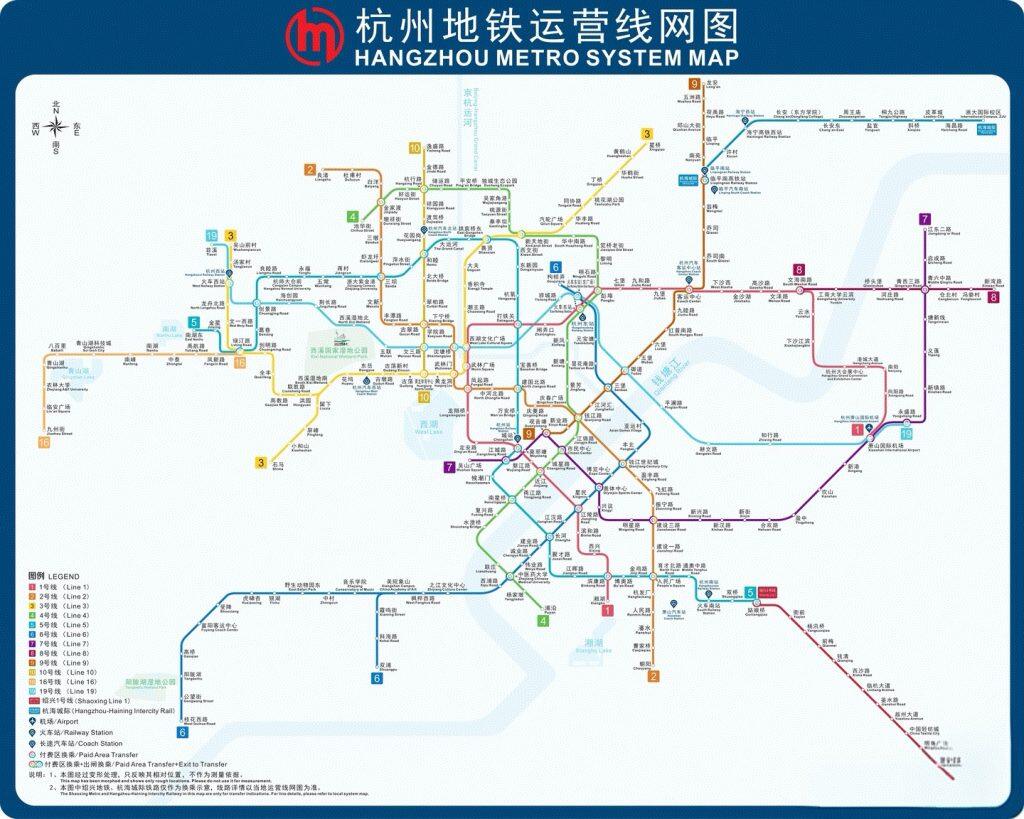
As of 2026, the Hangzhou Metro operates 12 metro lines (Lines 1 through 10, plus Lines 16 and 19), forming a comprehensive network that connects the city center to surrounding districts and key locations such as Hangzhou East Railway Station and Hangzhou Xiaoshan International Airport. The system covers 323 kilometers of track, with more than 240 stations across the network. And here‘s the exciting part — the network is expanding rapidly. The Metro Line 9 Phase II (10 km, 7 stations) is expected to open by the end of 2026, while Metro Line 10 Phase II & III (9.3 km, 4 stations) will connect with the Hangzhou-Deqing intercity railway for seamless cross-city travel. The Metro Line 12 (26.05 km, 15 stations) is also under construction and expected to open in 2027. And let‘s not forget the massive Metro Line 18 (48 km, 19 stations) that will eventually run north-south across the entire city. This city is literally building its metro network at lightning speed.
What I love most about the Hangzhou Metro is how ridiculously affordable it is. The system uses a distance-based fare system — 2 RMB for the first 4 kilometers, then tiered pricing after that. A short ride costs as little as 30 cents USD, and even a long cross-city journey rarely exceeds 10 RMB. Compare that to taxi fares or the stress of navigating Hangzhou‘s sometimes chaotic traffic around West Lake, and you‘ll quickly see why the metro is the smartest choice for any Hangzhou metro trip.
The trains run from roughly 6:00 AM to 11:00 PM daily depending on the line and station, with frequencies as tight as 2-4 minutes during peak hours. Announcements are made in Mandarin and English — so even if you don‘t speak a word of Chinese, you‘ll know exactly when to get off. Most stations have bilingual signs, and the system is incredibly user-friendly for international visitors.
Here‘s a local secret that I wish someone had told me on day one: download the official Hangzhou Metro app or set up the metro QR code in Alipay or WeChat before you arrive. Trust me, fumbling with ticket machines while a queue forms behind you is absolutely not the vibe you want on your first day in this beautiful city. Set it up in advance, and you‘ll glide through the gates like a pro.
One more thing that makes Hangzhou special — the city is known for its summer heat, and the metro has responded in the most thoughtful way. In 2026, the entire network opened 75 cooling zones across the system where anyone can come in and escape the heat. Some stations even have reading corners and cultural spaces. That‘s the kind of city Hangzhou is — welcoming, thoughtful, and always looking out for you.
Key Metro Lines You‘ll Use on Your Hangzhou Metro Trip
You don‘t need to memorize all 12 lines — I certainly haven‘t. But there are a few absolute must-know lines that will carry you to 90% of the places you want to go. Here‘s my cheat sheet based on years of trial, error, and countless happy discoveries:
🔴 Line 1 (Red – The Airport Connector) – This is the granddaddy of them all — Hangzhou‘s very first metro line. It runs from Xianghu in the south all the way to Hangzhou Xiaoshan International Airport in the east, passing through absolute must-see stops like Wulin Square (the city‘s central hub connecting to Line 2), Chengzhan (Hangzhou Railway Station), West Lake Cultural Square, and Hangzhou East Railway Station (connecting to Lines 4 and 6). If you‘re flying into Hangzhou, Line 1 will probably be your first encounter with the metro — and it‘s a good one.
🔵 Line 2 (Blue – The North-South Backbone) – This is my personal favorite and honestly the most useful line for tourists. It runs from Chaoyang in the south to Liangzhu in the north, cutting through the heart of the city. What makes Line 2 special is the incredible variety of experiences along the way — you can start your morning at Qianjiang New Town with its futuristic skyline, then ride to Fengqi Road for some of the best shopping in the city, and end your day exploring the ancient Liangzhu Culture site. A local tip: get off at Gucui Road, grab a cup of Longjing tea from a nearby shop, and just watch the city go by — it‘s the most Hangzhou thing you can do.
🟢 Line 3 (Green – The Western Explorer) – This line is an absolute gem for nature lovers. It connects the western parts of the city, making it your gateway to Xixi Wetland and the areas around West Lake. If you‘re here for the scenery, Line 3 is your ride.
🟠 Line 4 (Orange – The Eastern Connector) – Running from Puyan to Chihua Street, Line 4 is your ticket to the eastern and southern parts of the city. It connects to Hangzhou East Railway Station (with Lines 1 and 6) and is incredibly useful for getting around without always relying on the busier lines.
🟣 Line 5 (Purple – The Tourist Favorite) – This line is incredibly convenient for tourists, connecting Xixi Wetland and the West Lake Scenic Area. It also runs through Guniangqiao to East Nanhu. I‘ve used this line countless times to hop between Hangzhou‘s most beautiful spots, and it never disappoints.
🟡 Line 6 (Yellow – The Lifestyle Line) – This line links major residential and commercial districts, making it ideal for exploring shopping and dining spots. It runs from West Guihua Road to Goujunong and connects to Hangzhou East Railway Station and Huanglong Sports Center (connecting to Line 2).
✈️ Line 19 (The Airport Express) – Here‘s the game-changer for anyone flying into or out of Hangzhou. Line 19 runs from Tiaoxi to Yongsheng Road and directly connects Hangzhou East Railway Station to Hangzhou West Railway Station in about 40 minutes for just 7 RMB. A taxi on the same route would cost you around 120 RMB. I‘ve made this trip more times than I can count, and I‘ve never once regretted choosing the train over a cab.
🚇 Line 9 (The Growing Star) – Line 9 currently runs from Long‘an to Guanyintang, with Phase II (10 km, 7 stations) expected to open by the end of 2026. Once complete, Line 9 will stretch 39.6 kilometers and strengthen the connection between Donghu New Town and the city center.
🚇 Line 16 (The Suburban Link) – Running from Jiuzhou Street to Lüting Road, Line 16 connects the city to its suburban areas and is perfect for day trips outside the main urban core.
How to Buy Metro Tickets in Hangzhou
Okay, let‘s talk about the practical stuff — because nothing kills the excitement of a Hangzhou metro trip faster than standing helplessly in front of a ticket machine with a long line forming behind you. I‘ve been there, and it‘s not fun. Here‘s everything you need to know.
Option 1: QR Code Scanning (My Absolute Top Pick) – This is what I use every single day and it‘s honestly life-changing. Use the Hangzhou Metro app, Alipay, or WeChat to generate a metro QR code. At the gate, just scan the QR code, walk through, and scan again when you exit. The fare is automatically calculated and deducted based on your entry and exit stations. It‘s seamless, it‘s fast, and it saves you from carrying loose change or figuring out complicated fare calculations. If you‘re visiting from overseas, set this up before you leave — it takes five minutes and saves you hours of frustration. Hangzhou almost completely relies on mobile payments now — cash is becoming increasingly inconvenient. Foreign visitors can now link international credit cards to Alipay, making it easier than ever.
Option 2: Hangzhou Tong Card (Transportation Card) – This is Hangzhou‘s official transportation card, and it works on buses, metro, and even some convenience stores. You can buy one at any metro station for a deposit (usually 10-15 RMB), then top it up with cash (minimum 50 RMB). The real perk? Monthly spending discounts — spend under 50 RMB and get 10% off; spend 50-100 RMB and get 30% off; spend over 100 RMB and get 50% off. If you‘re staying for a week or more, this card is incredibly convenient, especially as a backup when your phone battery dies (which, let‘s be honest, always happens at the worst possible moment).
Option 3: Single-Journey Tokens – These are the plastic tokens you get from ticket vending machines. They work fine for one-off rides, but I honestly don‘t recommend them for tourists. Why? Because you need exact change or small bills, the machines can be confusing if you don‘t read Chinese, and you have to queue twice — once to buy, once to exit (you insert the token into the exit gate). It‘s doable, but it‘s the least convenient option.
Option 4: Tourist Passes – Hangzhou offers 1-day and 3-day tourist passes that give you unlimited rides within the valid period. If you‘re planning a sightseeing marathon around West Lake and beyond, these are fantastic value. The 1-day pass gives you 24 hours of unlimited rides, and the 3-day pass gives you 72 hours. Electronic versions can be purchased through the Hangzhou Metro app.
Option 5: Contactless Bank Cards – As of 2026, some machines accept contactless bank cards, though foreign cards may not always work. Stick with the QR code or transportation card for the most reliable experience.
Pro tip from painful experience: Always carry a backup payment method. I‘ve had my phone battery die mid-trip more times than I‘d like to admit, and having a Hangzhou Tong card in my wallet saved me every single time. Also, make sure you use the same app or card for both entry and exit — mixing different methods will cause problems at the gate.
Important Tips for a Smooth Hangzhou Metro Trip
After hundreds of metro rides across Hangzhou, I‘ve compiled a list of lessons learned the hard way — so you don‘t have to.
🕐 Rush Hour Is Real – Plan Accordingly – Lines 1 and 2 between 8:00-9:00 AM and 6:00-7:00 PM are genuinely some of the most crowded train experiences you‘ll ever have. I‘m talking shoulder-to-shoulder, personal-space-is-a-memory packed. If you‘re traveling with luggage, small children, or just value your personal space, avoid these times at all costs.
🏞️ West Lake Access – The closest metro station to West Lake is Longxiangqiao Station on Line 1, just 240 meters away. From there, you can walk straight to the lake. During weekends and holidays, this station gets absolutely packed — I‘ve seen queues stretching out the door. If you can, go early in the morning or on weekdays.
🧳 Luggage Etiquette – If you‘re carrying large suitcases, use the elevators, not the escalators. I‘ve watched too many tourists struggle with rolling luggage on moving stairs, and it‘s both dangerous and stressful. Every station has accessible elevators — just look for the signs.
⏱️ Don‘t Overstay – You have a maximum time limit from entry to exit. It sounds like plenty of time, but if you‘re doing a long day of sightseeing with multiple transfers, it can sneak up on you. Keep an eye on the clock.
🚻 Bathroom Locations – Need to find a restroom in a hurry? The Hangzhou Metro app has a station facility finder that shows you exactly where the bathrooms are. This has saved me more times than I care to count — especially after a big bowl of spicy noodles.
📱 Stay Connected – Free Wi-Fi is available on most trains and in stations, but it can be spotty. I recommend getting a local SIM card or an eSIM before you arrive so you‘re never stranded without navigation. Baidu Maps and Amap are more accurate for metro routes in China than Google Maps.
💬 Language – Station announcements are in Mandarin and English. Signs are bilingual too. When in doubt, just show your destination station name (in Chinese characters) to a staff member — they‘re universally helpful and used to assisting tourists.
🌡️ Summer Survival – Hangzhou gets HOT in the summer. The metro network opens up 75 cooling zones across stations with seating where you can escape the heat. Some stations even have reading corners and cultural spaces. Don‘t be shy about using them — locals do it all the time.
🍜 Food Etiquette – Please, for the love of everything good, don‘t eat or drink on the train. Nobody wants to smell your spicy noodles in a crowded carriage. Save the snacking for when you get off — and trust me, there‘s always an incredible restaurant waiting for you right outside the station.
FAQ – Your Hangzhou Metro Trip Questions
Q: What‘s the absolute best way to pay for the metro as a tourist in 2026?
A: Without a doubt, use the QR code feature in Alipay or the Hangzhou Metro app. This is what I‘ve been using for years, and it‘s honestly the most stress-free option. You don‘t need to worry about buying tickets, calculating fares, or carrying exact change — just scan your phone at the gate and go. The fare is automatically calculated and deducted when you scan out. Hangzhou has gone almost completely cashless at this point — even the ticket machines are gradually being phased out in favor of QR scanners. If you‘re visiting from overseas, Alipay now allows you to link international credit cards, which makes the whole process incredibly smooth. If you‘re worried about your phone battery (and trust me, I‘ve been there), get a Hangzhou Tong transportation card as a backup — they work on buses too and give you monthly spending discounts of up to 50%. One thing to note: the QR code system is “one person, one code” — you can‘t scan for multiple people with one phone. If you‘re traveling with family or friends, everyone needs their own code or card. It takes a few minutes to set up, but it‘s absolutely worth it for the convenience.
Q: How do I get from Xiaoshan International Airport to West Lake using the metro?
A: This is one of the most common questions I get, and the answer is refreshingly simple: take Metro Line 1 directly from the airport into the city. The airport has a dedicated metro station integrated right into the terminal — just follow the signs for “Metro” after you collect your luggage. The journey takes about 40-50 minutes depending on where you‘re going, and trains run frequently from early morning until around 11:00 PM. If you‘re heading to West Lake, get off at Longxiangqiao Station — it‘s just 240 meters from the lake. I‘ve made this trip dozens of times and never once regretted choosing the train over a taxi. The taxi ride from the airport can take anywhere from 45 minutes to over an hour depending on traffic, and it‘ll cost you at least 10 times more. The metro is faster, cheaper, and more reliable. One thing to keep in mind: if you‘re arriving late at night, check the last train time — Line 1‘s last train from the airport usually departs around 10:30-11:00 PM. If you miss it, you‘ll have to take a taxi or wait for the night bus.
Q: Is the Hangzhou Metro easy to navigate for someone who doesn‘t speak Chinese?
A: Yes — and I say this as someone who arrived in Hangzhou with exactly zero Mandarin skills. All stations have bilingual signs in Chinese and English, and train announcements are made in Mandarin and English. The metro map is color-coded and intuitive, and the official app has an English interface. That said, I‘ll give you one piece of honest advice: download a metro map app before you arrive and save it offline. Some of the older stations have less consistent English signage, and having a backup map on your phone gives you total peace of mind. Also, don‘t be shy about asking staff for help — they‘re used to assisting tourists and many speak basic English. I‘ve had station staff walk me to the right platform more than once, and they were always patient and kind. One thing I‘ve learned: if you‘re really stuck, just show the staff the Chinese characters for your destination station on your phone — they‘ll point you in the right direction immediately. And if all else fails, the station maps are color-coded, so you can always find your way by matching colors. One more tip: download Baidu Maps or Amap for more accurate metro routing — they work better in China than Google Maps.
Q: What are the must-see attractions that are easily accessible by metro?
A: Oh, this is my favorite question because Hangzhou‘s metro literally takes you everywhere worth going. Here are my absolute must-visits: West Lake – take Line 1 to Longxiangqiao Station and walk 240 meters. I‘d recommend going at sunrise or sunset — the lake is magical at those times. Wulin Square – take Line 1 or Line 2 to Wulin Square Station for shopping, dining, and the iconic fountain show. Xixi Wetland – take Line 5 to the Xixi Wetland area and spend a day exploring the waterways and traditional villages. Hefang Street – take Line 1 to Ding‘an Road Station and walk to this historic street for snacks and souvenirs. Liangzhu Culture Site – take Line 2 to the Liangzhu area and explore one of China‘s most important archaeological sites. And here‘s a local secret: instead of just hitting the tourist traps, take Line 1 to West Lake Cultural Square and walk along the lake‘s northern shore — it‘s less crowded than the southern end and has some of the best views. Or take Line 4 to the Qianjiang New Town area and watch the city‘s futuristic skyline light up at night. The beauty of the Hangzhou Metro is that every station opens up a new neighborhood to explore, and some of the best experiences are the ones you stumble upon by accident. Just pick a line, get off at a random station, and start walking — you‘ll discover something amazing, I promise.

Dalia Xu
Dalia Xu is a 30-year-old female seasoned travel enthusiast
with over a decade of travel experience,
she has a passion for natural landscapes and hotel reviews.
Essential Metro Map Guide
Your Ultimate Guide to the Shanghai Metro Map
Your Ultimate Guide to the Beijing Metro Map
Your Perfect Guide to the Guangzhou Metro Map
Chengdu Metro Trip Guide: Easy Navigation
Essential Shenzhen Metro Trip Guide
Hangzhou Metro Travel Guide: Top Tips
Chongqing Metro Guide: Smooth Trip Tips
Xiamen Metro Trip Guide: Easy to Navigate
Essential Kunming Metro Trip Guide for Visitors
Nanjing Metro Travel Guide: Top Practical Tips
Qingdao Metro Guide: Must-Know Trip Tips
Harbin Metro Travel Guide for a Perfect Trip
Zhengzhou Metro Guide: Essential Trip Tips
Changsha Metro Travel Guide: Smooth Journey Tips
Popular City Travel Guides
Beijing Travel Guide Shanghai Travel Guide Hangzhou Travel Guide Sanya Travel Guide Chongqing Travel Guide
Nanjing Travel Guide Guangzhou Travel Guide ChengduTravel Guide Hongkong Travel Guide Xi’an Travel Guide