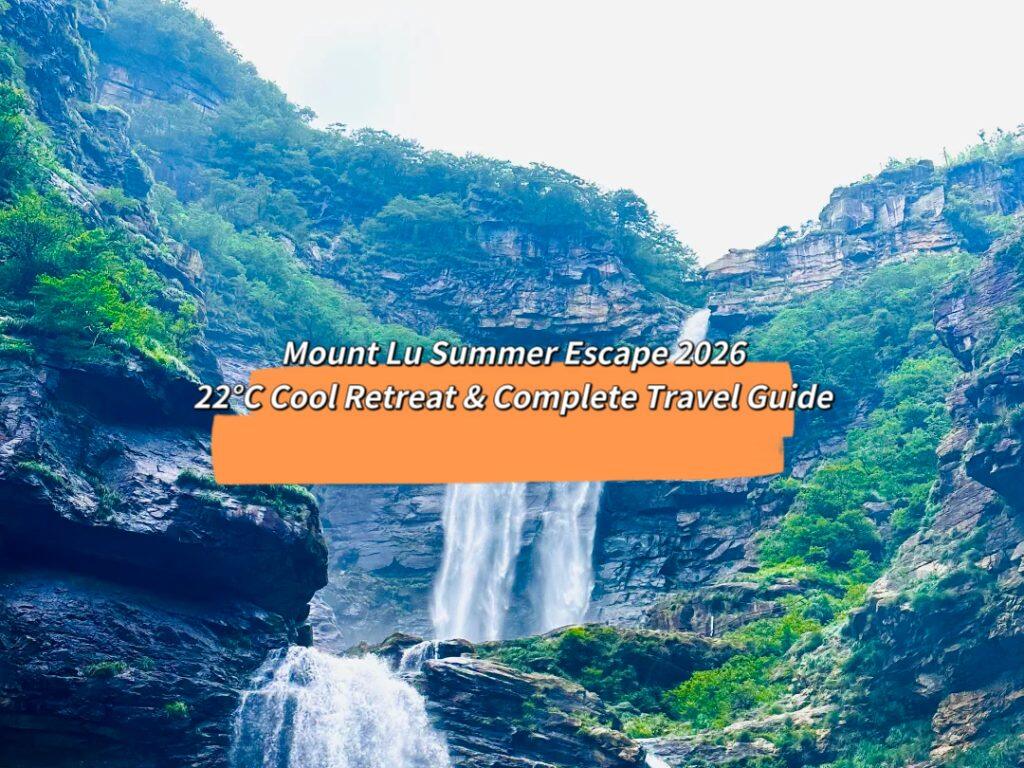
Hello, I‘m Mike Wang. For over 20 years, I have guided travelers through China’s most breathtaking landscapes, but few places have captured my heart quite like Mount Lu. I still remember my first visit — waking up in Guling Town as the morning mist rolled over the rooftops, walking along the shores of Ruqin Lake as clouds drifted through the pine forests, and standing at the edge of the famous Three Springs Waterfall as the roar of water echoed through the valley. I knew then that this wasn‘t just a mountain — it was a living poem, painted in mist and stone.
Mount Lu, located in Jiujiang City, Jiangxi Province, is one of China’s most celebrated mountains — a UNESCO World Cultural Landscape and a national 5A-level scenic area. It stands alongside Jigongshan, Beidaihe, and Mount Mogan as one of China‘s “Four Great Summer Retreats,” with a remarkable average summer temperature of just 22°C — a full 10 degrees cooler than the sweltering cities below. But Mount Lu is far more than a natural wonder. It is a living museum of Chinese history, poetry, and architecture. Over 1,500 poets, including the legendary Li Bai and Su Shi, have written about its mist-shrouded peaks. More than 600 villas in over 20 different architectural styles dot its slopes, built by missionaries and diplomats from around the world over the past century. The 1980 film Romance on Lushan Mountain put it on the global map, and today, it remains one of the most beloved destinations for travelers seeking both natural beauty and cultural depth.
If you are planning your Jiujiang trip 2026, this Mount Lu travel guide 2026 will give you everything you need — from the legendary Three Springs Waterfall to the sea of clouds at Hanpokou, from Guling Town‘s charming streets to the villas that have hosted emperors and revolutionaries. Let me share what I’ve learned from two decades of bringing travelers to this poetic mountain.
🏔️ Why Mount Lu 2026 Belongs on Your China Bucket List
You might be thinking, “Another mountain in China?” But Mount Lu is profoundly different.
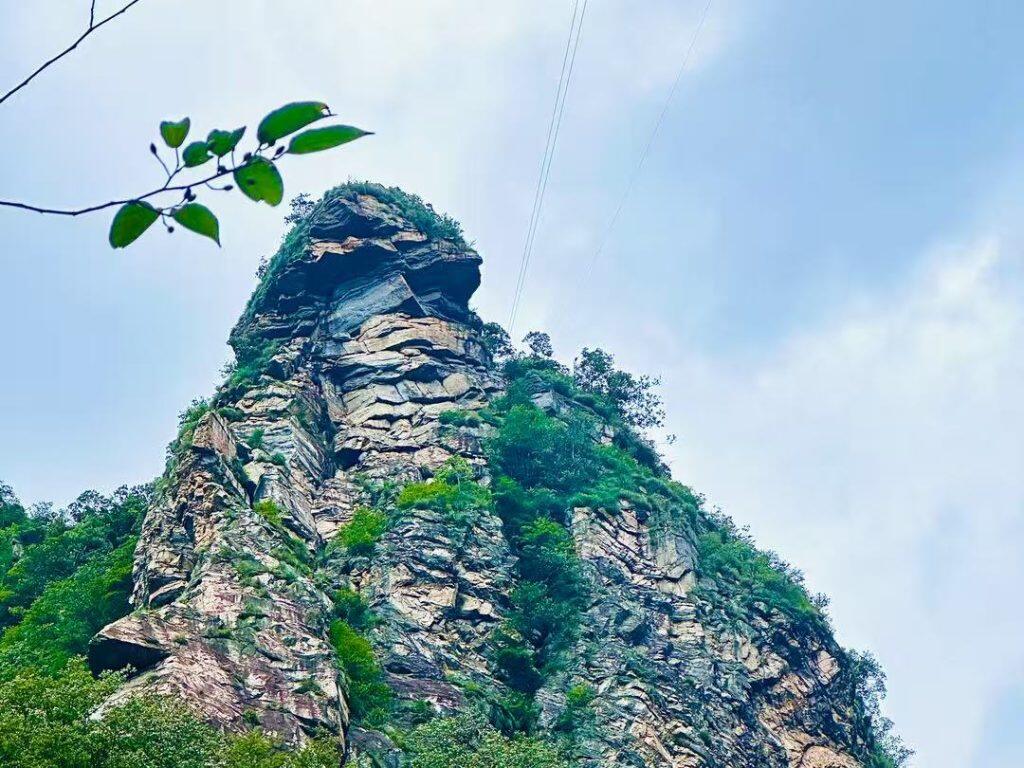
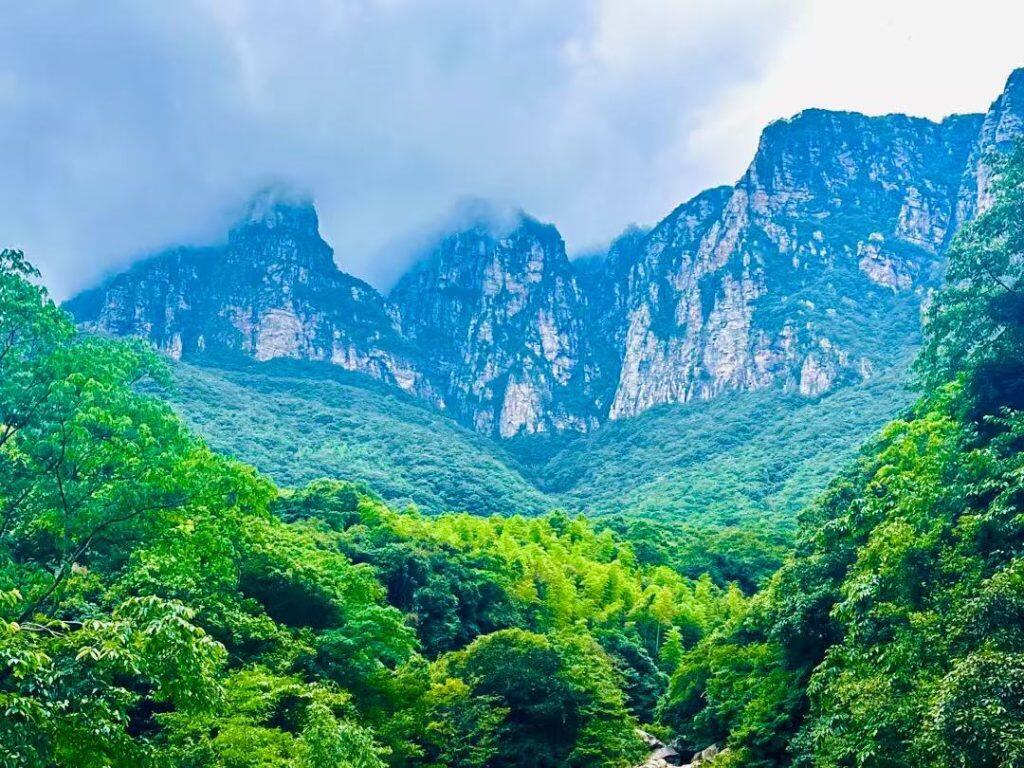
First, the natural beauty is legendary. The mountain is famous for its sea of clouds — early morning mist that submerges the valleys, leaving only the highest peaks visible like islands in a white ocean. The Three Springs Waterfall (Sandiequan) — a three-tiered cascade that drops over 155 meters — is so iconic that there‘s a saying: “If you haven‘t been to Three Springs, you haven‘t truly visited Mount Lu.” The Five Old Peaks (Wulaofeng) rise like five ancient elders, their granite faces weathered by millennia of wind and rain. The Hanpokou viewpoint offers a sweeping vista of the vast Poyang Lake, China‘s largest freshwater lake, stretching to the horizon.
Second, the cultural heritage is unparalleled. Mount Lu has been a source of inspiration for over 1,500 poets. The Tang Dynasty poet Li Bai wrote of its waterfalls: “The torrent drops three thousand feet straight down, as if the Silver River has fallen from the Ninth Heaven.” Su Shi, the great Song Dynasty poet, famously wrote: “From the side, a ridge; from the end, a peak — far, near, high, low, each view unique. Not knowing the true face of Mount Lu, only because I am in the mountain itself.” This is a place that has shaped the cultural imagination of China for over a thousand years.
Third, the architectural legacy is extraordinary. In the late 19th century, British missionary Edward Selby Little leased land on the mountain and built the first villa. Over the following decades, more than 600 villas were constructed in over 20 different national styles — British, American, French, German, Russian, and more. Today, this “Museum of World Modern Villas” stands as a testament to Mount Lu‘s unique place in history. Walking through Guling Town feels like stepping back in time, with stone houses, cobblestone paths, and century-old churches nestled among the pines.
I’ve taken travelers from all over the world to this mountain, and the reaction is always the same: a quiet sense of awe. This place doesn‘t just show you beauty — it makes you feel it.
🎟️ Tickets, Hours & Smart Booking for Mount Lu 2026
💰 Ticket Prices (2026 Update):
🎟️ 2026 Special Offers:
- March 2026: Free admission for all visitors (must reserve through mini-program)
- Until August 20, 2026: Teachers and medical professionals enter free
- Until September 20, 2026: Residents of 12 major cities (Shanghai, Nanjing, Hangzhou, Hefei, Fuzhou, Nanchang, Wuhan, Changsha, Jinan, Chongqing, Zhengzhou, Xi‘an) get 50% off
⏰ Opening Hours (2026):
- Scenic area: 24 hours, open year-round
- Cable car: 7:30 AM – 6:30 PM (extended to 9:00 PM during holidays)
- Sightseeing bus: 7:30 AM – 5:30 PM
⚠️ Important 2026 Notice:
The Mount Lu cable car was closed for annual maintenance from May 11 to June 9, 2026. It resumed normal operation on June 10. All future maintenance schedules will be announced on the official mini-program.
🚡 Mastering the Cable Car: Your Key to an Effortless Ascent
Let me be completely honest with you: this mountain is not easy to climb. The traditional route up has over 400 winding turns — it‘s famous for making even the most seasoned travelers carsick. I‘ve seen visitors arrive at the summit pale and nauseous, their day ruined before it even began.
The smart way to experience Mount Lu is to take the cable car. It’s a 7-minute ride that lifts you from the base straight to Guling Town at the summit. No winding roads, no motion sickness — just breathtaking views of Poyang Lake spreading out below you as you rise through the clouds.
Why the cable car is worth it:
- Fast: 7 minutes vs. 1+ hour of winding mountain roads
- Comfortable: No carsickness, air-conditioned cabins
- Scenic: Unobstructed views of the mountain and lake
- Weather-proof: Operates even when the mountain roads are icy
Pro tip: If you‘re traveling with children, elderly parents, or anyone prone to motion sickness, take the cable car. The extra cost is negligible compared to the misery of a winding bus ride.
🏘️ Guling Town – The Heart of Mount Lu
At the summit of Mount Lu sits Guling Town — a charming mountain settlement that serves as the hub of the entire scenic area. This is where you will stay, eat, and begin every day‘s exploration.
Guling was founded in 1895 when British missionary Edward Selby Little leased land on the mountain. The name “Guling” is actually an English word — “Cooling” — because the British settlers recognized the mountain‘s potential as a summer retreat. Over the next century, diplomats, missionaries, and merchants from over 20 countries built villas here, creating a unique “International Settlement” high in the mountains of China.
Today, Guling Town is a lively, walkable village with hotels, restaurants, cafes, and shops. The streets are lined with stone houses, many over a century old, and the atmosphere is relaxed and welcoming. There‘s even a small cinema that still shows the 1980 film Romance on Lushan Mountain — a charming nod to the town‘s cinematic history.
Where to stay: Guling Town is the only place you should consider staying. It‘s centrally located, has the widest range of accommodation options, and puts you within easy reach of all the major attractions. Book at least 3-5 days in advance during peak summer months.
🏯 The Main Attractions: What to See on Mount Lu 2026
🌊 Three Springs Waterfall – The Crown Jewel of Mount Lu
The Three Springs Waterfall (Sandiequan) is the most famous waterfall on Mount Lu — and for good reason. This three-tiered cascade drops over 155 meters, with each tier offering a different perspective. The water thunders down from the cliffs, creating a mist that rises like smoke and catches the sunlight in rainbows. There‘s a popular saying among locals: “If you haven‘t been to Three Springs, you haven‘t truly visited Mount Lu.”
What makes it special: The waterfall is at its most spectacular in spring and early summer when the snowmelt and rains swell the water volume. The roar of the water, the cool mist on your face, and the dramatic cliffs rising on either side create an experience that is both humbling and exhilarating.
Pro tip: Be prepared for 3,000+ steps down to the waterfall and back up. It’s a strenuous hike, but there is a cable car (80 RMB round trip) that can take you part of the way. If you‘re not in good shape, take the cable car — your legs will thank you.
☁️ Hanpokou – The Best Sea of Clouds Viewpoint
Hanpokou is the premier spot on Mount Lu for viewing the sea of clouds and the sunrise. From this vantage point, you can see the vast Poyang Lake stretching to the horizon, with the mountain peaks rising like islands from a white ocean of mist. The name “Hanpokou” means “Mouth That Contains Poyang” — and it‘s easy to see why.
What makes it special: On a clear morning, the view is simply transcendent. The clouds roll in from the lake, filling the valleys and leaving only the highest peaks visible. If you‘re lucky enough to be there at sunrise, the golden light painting the clouds is an experience you will never forget.
Pro tip: Arrive before dawn for the best sunrise views. Bring a jacket — it gets cold up here, even in summer.
🏔️ Five Old Peaks – The Ancient Elders of Mount Lu
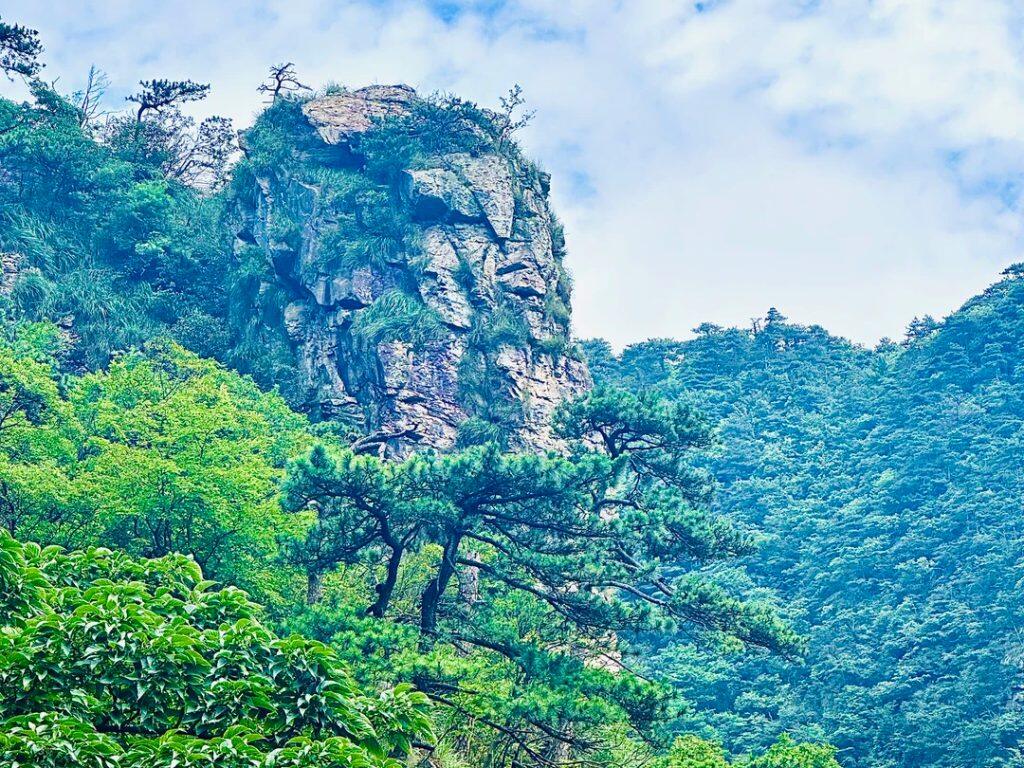
The Five Old Peaks (Wulaofeng) are five towering granite peaks that rise side by side, resembling five ancient elders sitting in contemplation. Each peak offers a different perspective on the surrounding landscape, and the hike between them is one of the most rewarding on the mountain.
What makes it special: The peaks are the highest points on Mount Lu, offering panoramic views that stretch for miles. The hike is challenging but accessible to anyone with reasonable fitness. The sense of achievement when you reach the summit — combined with the breathtaking views — makes it well worth the effort.
Pro tip: Start early and bring plenty of water. The hike between peaks can take 3-4 hours.
🌿 West Line – The Cultural Heart of Mount Lu
The West Line is the most culturally rich and scenic route on Mount Lu. It‘s a relatively gentle walk that takes you through the most famous historical and natural sites:
- Ruqin Lake – A beautiful lake shaped like a violin (ruqin), with morning mist that creates a dreamlike atmosphere
- Huajing (Flower Path) – The site where the Tang Dynasty poet Bai Juyi wrote his famous poem about peach blossoms
- Jinxiu Valley – A spectacular gorge with sheer cliffs, strange rock formations, and panoramic views
- Xiaren Cave – A natural cave made famous by Chairman Mao‘s poem: “Nature has given a Xiaren Cave, with infinite splendor on the perilous peak.”
What makes it special: This route is gentle and accessible — mostly flat paths with gentle slopes. It‘s perfect for travelers who want to experience the beauty and history of Mount Lu without strenuous hiking. The views are stunning, the history is rich, and the whole experience takes about half a day.
🏛️ Meilu Villa – A Window into Modern Chinese History
Meilu Villa is one of the most historically significant buildings on Mount Lu. Built in 1903, this charming stone villa served as the summer residence of Chiang Kai-shek and his wife Soong Mei-ling. It was here that many crucial decisions were made during the tumultuous years of modern Chinese history. The villa‘s name, Meilu, combines the characters for “Mei” (from Soong Mei-ling‘s name) and “Lu” (for Mount Lu).
What makes it special: The villa has been preserved as a museum, allowing visitors to step back in time and see how the powerful lived and worked on the mountain. The gardens are beautiful, and the villa‘s setting among the pines creates a tranquil atmosphere.
Pro tip: Visit in the afternoon when the light filters through the pine trees, casting beautiful shadows on the stone walls.
🗺️ Sample Itineraries for Mount Lu 2026
🌅 Two-Day Classic Itinerary
Day 1 – West Line (Cultural & Scenic):
Guling Town → Ruqin Lake → Huajing (Flower Path) → Jinxiu Valley → Xiaren Cave → Meilu Villa → Return to Guling Town
This route is gentle and relaxing, taking about 4-5 hours. You‘ll experience the most famous cultural and scenic sites on the mountain without exhausting yourself.
Day 2 – East Line (Nature & Views):
Hanpokou (sunrise optional) → Five Old Peaks → Three Springs Waterfall → Return to Guling Town
Start early for Hanpokou‘s sea of clouds. The hike to Three Springs is strenuous, so consider taking the cable car to save your legs.
🌅 Three-Day Immersion Itinerary
Day 1: Arrive, settle into Guling Town, explore the town‘s streets and villas
Day 2: West Line (Ruqin Lake → Huajing → Jinxiu Valley → Xiaren Cave)
Day 3: East Line (Hanpokou sunrise → Five Old Peaks → Three Springs Waterfall)
🚗 How to Get to Mount Lu 2026
🚄 High-Speed Train (Recommended):
- Take the high-speed train to Jiujiang Station (closest) or Lushan Station
- Jiujiang Station → Mount Lu North Gate: taxi about 30 minutes
- Lushan Station → cable car base: taxi about 20 minutes
- From either station, take a shuttle bus or taxi to the cable car base or the North/South Gate
🚗 Self-Driving:
- Navigate to Mount Lu North Gate Visitor Center or South Gate Visitor Center or Mount Lu Cable Car Base
- Note: Private vehicles must be pre-registered through the mini-program during peak seasons
- Parking fee: approximately 30 RMB per day
🚌 From Jiujiang:
- Direct shuttle buses from Jiujiang Station to Mount Lu (about 1 hour)
🚠 Within the Scenic Area:
- The sightseeing bus (90 RMB for 7 days) is essential — attractions are spread far apart, and walking between them would take days
- The bus connects all major sites and runs frequently during operating hours
💡 Local Expert Tips for Mount Lu 2026
- Book all tickets online — the new real-name reservation system means no on-site sales
- Take the cable car — it‘s faster, more comfortable, and avoids carsickness
- Buy the sightseeing bus pass — 90 RMB for 7 days of unlimited rides
- Visit in March for free admission and spectacular sea of clouds
- Visit in July-August for cool 22°C weather — perfect summer escape
- Dress in layers — the mountain is 10°C cooler than the base
- Wear good walking shoes — there are many stone steps
- Don‘t feed the macaques — it‘s illegal and dangerous
- Avoid cliff edges on foggy days — visibility can be dangerously low
- Three Springs has over 3,000 steps — take the cable car if you‘re not fit
❓ FAQ – Mount Lu Trip 2026
Q: Is Mount Lu worth visiting if I‘m not interested in poetry or history?
A: Absolutely — and I say this as someone who has brought hundreds of guests here. While the cultural heritage is profound and adds a rich layer of meaning, Mount Lu‘s natural beauty stands entirely on its own. The Three Springs Waterfall is one of the most spectacular waterfalls in all of China. The sea of clouds at Hanpokou is a sight that would impress anyone, regardless of their cultural background. The Five Old Peaks offer some of the most dramatic mountain views in the country. I‘ve taken photographers, families, adventure travelers, and nature lovers here, and every single one of them left in awe. The mountain‘s beauty transcends language and culture — it speaks directly to the soul.
Q: Can I visit Mount Lu as a day trip from Jiujiang?
A: Yes — but I strongly recommend staying at least one night. A day trip is possible if you start very early and take the cable car. You could see the West Line highlights (Ruqin Lake, Huajing, Jinxiu Valley, Xiaren Cave) in about 4-5 hours and return the same day. However, you would miss the East Line (Hanpokou, Five Old Peaks, Three Springs) and the magical experience of spending an evening in Guling Town. The mountain really rewards a slower pace — waking up to the mist, watching the sunset from a villa garden, and enjoying the cool mountain air. I always tell my guests: give yourself at least two days. You won‘t regret it.
Q: Is Mount Lu suitable for elderly visitors or families with young children?
A: Yes — if you choose the right route. The West Line is gentle and accessible, with mostly flat paths and gentle slopes. It‘s perfect for families and older visitors. The cable car eliminates the need for the winding mountain road. However, the East Line — especially Five Old Peaks and Three Springs — involves strenuous hiking with thousands of stone steps. For these, consider taking the cable cars and only going as far as you feel comfortable. Many families with young children focus on the West Line and Guling Town, and have a wonderful time. The 22°C summer temperature is a blessing for everyone.
Q: What‘s the best month to visit Mount Lu in 2026?
A: This depends on what you want to experience. For free admission and spectacular sea of clouds, visit in March — the entire month is free, and the cloud-sea probability is over 90%. For wild azaleas in bloom, come in April-May. For the ultimate summer escape, visit in July-August when the temperature is a perfect 22°C — this is when the mountain is at its most vibrant, but it‘s also the busiest. For autumn colors and crisp air, September-November is ideal. For snow-covered landscapes and rime ice, visit in winter — the views are stunning, but temperatures can drop significantly. Honestly, there‘s no bad time to visit Mount Lu. Each season offers its own unique beauty.
Mount Lu is more than a tourist destination — it is a place of inspiration, reflection, and wonder. For over a thousand years, poets have climbed these slopes seeking beauty and truth. For over a century, travelers from around the world have come here to escape the summer heat and find peace. When you walk the Flower Path, stand at the edge of the Three Springs Waterfall, or watch the clouds roll in from Poyang Lake at Hanpokou, you are joining a long line of seekers who have found something profound in this mountain.
I sincerely invite you to come to Jiujiang and experience Mount Lu in 2026. Ride the cable car through the clouds, walk the gentle paths of the West Line, feel the spray of the Three Springs Waterfall on your face, and let the cool mountain air wash away the stress of modern life. This is a place that will stay with you long after you leave — I promise you that.
If you need any local advice — where to find the best Lushan cloud tea, how to navigate the new online reservation system, or which viewpoint offers the most dramatic sunrise — just ask. I am always happy to share my home with you. Safe travels, and I hope to see you on the mountain.

Mike Wang
Mike Wang is a 40-something Chinese travel expert, has explored the world,
hosting numerous foreign visitors. He’s deeply interested in and knowledgeable
about ancient cultural architectures, enriching journeys with his insights.
Essential China Attractions
Zhangjiajie Travel Guide 2026: Complete Guide to China’s Most Spectacular Natural Wonder
Jiuzhaigou Travel Guide 2026: Complete Guide to China’s Fairyland
Huangshan Travel Guide 2026: Yellow Mountain Complete Guide
Yangshuo Guangxi 2026 | Karst Mountains & Li River Paradise
Potala Palace Travel Guide 2026: Lhasa’s Iconic Tibet Landmark & Top Attractions
Suzhou Classical Gardens 2026 | UNESCO World Heritage Guide
Dunhuang Mogao Caves Travel Guide 2026: Complete Visitor’s Manual
Zhangye Danxia Travel Guide 2026 | China’s Rainbow Hills
Lijiang Ancient Town 2026 | UNESCO Naxi Cultural Gem Guide
Qinghai Lake Travel Guide 2026: China’s Largest Salt Lake – Complete Local Tips
Xishuangbanna Travel Guide 2026 | Borderland Tropical Paradise China Summer Escape Pick
2026 Wuzhen Trip – East & West Gate Iconic Yangtze Delta China Attraction
2026 Shaolin Temple Trip – World-Famous Zen Temple Top China Attraction
Hukou Waterfall Travel Guide 2026 | Yellow River’s Grand Roaring Falls Guide
Changbai Mountain Tianchi Travel Guide2026 | China’s Volcanic Alpine Lake Guide
Danxiashan Travel Guide 2026 | China’s Colorful Danxia Landform Gem Guide
Fujian Tulou Travel Guide 2026 | UNESCO Ancient Hakka Earthen Building Guide
Popular City Travel Guides
Beijing Travel Guide Shanghai Travel Guide Hangzhou Travel Guide Sanya Travel Guide Chongqing Travel Guide
Nanjing Travel Guide Guangzhou Travel Guide ChengduTravel Guide Hongkong Travel Guide Xi’an Travel Guide