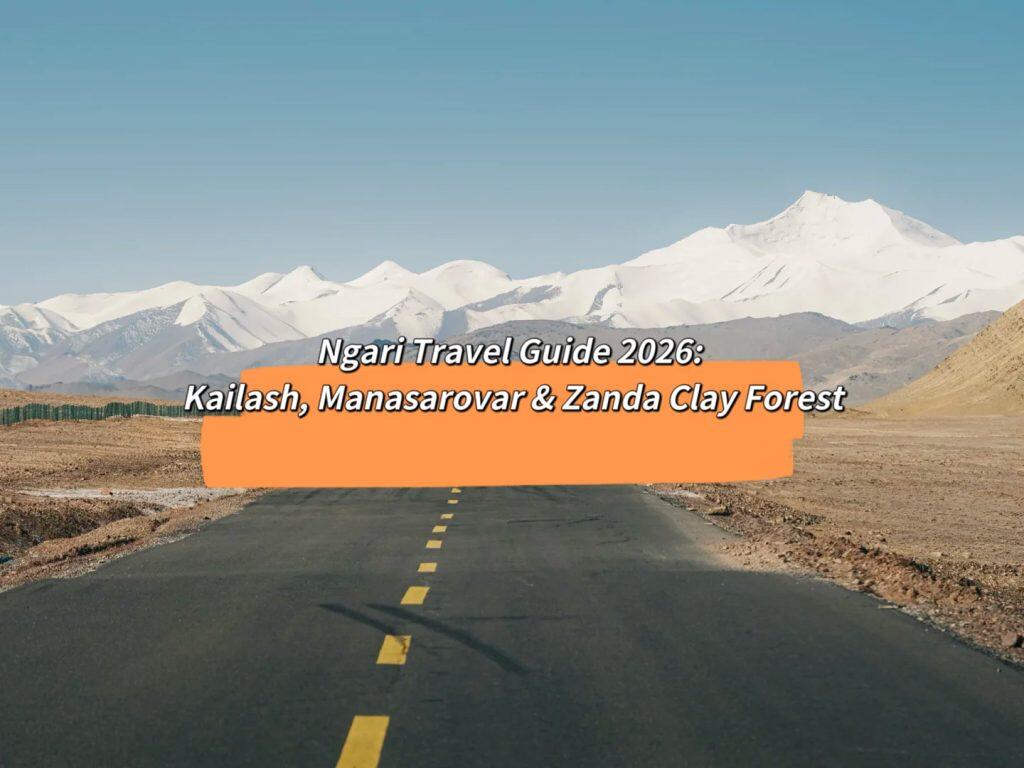
Hello, I‘m Mike Wang. For over two decades, I have guided travelers through China’s most extraordinary landscapes, but few places have moved me as deeply as Ngari — the “Roof of Tibet”. I still remember my first journey into this vast, windswept land: driving for hours across the barren plateau, the sky so impossibly blue it hurt to look at, the silence so complete you could hear your own heartbeat. Then, in the distance, I saw it — the unmistakable pyramid of Mount Kailash, rising from the earth like a cosmic throne. I stood there, speechless, and I understood why this place has been called the “center of the universe” for thousands of years.
Located in the far west of the Tibet Autonomous Region, Ngari covers an astonishing area where four of Asia‘s mightiest rivers begin their journey — the Yarlung Tsangpo (Brahmaputra), the Indus, the Ganges, and the Sutlej — earning it the title “Source of All Rivers”. This is where the ancient Zhangzhung civilization once flourished, where the Guge Kingdom rose and mysteriously vanished, and where the sacred mountain draws pilgrims from four major religions. If you are planning your Tibet trip 2026, this Ngari travel guide 2026 will give you everything you need — from the sacred Mount Kailash to the turquoise waters of Lake Manasarovar, from the ruins of the Guge Kingdom to the otherworldly Zanda Clay Forest. Let me share what I‘ve learned from two decades of bringing travelers to this extraordinary corner of the world.
🏔️ Why Ngari 2026 Belongs on Your China Bucket List
You might be thinking, “Another remote destination in Tibet?” But Ngari is genuinely in a league of its own. Here‘s why I keep bringing travelers back here, year after year.
First, the spiritual significance is unparalleled. Mount Kailash is revered as the “center of the universe” by four major religions — Tibetan Buddhism, Hinduism, Jainism, and the indigenous Bon religion. For over a thousand years, pilgrims from across Asia have trekked its 52-kilometer circuit, believing that a single circumambulation washes away a lifetime of sins. And 2026 is a special year — it‘s the Year of the Horse in the Tibetan calendar, when a single circuit around Kailash is believed to carry the merit of 12 to 13 circuits in ordinary years. This once-every-12-years occurrence is often called the “Mahakumbh of Kailash”. Pilgrims and travelers from around the world will be drawn here. This is the year to come.
Second, the landscapes are otherworldly. The Zanda Clay Forest stretches for hundreds of kilometers, a surreal landscape of towering earthen pillars carved by millennia of wind and water that looks like a scene from another planet. The turquoise waters of Lake Manasarovar shimmer at the foot of Mount Kailash, one of the highest freshwater lakes in the world at 4,588 meters. And then there are the ruins of the Guge Kingdom — a once-great civilization that flourished for over 700 years before vanishing mysteriously in the 17th century.
Third, the wildlife is extraordinary. This is one of the last places on Earth where you can see Tibetan antelope, wild yaks, Tibetan wild donkeys, and black-necked cranes roaming free across the endless grasslands.
I‘ve taken travelers from all over the world to Ngari, and the reaction is always the same: awe, followed by a profound sense of peace. This place strips away the noise of modern life and reminds you of what truly matters.
🎟️ Tickets, Hours & Smart Booking for Ngari 2026
💰 Ticket Prices (2026 Update):
| Attraction | Price (RMB) |
|---|---|
| Mount Kailash | 150 entrance fee |
| Lake Manasarovar | 150 entrance fee |
| Guge Kingdom Ruins | 65 |
| Zanda Clay Forest | Free |
| Bangong Lake | Free |
⏰ Opening Hours (2026):
- Mount Kailash open season: May to October
- Guge Kingdom Ruins: 10:00 AM – 6:00 PM
- Best months for clear views: May–June and September–October
🏯 The Main Attractions: What to See in Ngari 2026
⛰️ Mount Kailash – The Sacred Center of the World
Mount Kailash is the spiritual heart of Ngari and one of the most sacred mountains on Earth. At 6,638 meters, it‘s not the highest peak in Tibet, but its distinctive, symmetrical, four-sided pyramid shape makes it instantly recognizable. Revered as the “center of the universe” by four major religions, it draws thousands of pilgrims and travelers each year.
What makes it special: The 52-kilometer outer circuit (kora) is the main pilgrimage route, taking most people 1–3 days to complete. The highest point is the Dolma La Pass at 5,630 meters. In 2026 — the Year of the Horse — a single circuit is believed to carry the spiritual merit of 12–13 circuits. Whether you complete the full circuit or simply stand at its base, the experience is deeply moving. The mountain‘s four walls face the four cardinal directions, and scientific research has revealed strong geomagnetic anomalies in the surrounding area.
Pro tip: Most travelers spend 1–2 days in Darchen (the gateway town) to acclimatize before starting the circuit. The best months for clear views are May–June and September–October. The 52 km outer circuit requires good fitness and altitude preparation. Even if you don‘t trek, the view of “Golden Mountain” (sunrise lighting up the peak) from Darchen is unforgettable.
💎 Lake Manasarovar – The Sacred Mirror of the Sky
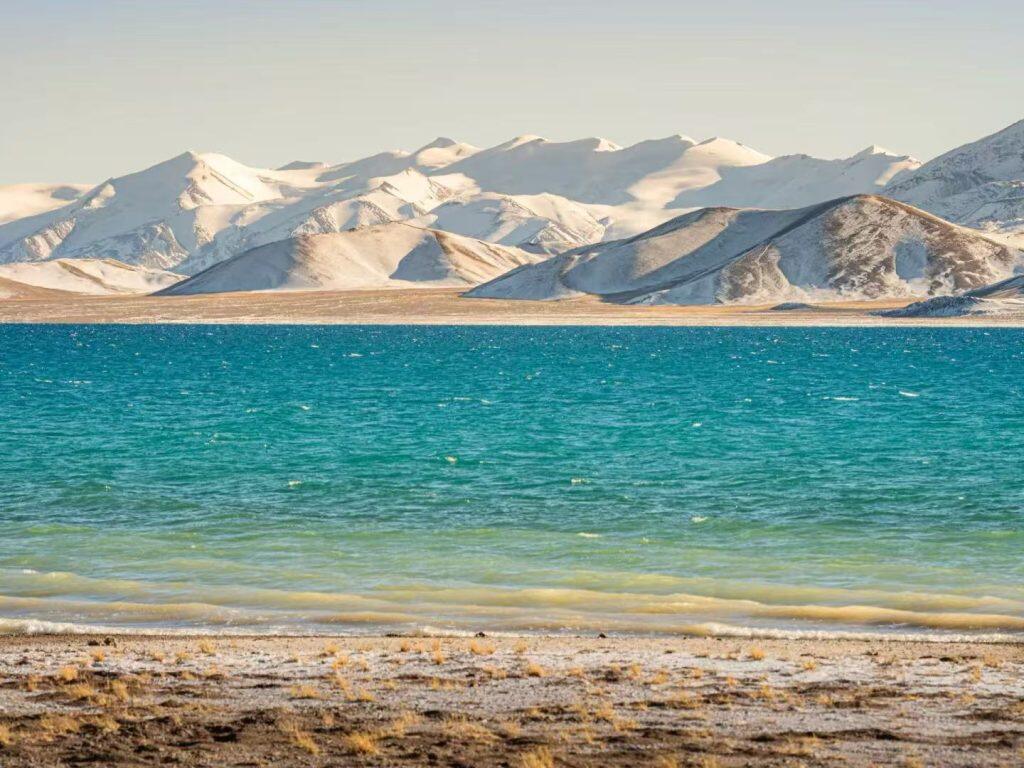
Lake Manasarovar (Mapam Yumtso) lies just southeast of Mount Kailash at 4,588 meters. It is one of the highest freshwater lakes in the world, revered as the “source of all rivers” and the “Western Paradise” in Buddhist scriptures. The lake‘s Tibetan name means “Invincible Turquoise Lake,” and the water is so clear that visibility reaches an astonishing depth.
What makes it special: The view of Mount Kailash reflected in the lake‘s turquoise waters is one of the most iconic images in Tibet. Pilgrims believe that bathing in the lake‘s waters cleanses the soul of all sins. The water is described as “blue as a jewel”. Nearby lies Lake Rakshas Tal (the “Ghost Lake”) — though its name sounds foreboding, its deep blue waters create a stunning contrast with the sacred lake, one freshwater and one saltwater, side by side.
Pro tip: The lake is best visited in the early morning when the water is calm and the reflections are at their most stunning. Allow at least 2–3 hours to explore the shoreline. A full circumambulation (kora) takes 7–10 days.
🏛️ Guge Kingdom Ruins – The Lost Civilization
The Guge Kingdom Ruins are one of the most significant archaeological sites in Tibet. This once-great kingdom flourished for over 700 years from the 10th to the 17th century, controlling much of western Tibet. Today, its ruins stretch across a hillside in the Zanda Valley — a labyrinth of caves, temples, and royal chambers carved into the yellow earth.
What makes it special: The ruins are a three-tiered city — palace at the top, temples in the middle, and dwellings at the base. The Red Temple and White Temple still contain stunning murals of the Guge painting style, showcasing the extraordinary artistic achievements of this lost civilization. The view from the top — overlooking the Zanda Clay Forest and the Xiangquan River — is breathtaking. The site is set against the dramatic backdrop of the clay forest, creating a scene of haunting beauty.
Pro tip: Allow 2–3 hours to explore the ruins. The best light for photography is sunrise and sunset. The site is 18 kilometers from Zanda County — about 30 minutes by car. Book in advance as the site has a daily visitor limit.
🌄 Zanda Clay Forest – The Alien Landscape
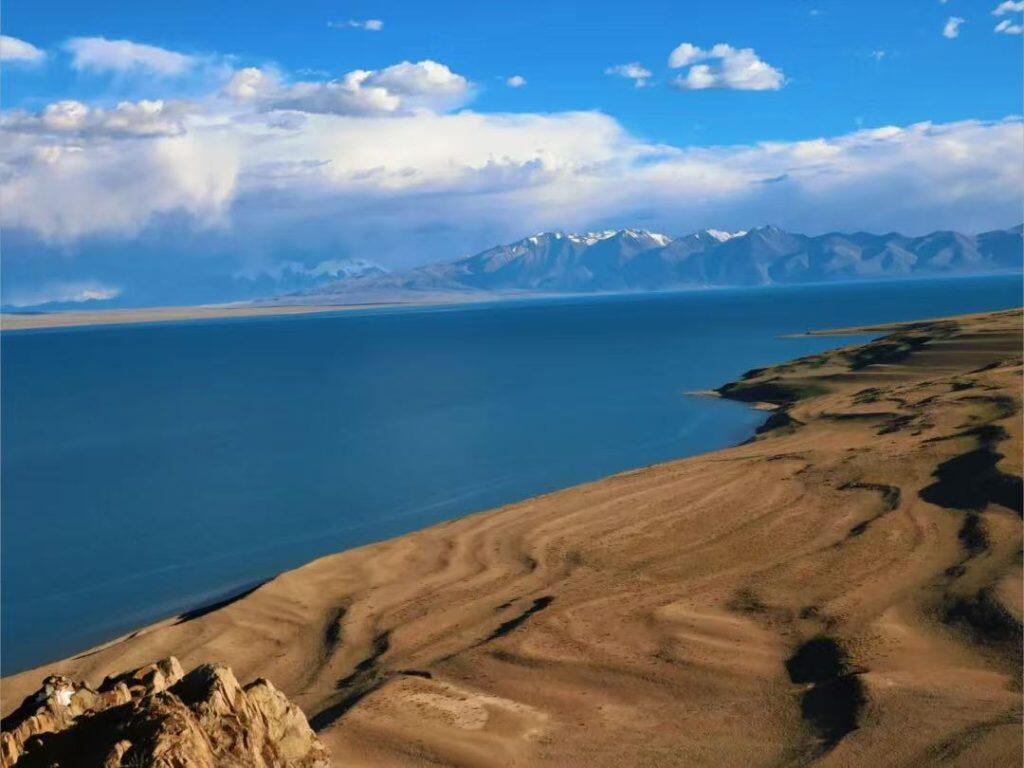
The Zanda Clay Forest National Geopark is a natural wonder unlike anything else on Earth. Covering hundreds of square kilometers along the banks of the Xiangquan River, this surreal landscape of towering earthen pillars was carved over millennia by wind and water erosion. The “trees” of the forest rise dozens of meters high, creating a scene that looks like an alien planet.
What makes it special: The clay forest is at its most dramatic at sunrise and sunset when the low light creates deep shadows and brings out the warm hues of the earth. The pillars stretch to the horizon — a landscape that feels prehistoric, almost otherworldly. Local children describe it as “giant‘s castles”.
Pro tip: The clay forest is free to enter. The best viewing points are the Zanda Clay Forest Viewing Platform and the top of the Guge Kingdom ruins. Allow 1–2 hours for a visit.
🏞️ Other Hidden Gems of Ngari 2026
Tholing Monastery – Founded in 996 AD, this is one of Tibet‘s oldest monasteries and a center of the Guge Kingdom‘s spiritual life.
Piyang-Dongga Caves – An ancient complex of over 1,000 cave dwellings carved into the cliffs, containing some of the most remarkable Buddhist murals in Tibet.
Bangong Lake – A stunning high-altitude lake spanning the India-China border, famous for its ever-changing colors. Remarkably, the Chinese side is freshwater while the Indian side is saltwater. Lake tours available from 100 RMB per person.
Daba Ruins – A lesser-known site in the Zanda Valley. “Daba” in Tibetan means “where the arrow landed,” said to have been founded where an arrow landed.
Lake Rakshas Tal – The “Demon Lake” lying west of Manasarovar, with strikingly different character — its waters are salty and its shores barren.
🗺️ Sample Itineraries for Ngari 2026
🚙 Classic Ngari South Route (10 Days)
Total distance: ~2,500 km
Route: Lhasa → Yamdrok Lake → Gyantse → Shigatse → Everest Base Camp → Saga → Lake Manasarovar → Mount Kailash → Darchen → Zanda → Guge Kingdom → Return
This is the most popular route for first-time visitors, covering the highlights of Ngari.
🏔️ Full Ngari Grand Loop (13–14 Days)
Total distance: ~4,300 km
Route: Lhasa → Shigatse → Everest → Ngari South Route → Mount Kailash → Zanda → Shiquanhe → Ngari North Route (the “Lakes Route”) → Namtso → Lhasa
This is the ultimate Ngari experience — the full loop that takes you through the wild, remote northern grasslands and the “one lake after another” region. This is for serious adventurers.
⛰️ Mount Kailash Focus (5–7 Days)
Route: Lhasa → Shigatse → Saga → Darchen (2 days acclimatization) → 3-day Kailash circuit → Return
For those whose primary goal is the Kailash pilgrimage or trek, this focused itinerary gives you the time and space to do it properly.
🚗 How to Get to Ngari 2026
✈️ By Air (Fastest):
- Fly from Lhasa to Ngari Gunsa Airport (near Shiquanhe) — about 2 hours
- From the airport, drive to Darchen (Mount Kailash base) — about 4–5 hours
🚙 By Road (Recommended for acclimatization):
- Drive from Lhasa along the Friendship Highway (G318) to Shigatse, then G219 (the Xinjiang-Tibet Highway) into Ngari
- Total driving time: 3–4 days with stops
- This gradual ascent is far better for altitude acclimatization
🚌 By Bus:
- Buses run from Lhasa to Shiquanhe (the main town of Ngari) — about 2 days
- From Shiquanhe, arrange local transport to attractions
🚙 Within Ngari:
- 4WD vehicle is essential — the roads are rough, and some areas are unpaved
- Most travelers hire a local driver and guide — this is the safest and most rewarding option
💡 Local Expert Tips for Ngari 2026
- Acclimatize properly — spend at least 3–5 days in Lhasa before heading to Ngari
- Get your permits in advance — Tibet Travel Permit + Border Defense Permit
- Book accommodation early — 2026 is the Year of the Horse; Darchen will be packed
- Hire a local guide and driver — they know the roads, the weather, and the culture
- Pack for all seasons — even in summer, nights can drop below freezing
- Bring high-quality sunglasses — the UV at 4,500+ meters is intense
- Stay hydrated — drink at least 3–4 liters of water daily
- Don‘t push yourself — altitude sickness is real; listen to your body
- The best months for clear views are May–June and September–October
- Respect local customs — walk clockwise around sacred sites. Hang prayer flags at the mountain base (around 30 RMB)
- Don’t take photos inside temples — flash damages the ancient murals
- Don‘t drive too long each day — 3-4 hours is ideal to allow for rest
- Bring oxygen — you may need it at various attractions
- Don’t shower too frequently — avoid catching a cold at high altitude
❓ FAQ – Ngari Trip 2026
Q: Why is 2026 a special year to visit Ngari and Mount Kailash?
A: 2026 is the Year of the Horse in the Tibetan calendar — a year of immense spiritual significance. According to tradition, a single circumambulation (kora) of Mount Kailash during the Horse Year carries the merit of 12 to 13 circuits performed in ordinary years. This once-every-12-years occurrence is often called the “Mahakumbh of Kailash”. The Horse Year is also the birth sign of the sacred mountain itself. Pilgrims from around the world will be drawn to Kailash, and the energy around the mountain will be extraordinary. If you’ve ever wanted to experience the “center of the universe,” this is the year to do it. Just be aware that accommodation and services will be in high demand — book early.
Q: Do I need to be an experienced hiker to visit Ngari or do the Kailash circuit?
A: Not necessarily — but you need to be fit and well-prepared. The 52-kilometer Kailash circuit is not technically difficult, but it is physically demanding due to the altitude. The highest point is the Dolma La Pass at 5,630 meters, and the trail involves significant elevation gain. Many people complete the circuit in 3 days at a steady pace. If you don‘t want to do the full circuit, you can simply visit the base of Kailash and Lake Manasarovar — both are accessible without trekking. Children under 16 are generally not recommended for the full circuit. But for the full experience, good fitness and proper altitude preparation are essential.
Q: Is Ngari safe for solo travelers?
A: For foreign travelers, independent travel is not permitted in Tibet — you must join an approved tour group. For Chinese travelers, solo travel is possible but requires careful preparation. Ngari is remote, sparsely populated, and at extreme altitude. The roads are rough, the weather is unpredictable, and mobile signal is often unavailable. I strongly recommend hiring a local guide and driver rather than traveling alone — they will keep you safe and enrich your experience with cultural and historical context. If you are an experienced, well-prepared traveler, it’s possible — but do your research thoroughly and share your itinerary with someone reliable.
Q: What‘s the best time of year to visit Ngari?
A: The best months are May–June and September–October. During these periods, the weather is relatively stable, the skies are clear, and the views of the mountains and lakes are at their most spectacular. July–August is warmer but also the rainy season, which can make roads muddy and obscure views. The Kailash circuit is open from May to October. Winter (November–March) is extremely cold with heavy snow — most roads are closed and the circuit is impassable. Plan your visit for the shoulder seasons for the best experience.
Ngari is not a place you visit — it‘s a place you experience. It’s a place that strips away the noise of modern life and reminds you of what truly matters. The vastness of the plateau, the silence of the mountains, the clarity of the air — these things have a way of resetting your soul.
I have watched travelers arrive in Ngari anxious and distracted, and I have watched them leave peaceful and centered. There is something about standing at the foot of Mount Kailash, watching the sunrise paint its golden slopes, that puts everything into perspective. This is a place that has been sacred for thousands of years — and when you stand there, you understand why.
I sincerely invite you to come to Tibet and experience Ngari in 2026. Walk the Kailash circuit, stand at the shores of Lake Manasarovar, explore the ruins of the Guge Kingdom, and let the vast, wild beauty of the Tibetan plateau remind you of the wonder of the natural world. This is a journey that will stay with you for a lifetime — I promise you that.
If you need any local advice — how to get your permits, where to find the best guide, or what to pack for the Kailash circuit — just ask. I am always happy to share my knowledge of this extraordinary place. Safe travels, and I hope to see you on the Roof of the World.

Mike Wang
Mike Wang is a 40-something Chinese travel expert, has explored the world,
hosting numerous foreign visitors. He’s deeply interested in and knowledgeable
about ancient cultural architectures, enriching journeys with his insights.
Essential China Attractions
Zhangjiajie Travel Guide 2026: Complete Guide to China’s Most Spectacular Natural Wonder
Jiuzhaigou Travel Guide 2026: Complete Guide to China’s Fairyland
Huangshan Travel Guide 2026: Yellow Mountain Complete Guide
Yangshuo Guangxi 2026 | Karst Mountains & Li River Paradise
Potala Palace Travel Guide 2026: Lhasa’s Iconic Tibet Landmark & Top Attractions
Suzhou Classical Gardens 2026 | UNESCO World Heritage Guide
Dunhuang Mogao Caves Travel Guide 2026: Complete Visitor’s Manual
Zhangye Danxia Travel Guide 2026 | China’s Rainbow Hills
Lijiang Ancient Town 2026 | UNESCO Naxi Cultural Gem Guide
Qinghai Lake Travel Guide 2026: China’s Largest Salt Lake – Complete Local Tips
Xishuangbanna Travel Guide 2026 | Borderland Tropical Paradise China Summer Escape Pick
2026 Wuzhen Trip – East & West Gate Iconic Yangtze Delta China Attraction
2026 Shaolin Temple Trip – World-Famous Zen Temple Top China Attraction
Hukou Waterfall Travel Guide 2026 | Yellow River’s Grand Roaring Falls Guide
Changbai Mountain Tianchi Travel Guide2026 | China’s Volcanic Alpine Lake Guide
Danxiashan Travel Guide 2026 | China’s Colorful Danxia Landform Gem Guide
Fujian Tulou Travel Guide 2026 | UNESCO Ancient Hakka Earthen Building Guide
Popular City Travel Guides
Beijing Travel Guide Shanghai Travel Guide Hangzhou Travel Guide Sanya Travel Guide Chongqing Travel Guide
Nanjing Travel Guide Guangzhou Travel Guide ChengduTravel Guide Hongkong Travel Guide Xi’an Travel Guide